Debt remembered and debt ignored

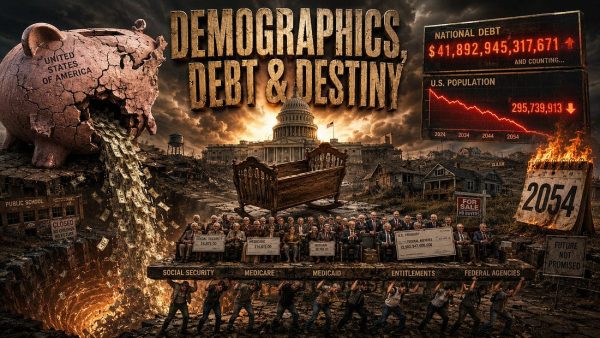
Memorial Day compels Americans to confront a word we avoid: debt. Not the financial kind that Congress pretends will magically resolve itself, but the older, heavier meaning — the kind carved into headstones at Arlington and cemeteries across the country. It is the debt paid in full by those who gave their lives, so the …

Read more

CBS Radio News Signs Off

With the radio positioned above the refrigerator, WCBS Newsradio 88 was the soundtrack of our kitchen.  For much of the 20th century, AM radio news was the country’s heartbeat.

CBS was the gold standard.  It was the home of Edward R. Murrow’s rooftop broadcasts during World War II, Walter Cronkite’s war dispatches, and Eric Sevareid’s reports from a collapsing Paris that defined American news to the present.

Radio made a snowstorm, a blackout, a presidential address, a shared experience. The intimacy of a human voice cutting through static created a bond that television never replicated and digital platforms never attempted.

I recall helicopter traffic reporter Lou Timolat, calling live updates from the FDR and GWB to the BQE and Major Deegan, decades before GPS or digital traffic sensors existed.  Such reporting crystalized WCBS’s “traffic and weather together” format, setting a national standard for all news radio and making Timolat a unforgettable memory over 50 years later.

Once upon a time in America, families gathered around the radio, commuters listened in unison, and breaking news traveled through a single, trusted pipeline. Even into the 1980s and 1990s, AM news stations like WCBS, WINS, KYW and locally at WKOK served as civic institutions with a reliability no other medium could match with their anchors’ voices woven into the daily rhythms of life.

Despite selling its stations in 2017, CBS still fed news to 700 affiliates, including its historic “World News Roundup,” the longest running newscast in the country. That will end May 22 as CBS News Radio will cease operations.  The announcement cited “challenging economic realities” and “shifting programming strategies” corporate verbiage for: the AM business model no longer sustains.

AM radio’s competition came from their own sister stations on the FM side of the house with its superior sound quality that pulled the plug on most music programming, leaving AM to reinvent itself as the home of news, talk and sports.

For a time, that pivot worked.

CBS News Radio’s shutdown is not an isolated event; rather, it is the culmination of operational constraints that have been hollowing out the medium since the 1970s fighting physics, economics, and cultural drift all at once.

Cable news arrived in the 1980s followed by the 24-hour cycle of the 1990s. Then in 1996 the Telecommunications Act accelerated consolidation, allowing companies to buy dozens of stations in a single market. Local newsrooms were gutted. National feeds replaced them. Syndicated talk became cheaper than journalism while advertising dollars migrated to digital platforms.

As AM’s audience aged and younger listeners ghosted the dial.  The signal turned into a static-ridden hostage choked by increased power lines, cell towers and ubiquitous chargers.  Another killing blow occurred when carmakers tossed AM radios overboard.  The internet finished the job and by the 2000s, AM radio survived more on memory than momentum leaving storied names like CBS News Radio vulnerable.

Waiting for a top‑of‑the‑hour newscast is antiquated in a world where breaking news arrives instantly and continuously in your pocket before the anchor even clears their throat. AM radio’s linear, scheduled format simply cannot compete with the immediacy and personalization of digital platforms tailored to niche interests.

Roger Haddon Jr., president and CEO of Sunbury Broadcasting Corp., said WKOK— a central Pennsylvania news institution since the 1930s and a 73-year CBS News Radio affiliate—will switch to USA Radio News, saying, “It’s the only network that comes close to the CBS News Radio offerings.”

WKOK will also continue to maintain its newsroom as one of the few independently owned news stations left in American radio.  CBS is signing off, but the spirit of radio – that familiar and trusted voice in the background hasn’t gone anywhere.

If you enjoyed this article, then please REPOST or SHARE with others; encourage them to follow AFNN. If you’d like to become a citizen contributor for AFNN, contact us at managingeditor@afnn.us Help keep us ad-free by donating here.

Substack: American Free News Network Substack
Truth Social: @AFNN_USA
Facebook: https://m.facebook.com/afnnusa
Telegram: https://t.me/joinchat/2_-GAzcXmIRjODNh
Twitter: https://twitter.com/AfnnUsa
GETTR: https://gettr.com/user/AFNN_USA
CloutHub: @AFNN_USA


A Bill Gone Rogue

Every legislative session has its defining moment, the vote that reveals not just what politicians believe, but how far they are willing to go to impose it.

Recently, that moment arrived in the closest of votes 101 to 100, as the Pennsylvania House passed House Bill 2103, a bill that has yet to be named but began as a modest proposal and ended as a sweeping rewrite of state anti-discrimination law after the last-minute insertion of language from the stalled “Fairness Act.”

Naming legislation often is exactly the opposite of what the bill does. Remember the Affordable Care Act? Whose health insurance hasn’t skyrocketed since then?
The public never received a transparent debate on the dubious Fairness Act, which failed to advance on its own merits.

Rather, its text was transplanted into HB 2103 in a procedural maneuver that transformed the bill into a mandate. That alone should trouble anyone who values transparency and the bill’s substance raises even deeper concerns.

Policy experts, lawmakers, and advocacy groups have warned that the amended HB 2103 represents one of the most significant expansions of state authority over speech, conscience, and religious practice in Pennsylvania’s history.

The bill dramatically broadens the definition of “public accommodation,” a term that may sound technical but carries enormous legal weight. Once expanded, it becomes the mechanism through which the state can regulate conduct, speech, and institutional policies across churches, schools, nonprofits, workplaces, and community organizations.

Supporters insist the bill is harmless. Their denials have been loud, emotional, and carefully orchestrated but they have not addressed the actual text. And as Representative Brenda Pugh rightly noted, courts do not interpret laws based on floor speeches or political assurances. They interpret the words on the page. When those words are vague and undefined, the consequences fall on citizens, not legislators.

These concerns are not hypothetical.

They include legal exposure for churches, religious schools, and ministries that operate
according to their beliefs about human sexuality. Pressure on employees to conform to
state mandated viewpoints or risk consequences. The erosion of fairness in girls’ sports, the forced opening of women’s private spaces, and the looming threat that medical professionals would be compelled to violate their conscience.

These are not unconventional fears; they are the foreseeable results of the legislation itself.  Such statutory language redefines how far government may reach into private institutions. 

Representative Jesse Topper serving District 78, which includes parts of Bedford, Franklin, and Fulton counties captured the core issue when he warned that the bill infringes on Pennsylvanians’ religious rights that raises the fundamental question of what the limits of government authority over belief, speech, and the internal operations of faith-based organizations.

HB 2103 pushes those limits to the breaking point.

The bill’s fate moves to the Pennsylvania Senate where the Republican majority will determine whether to advance it, amend it, or stop it altogether.

The House vote proved that one vote can alter the trajectory of the Commonwealth.
This is precisely why your involvement is paramount.

When legislation of this magnitude moves quickly and quietly, the public must respond loudly and clearly.  Pennsylvanians deserve laws that are debated transparently, written clearly, and crafted with respect for the constitutional freedoms that anchor our civic life.

HB 2103 fails that test.

It represents not fairness, but force – not clarity, but confusion – not balance, but overreach. 

The Senate must reject it and Pennsylvanians should demand nothing less.

If you enjoyed this article, then please REPOST or SHARE with others; encourage them to follow AFNN. If you’d like to become a citizen contributor for AFNN, contact us at managingeditor@afnn.us Help keep us ad-free by donating here.

Substack: American Free News Network Substack
Truth Social: @AFNN_USA
Facebook: https://m.facebook.com/afnnusa
Telegram: https://t.me/joinchat/2_-GAzcXmIRjODNh
Twitter: https://twitter.com/AfnnUsa
GETTR: https://gettr.com/user/AFNN_USA
CloutHub: @AFNN_USA

Elections Matter

Restoring trust in U.S. elections requires passing the SAVE Act, which mandates citizenship verification and voter ID, because election integrity is essential to American democracy.

The calculus of impunity

When NYPD officers can be swarmed and assaulted in a snowy Manhattan and the reaction is a collective shrug, something deeper is off. The downplaying of that attack isn’t a quirk of winter news, it’s another sign of a growing culture of impunity built on masked anonymity, weak prosecution, and political rhetoric that treats accountability as optional.