The Forgotten Reset Beneath Lake Huron

What if our ancestors really did survive a global catastrophe?

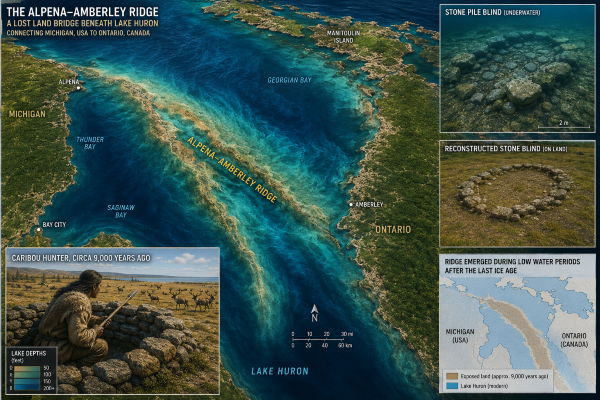
Beneath the waters of Lake Huron lies the Alpena–Amberley Ridge, a prehistoric hunting landscape that once connected Michigan and Ontario. Today it sits submerged and largely forgotten. To some researchers, it is evidence of sophisticated hunters tracking migrating caribou 9,000 years ago. To others, it raises a far bigger question: how much of humanity’s ancient story now lies underwater?

The Younger Dryas Impact Hypothesis remains controversial, but the idea is difficult to ignore. If a cosmic event helped trigger dramatic climate shifts, floods, and environmental upheaval near the end of the Ice Age, what would the world have looked like a few thousand years later? Perhaps not a world of lost super-civilizations, but one of survivors rebuilding, adapting, and passing down memories of a world forever changed.

The Alpena–Amberley Ridge doesn’t prove the theory. What it does prove is that entire landscapes, ecosystems, and chapters of human history can disappear beneath the waves. The real mystery may not be what we’ve found, but what remains hidden.

The Human Operating System: Why We Can’t Stop Fighting

What if the greatest battlefield of the 21st century isn’t a nation, a border, or a data center—but the human mind itself?

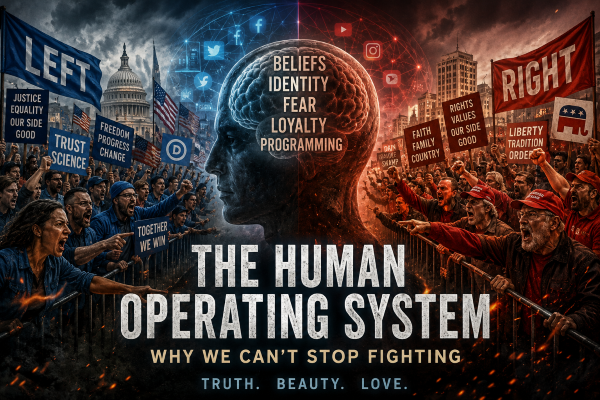
Every one of us runs on programming: beliefs, identity, experiences, fears, and loyalties that shape how we see the world. Today, those operating systems are colliding. Social media, political tribes, and algorithm-driven outrage have turned neighbors into enemies and disagreement into warfare. The question is no longer whether we’re being programmed. The question is who is writing the code—and whether we’re still capable of distinguishing truth from manipulation.
In an age of constant outrage, perhaps the most radical act is to pursue truth, beauty, and love over tribal loyalty.

The AI Civil War Nobody Saw Coming

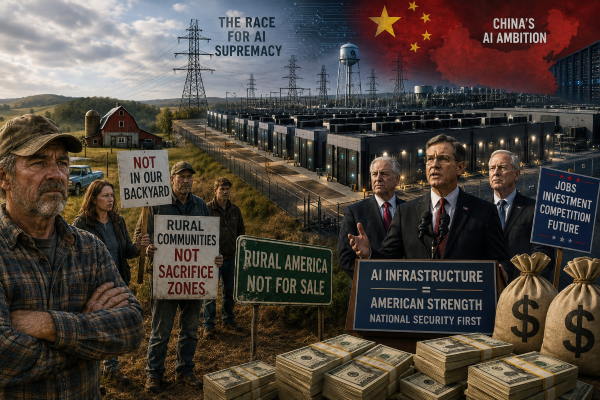
America’s next great divide may not be red versus blue. It may be the people who benefit from artificial intelligence versus the people forced to host its infrastructure. Across rural America, communities are being asked to accept massive data centers, increased power demands, and growing water consumption in the name of national security and the AI race with China. Meanwhile, the economic benefits often flow elsewhere. As politicians, tech companies, and investors promise prosperity and strategic advantage, local residents are left asking a simple question: who gets the rewards, and who carries the burden? The emerging battle over data centers is about far more than technology—it’s about trust, fairness, and whether rural America is a partner in the future or merely the place where the future gets built.

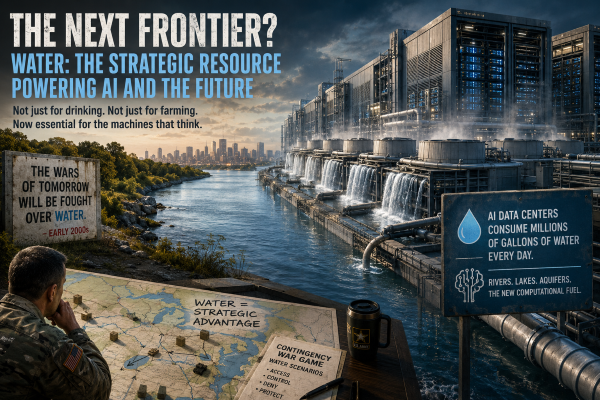
Water Wars Were Supposed to Be Here by Now. AI May Have Other Plans.

Twenty years ago, military planners and policy experts warned that the wars of the future would be fought over water. The wars never came—at least not in the way we expected. Today, however, a new competitor is entering the fight for one of humanity’s most precious resources: artificial intelligence. As massive data centers consume vast amounts of power and cooling water, rivers, lakes, and aquifers are becoming strategic assets once again. The future battle for water may not involve tanks and soldiers, but corporations, regulators, and communities struggling to determine who gets access to the fuel that powers the digital age. Perhaps the water warriors of the early 2000s weren’t wrong. They were simply ahead of their time.

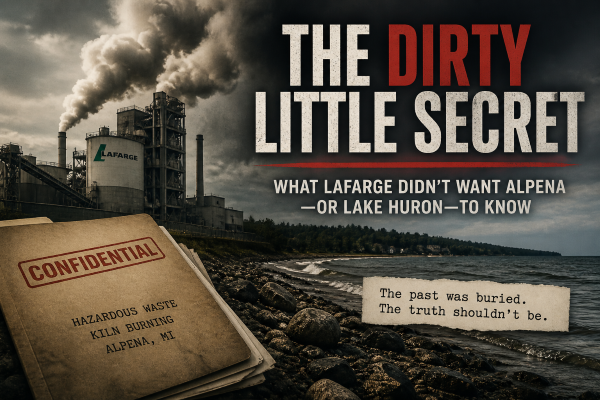
Alpena’s Dirty Secret: When “Alternative Fuel” Starts Looking Like Alternative Reality

Systech Environmental—pitched a brilliant idea: instead of burning traditional fuels, why not torch hazardous waste in the kiln? Tires, solvents, industrial byproducts—if it could burn, it could earn. Companies paid to get rid of their waste, Lafarge saved on fuel, and everyone shook hands like they’d just invented fire. The pitch was wrapped in the kind of language only a regulatory lawyer could love: “resource recovery,” “alternative fuels,” “energy efficiency.” What it meant in plain English was this: Alpena became a destination for waste that nobody else wanted, cooked at 2,500 degrees and released into the same air the locals were breathing.

Electric heat is fine, as far as it goes, but I always want a backup

That rascally rodent, Punxsutawney Phil projected six more weeks of winter, something which should have expired on Monday, but Tuesday sure was cold as well. We know that the groundhog’s projections are scientific, because the Weather Channel sends very scientifically-minded Meteorologist Jen Carfagno to cover it. Alas! Not only did we not get an early …

Read more

Hormuz: 21 Miles of History Proving Geography Still Rules the Modern World

The modern world likes to believe it has outgrown geography. Satellites circle the planet, data moves at the speed of light, and weapons can strike targets from continents away. Military theorists speak confidently about cyber war, artificial intelligence, and fifth-generation conflict conducted across digital networks and orbital platforms. Yet despite all this technological sophistication, the global economy still depends on an astonishingly simple fact of physical geography: about twenty-one miles of ocean between Iran and Oman control roughly a quarter of the world’s oil and enormous quantities of energy-related commodities such as petrochemical feedstocks and fertilizer inputs.

A Modest Climate Change Proposal: Melt Michigan

For decades, Democrats have run the greatest long con in meteorological history—keeping Michigan locked in a Siberian deep freeze under the guise of “saving the planet.” This is not environmentalism. This is a communist cold-storage program. A deliberate effort to stop the natural evolution of states—where Michigan obviously becomes Florida with better beer and fewer felonies.

Ford might discontinue entire F-150 Lightning line

It seems that the electric vehicle mandates of the Biden Administration were not greeted with approval by the public, and the public are not choosing to buy the silly things without Federal government bribery. From The Wall Street Journal: Ford Considers Scrapping Electric Version of F-150 Truck Once hyped as a ‘smartphone that can tow,’ …

Read more

The Climate Hysteria is Ending – That’s Great for America!

Ruy Teixeira has an article in the Liberal Patriot (a contradictory name if ever there was one) entitled: The Climate Movement is Circling the Drain – That’s Great for Democrats! He convincingly argues that the climate change hysteria is dying out, but not so convincingly claims that this is a positive development for the Democrats.

The State Department. It Needs Reform…Badly.

  Marco Rubio is working to make the State Department bureaucracy focused on serving American interests, not staffers looking at their DEI assignment/promotion. Sheriff murdered. Innocent women and children blown to bits! We’ve got to protect our phony-baloney jobs. We must do something about this immediately, immediately, immediately! Governor William J. Lepetomane (Mel Brooks), Blazzing …

Read more