Trusted There. Restricted Here; Restoring Trust and Rights

If we trust a service member overseas with a loaded rifle, real rules of engagement, and life-and-death decisions in a combat zone, it makes no sense to suddenly treat that same disciplined professional like a liability the moment they step onto a stateside installation; this policy correction acknowledges a simple truth long overdue—responsibility doesn’t evaporate at the gate. The men and women we entrust to defend the nation are trained, vetted, and held to standards far above the civilian baseline, and if we truly believe in that system, then extending reasonable trust for personal defense at home isn’t radical, it’s consistent. And if someone genuinely cannot be trusted with a firearm under controlled conditions on base, then the harder question isn’t about policy—it’s about why they’re in uniform in the first place.

Two Wings, One Bird: How We Traded a Republic for a Revenue Machine

We like to pretend we live in a fierce two-party system. Red vs. blue. Left vs. right. Cable news gladiators screaming like it’s the Super Bowl of righteousness. But step back far enough and the illusion fades. What you actually see is one bird with two wings—and that bird doesn’t care about your values, your vote, or your virtue. It worships one thing: money.

Mayday, Mayday: The Return of the American Strike Fantasy

The roots go back to the late 19th century, when American labor was less “9 to 5” and more “sunup to collapse.” The rallying cry was simple: eight hours for work, eight for rest, eight for life. In 1886, that demand erupted into nationwide strikes, culminating in the infamous Haymarket Affair in Chicago. A bomb, gunfire, dead police, dead civilians, and a trial that still sparks debate today. It was messy, chaotic, and deeply human—exactly the kind of event that leaves a permanent scar on history.

Today’s No Kings, Pro-Iran Quislings: A Reminder of America’s Vietnam War Turncoats

I thought I had seen the last of traitorous Americans cursing our soldiers or calling for them to be killed when the last American combat troops were pulled out of Vietnam following the 1973 Paris Peace Treaty. After the disgusting display by anti-American, pro-Iran thugs in Philadelphia and the perfidious “No Kings” protestors last weekend, it appears I was wrong.

We CAN Denaturalize & Deport “Americans:” We Merely Need The Will

We CAN Denaturalize & Deport "Americans:" We Merely Need The Will

The man who shot and killed an instructor at Old Dominion University on March 12, 2026 was a naturalized citizen WHO HAD ALREADY BEEN CONVICTED OF TERRORISM. In 2016 Jalloh was convicted of attempting to provide material support to ISIS and sentenced to 11 years in federal prison.

America at 250: Public Servants Were the Idea. Tax Servants Is What We Got

Two and a half centuries ago, the American founders attempted something radical. They built a government specifically designed not to accumulate too much power. It was intentionally slow, limited, and divided against itself. The idea was simple: if ambition countered ambition, tyranny would have a hard time getting traction.

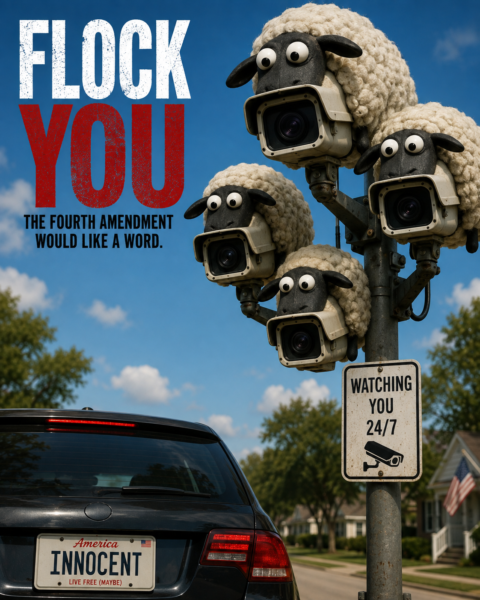
The Surveillance State and the Tyrannical Bird

The Founders built a system based on an assumption that now sounds almost quaint: government power would be limited by reality. Communication was slow. Information was scarce. The federal government had trouble collecting taxes, let alone tracking the daily movements of its citizens. If the government wanted to watch someone in 1790, it needed a horse, a spy, and probably a tavern receipt.

Returning to the Founding: Does the Presidential Pardon Power Extend to State Offenses? An Originalist Reexamination

Was it a miracle?

I have long accepted the conventional view that the President’s constitutional power to grant pardons extends only to federal offenses leaving violations of state law beyond his reach. However, when one examines the historical and textual record more closely, one begins to question whether this limitation truly reflects the original understanding at the Founding.

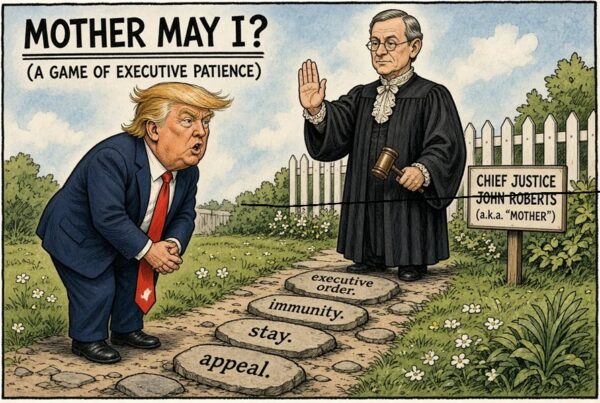
Separation of Powers Is Not Immunity from Accountability

Hannah Dugan and a rogue’s gallery of activist district judges don’t seem to understand that “we the people” spoke on November of 2024. We want the immigration crisis created by President Asterisk, fixed. With dozens of Democrat appointed judges trying to pretend that our electoral decisions don’t count, it is past time for them to experience accountability.

Ordinary Men Created America and Ordinary Men Will Preserve It

When Benjamin Franklin was asked what type of government had been created during that hot Philadelphia summer he replied, “A republic, if you can keep it.” Franklin wasn’t predicting the demise of our republic, he was observing that the baton was being passed to the self-governed. Our founders created the greatest republic the world has ever known, and then it became our duty to preserve it.

At 250, the Republic Is Missing: How America Quietly Rebuilt the Tyranny It Rebelled Against

At 250 years old, the United States has not collapsed. There are no tanks in the streets or dictators on balconies. Instead, America has done what nearly every revolution before it has done: it defeated an obvious form of tyranny and then slowly reconstructed a more efficient, more sophisticated version of it.

Since 1942, the United States Has Been Going to War Illegally — and Everyone Pretends That’s Fine

Enter the War Powers Resolution — Congress’s attempt to look relevant after Vietnam without actually reclaiming its authority. The War Powers Resolution is often defended as a guardrail. In reality, it’s a constitutional fig leaf stapled to a surrender note.

The Academy That Wanted to Be Ivy League: West Point, Rankings, and the Cost of Forgetting War

West Point does not need to be Harvard. America already has Harvard. What it needs—what it has always needed—is an academy singularly focused on producing officers whose primary purpose is to close with and destroy the enemy.

9/11 Permanent Emergency: The Long Game That’s Dismantling America – Part I

Americans didn’t wake up one morning and decide they wanted to live under surveillance, financial precarity, endless war, and algorithmic babysitting. This wasn’t a vote. It wasn’t even a debate. It was a process—slow, technical, wrapped in flags and fear, and sold as “temporary” at every stage.

Color Revolution Phase 2: Barking in the Streets for a Hunter You’ll Never See

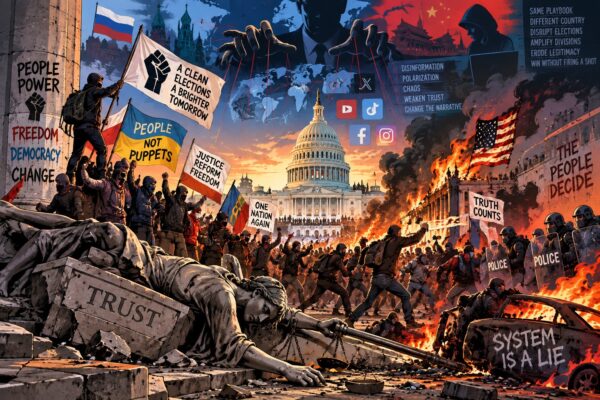
Phase 2 of a color revolution is the “streets on fire” phase. It looks organic. It feels spontaneous. It’s loud, chaotic, righteous, and emotionally intoxicating. This is where the dogs flood the streets. Students, activists, professional grievance collectors, and social-media revolutionaries with ring lights and Venmo links all sprint after the same thing: meaning.