Night Witches and the Art of Terror: How Improvised Bombers Haunted the Wehrmacht After Dark

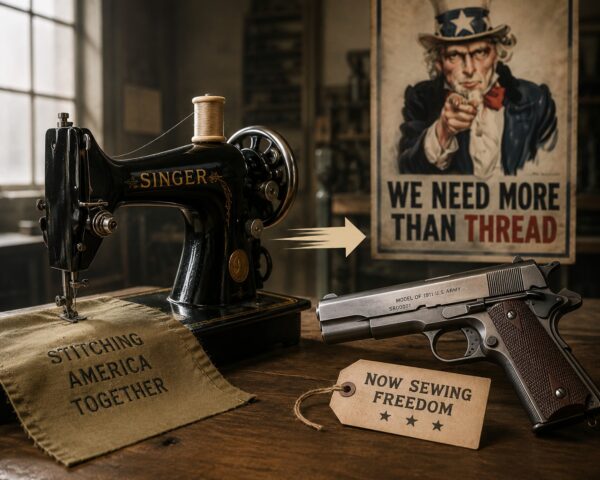
In 1941, the Soviet Union was being dismantled at industrial speed. Entire armies vanished. Cities fell. Aircraft factories were evacuated east while German armor drove forward. There was no time for elegance. The Red Army needed pilots, aircraft, and pressure on the enemy—immediately. So they did something profoundly unromantic and brutally practical: they took civilians who could fly and turned them into combat airmen.

Trusted There. Restricted Here; Restoring Trust and Rights

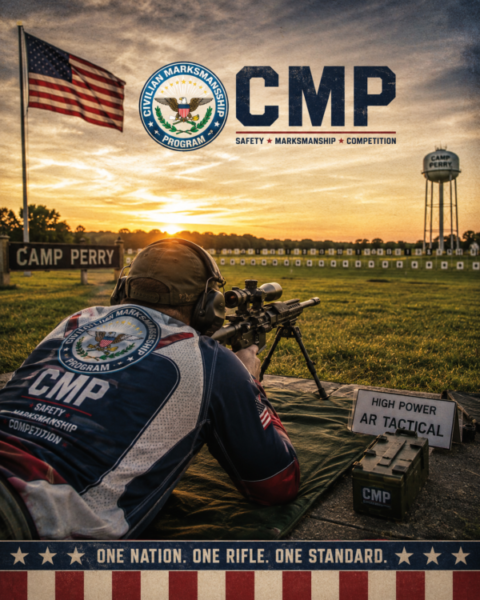
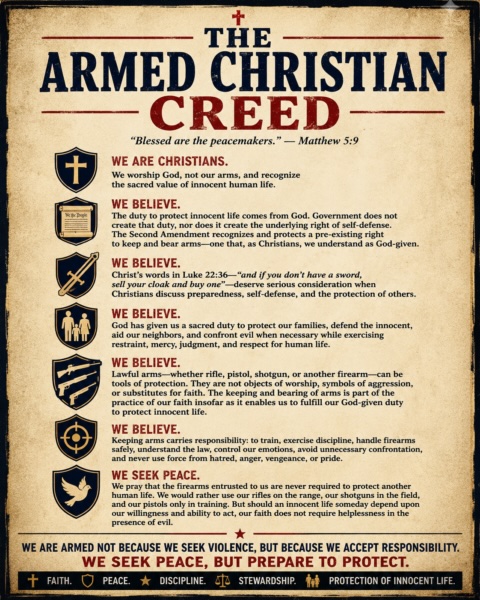
If we trust a service member overseas with a loaded rifle, real rules of engagement, and life-and-death decisions in a combat zone, it makes no sense to suddenly treat that same disciplined professional like a liability the moment they step onto a stateside installation; this policy correction acknowledges a simple truth long overdue—responsibility doesn’t evaporate at the gate. The men and women we entrust to defend the nation are trained, vetted, and held to standards far above the civilian baseline, and if we truly believe in that system, then extending reasonable trust for personal defense at home isn’t radical, it’s consistent. And if someone genuinely cannot be trusted with a firearm under controlled conditions on base, then the harder question isn’t about policy—it’s about why they’re in uniform in the first place.

Who needs Europe? We pay to defend them and absorb $200 billion in annual trade deficits.

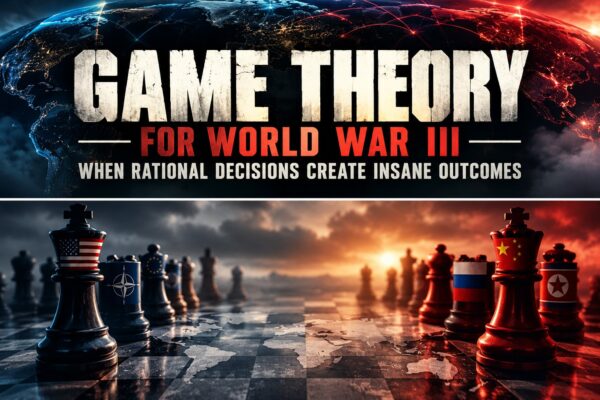
Just three years ago, Rubio and Tim Kaine succeeded in getting Congress to prohibit the president from unilaterally suspending, terminating, denouncing, or withdrawing the U.S. from the North Atlantic Treaty Organization without the approval of two-thirds of the Senate.

Trump has a hard enough time getting one-third of the Senate to agree with him, let alone two.

But he has a phone and a pen. And he has a growing plurality of Americans who believe NATO’s time ended when the Soviet Union died.

From Shield to Sword: Japan Quietly Loads the Tomahawk

There was a time—not long ago—when the Japan Maritime Self-Defense Force operated like a disciplined sentry: alert, capable, and formidable, but fundamentally reactive. Their destroyers were built to defend sea lanes, hunt submarines, and intercept incoming threats, not to reach deep into an adversary’s homeland. That posture wasn’t an accident. It was the product of history, law, and a deliberate national choice to remain a shield in a dangerous neighborhood. But shields, as it turns out, are only comforting until someone realizes they don’t have to stand in front of them.

When Deployment Felt Like Relief: The Pre-9/11 Army We Pretend to Forget

Büdingen, Germany, late ’90s. The barracks were “historic,” which was Army-speak for old, fragile, and nobody wants to pay to fix it. The plumbing was past its expiration date—backups, leaks, that constant low-grade stench that never quite left your clothes. And that’s where we put our enlisted soldiers. The pitch from leadership bordered on parody: “You’re living in a historic building—Adolf Hitler once gave a speech here. See the photo!” That didn’t land. Not even close.

The Flying Persian MoPed of War: Why the Shahed-136 Is Everyone’s Problem

The Shahed-136 is not a masterpiece of engineering. It’s not stealthy, not fast, not elegant, and certainly not impressive in the way a fifth-generation fighter is. It sounds like a weed whacker with anger issues. It flies like a lawn dart with a GPS addiction. And yet—this ugly little flying triangle has exposed a brutal truth about modern warfare: You don’t need to be advanced to be effective. You just need to be cheap, numerous, and good enough.

From Mushroom Clouds to Lab Leaks: How Civilization Could End in a Shipping Error

Today’s extinction event probably doesn’t arrive in a missile silo. It arrives in a mislabeled vial, a shipping manifest error, a warehouse with 1,000 genetically modified mice, or a “harmless research sample” that accidentally skipped customs paperwork.

The Surveillance State and the Tyrannical Bird

The Founders built a system based on an assumption that now sounds almost quaint: government power would be limited by reality. Communication was slow. Information was scarce. The federal government had trouble collecting taxes, let alone tracking the daily movements of its citizens. If the government wanted to watch someone in 1790, it needed a horse, a spy, and probably a tavern receipt.

The Day the Soviets Built the King of Boom

In October of 1961 the Cold War was already a tense, paranoid chess match played with nuclear weapons instead of pawns. The United States and the Soviet Union were staring each other down across oceans, missile silos, and enough megatonnage to turn the planet into a glowing charcoal briquette. But Soviet Premier Nikita Khrushchev decided the world needed a reminder of just how big the Soviet hammer could be. So the Kremlin did what any superpower with a bruised ego might do. They built the largest nuclear bomb in human history and lit it off over the Arctic.

Clausewitz, Jomini, and DIME-FIL: Why a 200-Year-Old War Theory Still Explains the Iran War

Start with Clausewitz. His most famous line remains the most brutally accurate description of war ever written: war is the continuation of politics by other means. In other words, wars are not random explosions of violence. Nations fight because they want political outcomes—territory, influence, regime survival, deterrence, or control of strategic regions.

Red China is the big loser in Iran; Red China’s military equipment is as reliable as Acme’s. Meep-meep

A side benefit of the Operation Epic Fury is testing the war materiel of the Russian and Red Chinese military. With little exception, they are failing again as they did in the extraction of Maduro from Venezuela

The Dollar Isn’t Backed by Gold — It’s Backed by DIME and a Carrier Strike Group

Let’s retire the fairy tales.

The U.S. dollar is not backed by gold. It’s not backed by “faith.” It’s not backed by vibes. It’s backed by power — specifically the kind of power that sails in carrier strike groups, negotiates trade deals, controls sea lanes, writes sanctions law, insures shipping, and can ruin your economy before your stock market even opens.