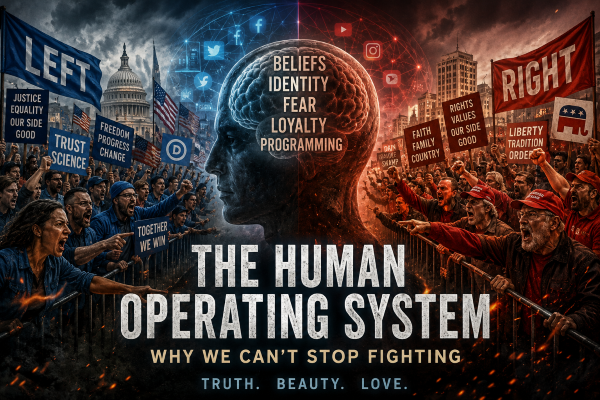
The Human Operating System: Why We Can’t Stop Fighting

What if the greatest battlefield of the 21st century isn’t a nation, a border, or a data center—but the human mind itself?

Every one of us runs on programming: beliefs, identity, experiences, fears, and loyalties that shape how we see the world. Today, those operating systems are colliding. Social media, political tribes, and algorithm-driven outrage have turned neighbors into enemies and disagreement into warfare. The question is no longer whether we’re being programmed. The question is who is writing the code—and whether we’re still capable of distinguishing truth from manipulation.
In an age of constant outrage, perhaps the most radical act is to pursue truth, beauty, and love over tribal loyalty.


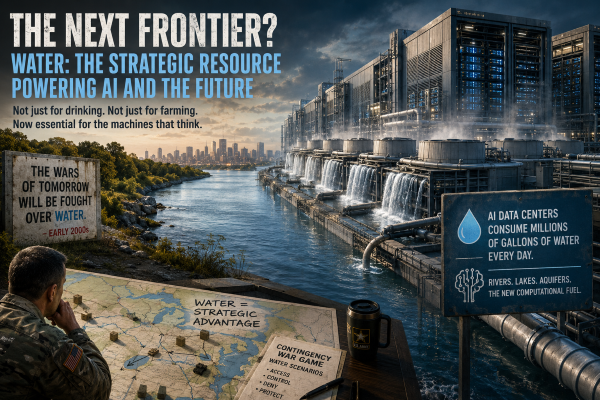
Water Wars Were Supposed to Be Here by Now. AI May Have Other Plans.

Twenty years ago, military planners and policy experts warned that the wars of the future would be fought over water. The wars never came—at least not in the way we expected. Today, however, a new competitor is entering the fight for one of humanity’s most precious resources: artificial intelligence. As massive data centers consume vast amounts of power and cooling water, rivers, lakes, and aquifers are becoming strategic assets once again. The future battle for water may not involve tanks and soldiers, but corporations, regulators, and communities struggling to determine who gets access to the fuel that powers the digital age. Perhaps the water warriors of the early 2000s weren’t wrong. They were simply ahead of their time.

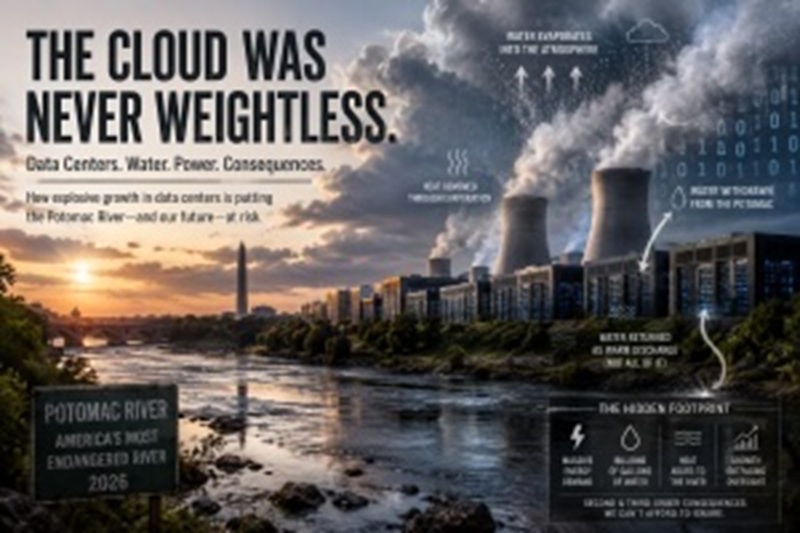
The Potomac and the “Weightless” Cloud

The Potomac River’s designation as America’s most endangered river isn’t really a story about one river. It’s a warning about an entire civilization rushing headlong into a technological revolution without fully understanding the consequences. More than 300 data centers already operate within the Potomac watershed, with hundreds more proposed to support the explosive growth of artificial intelligence and cloud computing. The same digital infrastructure powering our modern lives is quietly consuming vast amounts of electricity and billions of gallons of water. The cloud was never weightless. It was always connected to power plants, cooling towers, transmission lines, and rivers. The question isn’t whether technology will continue advancing. The question is whether we’ll recognize the second and third-order consequences before they become tomorrow’s crisis.

Oregon’s Coming Expensive Lesson

For decades, hunters and fishermen have quietly funded conservation while everyone else took credit. In Oregon alone, sportsmen contribute nearly a billion dollars annually to the economy and generate tens of millions more through Pittman-Robertson excise taxes that fund wildlife habitat, hunter education, and conservation programs. Yet lawmakers continue treating these same people as a problem rather than partners. Perhaps Oregon should proceed and learn the lesson firsthand. Numbers don’t care about politics. When the funding shrinks, the jobs disappear, and conservation budgets start hurting, the state may discover who was paying the bills all along.

Trump cleans up Obama’s mess

The latest battlefront in the Democrat War Against Sanity is the Reflecting Pool on the National Mall.

Barack Obama renovated it in 2012 and left a big mess when he left office because instead of using city water treated with chlorine, he brought in brackish water from the Tidal Basin and treated it with a product called Ozone.

Three Knots, No Excuses: The Lost Skill That Still Saves Lives

There was a time—not that long ago—when a man who couldn’t tie a knot was considered about as useful as a screen door on a submarine. Today, we’ve got people carrying $1,200 smartphones, satellite GPS, and enough titanium gadgets clipped to their belt to look like a walking REI catalog… and they can’t tie a loop that won’t slip under load.

Hormuz: 21 Miles of History Proving Geography Still Rules the Modern World

The modern world likes to believe it has outgrown geography. Satellites circle the planet, data moves at the speed of light, and weapons can strike targets from continents away. Military theorists speak confidently about cyber war, artificial intelligence, and fifth-generation conflict conducted across digital networks and orbital platforms. Yet despite all this technological sophistication, the global economy still depends on an astonishingly simple fact of physical geography: about twenty-one miles of ocean between Iran and Oman control roughly a quarter of the world’s oil and enormous quantities of energy-related commodities such as petrochemical feedstocks and fertilizer inputs.

Welfare For the Well-To-Do

On Boxing Day of 2023, I noted an article in The Wall Street Journal concerning investors souring on electric vehicle charging companies. In plug in electric vehicles are the wave of the future, why would investors not be moving into, rather than out of, such companies? Note that the original article was from December of …

Read more

Is the new “Restore Britain” movement in the U.K. a blueprint for America?

We are squandering our country’s wealth to accommodate 10-15 million unskilled, unvetted, third-world intruders who were invited to surge America’s open borders by Joe Biden and his duplicitous Democrat underlings.

The Control Grid Is Green: How 15-Minute Cities and Programmable Money Reshape Freedom

George Orwell didn’t imagine tyranny arriving with solar panels and fiber optic cable. He imagined telescreens and ration cards. But swap telescreens for smart meters and ration cards for CBDCs, and suddenly 1984 doesn’t look retro — it looks beta-tested.