From Garand to AR-15: When Service Rifles Stopped Belonging to the Nation and Started Belonging to Lawyers

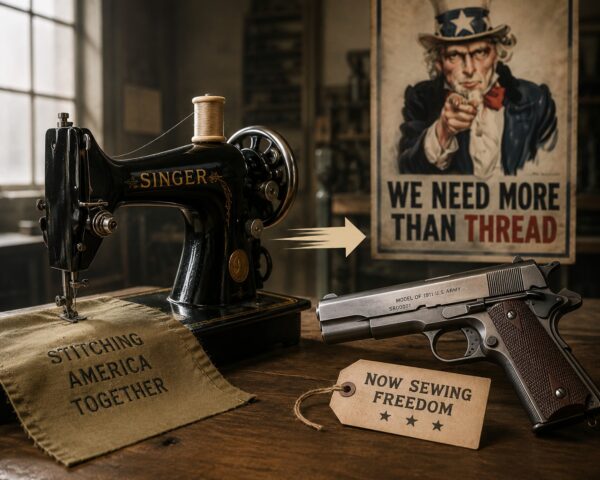
When the M1 went ashore in Normandy, no one wondered who owned the blueprints. When the M16 went to Vietnam, arguments over chrome lining, ammunition specifications, and intellectual property simmered behind the scenes. The rifle itself became entangled in acquisition disputes and contract language. Even improvements—like later A2 modifications—unfolded within a world shaped by lawyers as much as logisticians.

Promises, Pivots, and Surveillance: How Trump Went From FISA Foe to FISA Friend

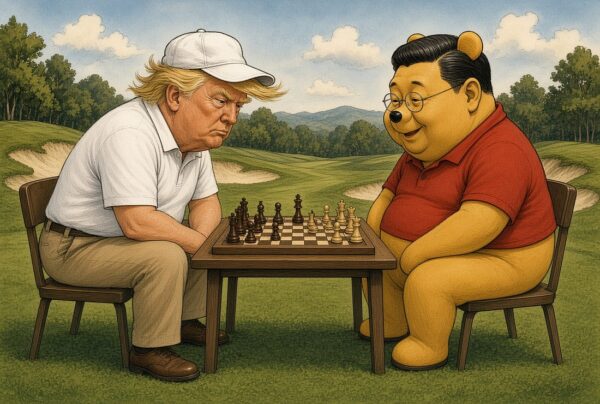
Campaign Trump told voters the surveillance state was dangerous and abused. Governing Trump is preserving the surveillance state with adjustments. Campaign Trump framed FISA as existential corruption. Governing Trump treats it as infrastructure in need of maintenance.

Since 1942, the United States Has Been Going to War Illegally — and Everyone Pretends That’s Fine

Enter the War Powers Resolution — Congress’s attempt to look relevant after Vietnam without actually reclaiming its authority. The War Powers Resolution is often defended as a guardrail. In reality, it’s a constitutional fig leaf stapled to a surrender note.

The Clipboard Strikes Back: Why Washington Wants You to Confess Your AI

Over the past two years, federal agencies have quietly moved from curiosity about artificial intelligence to formal requirements to identify, inventory, and govern its use. If an AI system influences decisions, analysis, or operations—especially if that system is commercial, third-party, or not owned by the government—someone is now expected to document it. Contractors are learning this lesson the fastest. If AI touches a deliverable, an auditor somewhere wants to know about it.

Democrat Bill: Giving Washington State’s Attorney General Power To Investigate Businesses Without Probable Cause

Democrat Bill: Giving Washington State's Attorney General Power To Investigate Businesses Without Probable Cause

At the request of AG Brown, Democrats^ snuck in a bill at the last minute which would allow Washington’s Attorney General to weaponize the legal system against law-abiding Americans: Conservatives and Christians will be abused without probable cause, without warrant and without a neutral judge.

Election Integrity 101: Anatomy Of The Steal. Securing Elections Against Adjudication Cheating Part 2

So what good is voter identification going to do in a state like Colorado where under my theory nearly one million extra ballots are being mailed out that can then be used to form the basis for inside the tabulation machine shenanigans? I show ID as I vote in person, but the vast majority of Coloradans voted by mail.

Small Nukes, Big Idea: Why SMRs Are the Future Catching Up With the Past

SMR stands for Small Modular Reactor. The concept is simple: instead of building massive, one-off nuclear cathedrals that take fifteen years, billions of dollars, and three generations of lawyers, you build smaller reactors that are standardized, factory-produced, shipped in modules, and deployed where power is actually needed. They’re designed to be safer, faster to build, easier to scale, and—most importantly—repeatable.

Four Fires, One Ally With a Hose: Why NATO Has to Grow Up So America Can Survive

At the Munich Security Conference, Secretary of State Marco Rubio did something unusual in modern diplomacy: he told the truth politely. He reaffirmed America’s commitment to Europe, praised NATO, spoke warmly about shared history and civilization—and then, in effect, slid a note across the table that read: You’re going to have to handle more of your own business.

Flayed by History: The Balkans, Broken Empires, and the Lie That Assimilation Doesn’t Matter

That’s the part modern commentators miss when they wave away Balkan violence as “ancient hatreds.” These weren’t abstract grudges. They were lived systems. For centuries, the region was ruled by empires that never integrated their subjects into a shared civic identity. Catholic Croats looked west to Rome and Vienna. Orthodox Serbs looked east to Constantinople and Moscow. Muslim communities were tied to Ottoman structures. Religion wasn’t just belief; it was citizenship, law, and survival. Identity was not optional. It was inherited like debt.

You’re Already in the War — You Just Missed the Declaration

The wars of the future—and increasingly, the wars of the present—will not announce themselves with bombs and bullets. They will arrive as confusion, contradiction, outrage, and exhaustion. You won’t know when they start. You won’t know who started them. You won’t even agree with your neighbors on whether they’re happening at all.

When Money Becomes a Weapon: China’s Digital Yuan and the Quiet War for Economic Power

To understand why this matters, you have to strip away the marketing. A CBDC is not “digital cash.” Cash is anonymous, final, and indifferent. A CBDC is programmable, trackable, and conditional. It is issued directly by a central bank, lives on state-controlled rails, and behaves exactly as policy requires it to behave. That makes it extremely attractive to governments that prefer obedience over ambiguity.

How Christian Virtue Became a Moral Trap

The modern moral argument surrounding immigration often leans heavily on Christian language while quietly discarding Christian wisdom. Appeals to compassion are constant; appeals to discernment are conspicuously absent. The result is a moral bait-and-switch: Christians are told that disagreement with expansive, consequence-free policies is equivalent to cruelty, fear, or hatred—despite Scripture never making such a claim.

The Deplorable’s Guide to Moral Anger and National Self-Destruction

Moral anger is where the process begins. Unlike ordinary anger, which arises from frustration or injury, moral anger feels virtuous. It carries the intoxicating belief that one’s emotional response is proof of righteousness. When politics is framed as a moral emergency, anger stops being something to manage and becomes something to display. Neurologically, this matters. Moral anger activates threat responses and suppresses reflective thought, which is why it feels urgent, clarifying, and necessary—even when it is wildly oversimplified. Once people believe that being angry is the same as being good, reason no longer stands a chance.

Private Profits, Public Blackouts: America’s Electric Grid as a National Security Blind Spot

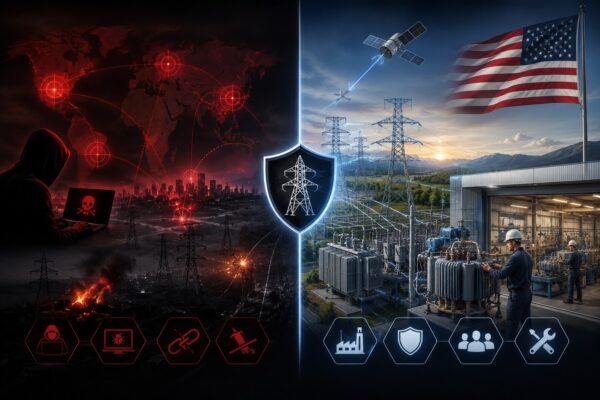
America’s electric grid lives in a strange legal and moral purgatory. It is economically private, legally regulated, but strategically national. That contradiction is not a philosophical quirk—it is a national security liability hiding in plain sight, humming quietly behind the walls while we argue about fighter jets, aircraft carriers, and which shiny weapons system deserves another trillion dollars.

9/11 Permanent Emergency: The Long Game That’s Dismantling America – Part III

The most dangerous futures rarely arrive with explosions. They arrive with paperwork, emergency meetings, and soothing language about “stability.” The worst-case scenario facing the United States is not sudden collapse or foreign invasion. It is something far more corrosive: a loss of sovereignty by process, at the exact moment the world becomes less forgiving, more competitive, and openly hostile to American advantage.

Uniforms Matter: Why the Constitution Draws a Hard Line Between Warriors and Police

Uniforms are not decoration. They are language. Long before an officer speaks a word or a citizen weighs compliance, the uniform announces intent, authority, and the rules that govern the encounter. In a free society—especially one built on constitutional limits—this signaling is not cosmetic. It is foundational.