The Seriousness of the Surge in Catholic Conversions

As a somewhat frequent participant in Catholic discussions on Twitter — I still refuse to call it 𝕏, the dumbest rebranding of the 21st century — I’ve been seeing a ton of posts about the surge in Catholic converts. Apparently, the algorithms see what we like, and send more of the same our way!  Many …

Read more

Who Was Jesus, Really? The Mystery Behind ‘Son of Man’ and ‘Son of God

Who was Jesus? It is a question that has echoed across centuries, whispered in quiet prayer, debated in universities, and argued in the streets. For Christians, the answer is not a simple label but a profound tension held together in Scripture: Jesus is both the Son of Man and the Son of God. And the confusion surrounding these titles is not accidental—it is the result of trying to compress a divine mystery into human categories.

Good News for American Evangelical Protestants

Church

There’s always good news for Bible-based Evangelicals in the Good News of Lord Jesus Christ.  His Resurrection is celebrated every Sunday.  And, there’s good news in numbers, despite the gloom and doom data painting a Post-Christian America and death spiral for Western Civilization.  Bible-based Evangelical Protestants are growing – not as much as non-Believers and way less than possible, but growing.  Growing is good.

The Rise of anti-Semitism by Recent Catholic Converts

It has been said that Catholic converts are among the most zealous of all. And so it is with Carrie Prejean Boller, or, as I prefer to call her, Carrie Prejean Hez-Boller, because she has been extremely vocal in her support of the ‘Palestinians’ and their war against Israel. On March 23, she tweeted: Israel …

Read more

Iran: The Revolution That Ate Its Own Children – A Brief History

When Americans think about Iran, the story usually begins in 1979—angry crowds, burning flags, and a stern cleric named Ayatollah Khomeini taking control of the country. But that snapshot hides something important. Iran—historically Persia—is one of the world’s oldest civilizations. Its history stretches back thousands of years, and the country that emerged after 1979 is not the inevitable outcome of Persian history. In many ways, it was a political accident born from revolution, miscalculation, and a brutal consolidation of power.

The Roosevelt Problem: What Teddy Said About Muslim Conquests That Would End a Political Career Today

If Theodore Roosevelt were transported into modern America and handed a microphone, the man wouldn’t survive a single news cycle. Not because he was shy, confused, or prone to carefully worded diplomatic statements. Quite the opposite. Roosevelt had a remarkable ability to say exactly what he thought about history, religion, and civilization without the slightest concern for whether it might offend a future diversity committee.

Stones, Spectacle, and Shortcuts: The Wilderness Temptation and the Blueprint We Pretend Not to See

The temptation of Jesus Christ in the wilderness is one of those passages Christians nod at politely and then immediately ignore when Monday morning rolls around. Forty days of fasting, a barren desert, and Satan offering three proposals that look suspiciously like modern self-help advice. If you think it’s a children’s Sunday school story about resisting candy, you’ve missed the plot. It’s a masterclass in how power, identity, and survival actually work in the real world.

Is the new “Restore Britain” movement in the U.K. a blueprint for America?

We are squandering our country’s wealth to accommodate 10-15 million unskilled, unvetted, third-world intruders who were invited to surge America’s open borders by Joe Biden and his duplicitous Democrat underlings.

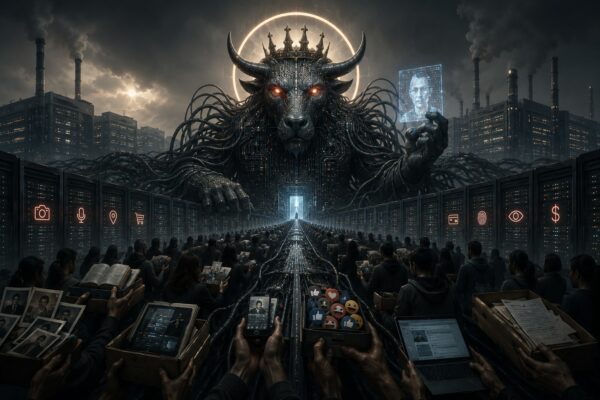
The Interface, the Code, and the War: Why Christianity Becomes Offensive

Some of the sharpest minds of the last century sensed the reductionist story was missing something. Carl Jung looked inward and saw conflict. The ego — the conscious “I” — wants control, moral self-justification, narrative dominance. It insists on sovereignty. Jung recognized the ego was not the whole self and that something beyond it pressed inward, demanding humility and reordering. He called that pressure the “Self.” He diagnosed the tension correctly. He simply refused to name the external authority behind it.

Not Random, Not Accidental: Chuck Missler and the Case for an Engineered Reality

When Missler said we may be living in something like a simulation, he meant that physical reality functions like a user interface. We experience the front end. The underlying code — the laws, constants, and constraints — operate beneath our direct perception. Just as you don’t see the binary code behind your screen but interact with its output, we interact with a physical world governed by informational architecture we didn’t write.

Why Christians Feel Obligated to Defend Israel—and Why the Bible Never Commands It

There is a quiet anxiety baked into much of modern American Christianity: if you don’t support Israel—always, loudly, and without qualification—God might notice. Entire churches treat Israeli foreign policy as a third sacrament. Question a settlement policy or a military response and someone will reach for Genesis 12 like it’s a theological panic button. This fear wears the costume of faith, but it isn’t biblical. It’s superstition with a study Bible.

From Dionysus to the Edict: The Olympic Whiplash Nobody Planned

In 2024, the world tuned in to Paris and was treated to a lavish, high-budget revival of pagan imagery—complete with nods to Dionysus, the ancient god of intoxication, ecstasy, and losing yourself so completely that personal responsibility becomes someone else’s problem. It was art, we were told. It was symbolism. It was “inclusive.” It was definitely not accidental. And it certainly wasn’t Christian.