Clausewitz, Jomini, and DIME-FIL: Why a 200-Year-Old War Theory Still Explains the Iran War

Start with Clausewitz. His most famous line remains the most brutally accurate description of war ever written: war is the continuation of politics by other means. In other words, wars are not random explosions of violence. Nations fight because they want political outcomes—territory, influence, regime survival, deterrence, or control of strategic regions.

Death Rays on a Budget: How the U.S. and Israel Turned Electricity into Air Defense

If you grew up on Austin Powers, you remember the joke. Dr. Evil didn’t want nukes. He didn’t want tanks. He wanted lasers. The audience laughed because lasers were cinematic nonsense. Fast forward to 2026 and Israel is fielding the Iron Beam, and the U.S. military has ship-mounted and vehicle-mounted high-energy laser systems actively burning small threats out of the sky. Turns out Dr. Evil was just early.

Iran: The Revolution That Ate Its Own Children – A Brief History

When Americans think about Iran, the story usually begins in 1979—angry crowds, burning flags, and a stern cleric named Ayatollah Khomeini taking control of the country. But that snapshot hides something important. Iran—historically Persia—is one of the world’s oldest civilizations. Its history stretches back thousands of years, and the country that emerged after 1979 is not the inevitable outcome of Persian history. In many ways, it was a political accident born from revolution, miscalculation, and a brutal consolidation of power.

The Roosevelt Problem: What Teddy Said About Muslim Conquests That Would End a Political Career Today

If Theodore Roosevelt were transported into modern America and handed a microphone, the man wouldn’t survive a single news cycle. Not because he was shy, confused, or prone to carefully worded diplomatic statements. Quite the opposite. Roosevelt had a remarkable ability to say exactly what he thought about history, religion, and civilization without the slightest concern for whether it might offend a future diversity committee.

The War Powers Resolution of 1973 and Iran

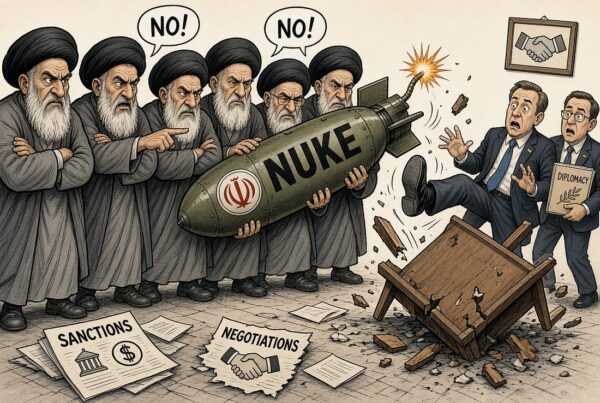
Representative Thomas Massie (R-KY 4th District) and Senator Rand Paul (R-KY) are Republicans, but they are also two of the very few libertarians (not Libertarians) elected to Congress. Both have long opposed wars, and are definitely not neocons, and both sponsored concurrent resolutions to force President Trump to pull back military forces from any conflict …

Read more

When Veteran YouTube Geopolitical Talking Heads Start Acting Like Internet Trolls

Now let’s be clear about something. Veterans arguing about foreign policy is not the problem. In fact, it’s healthy. People who have worn the uniform should absolutely debate how American power is used. The military has always produced strong opinions—usually accompanied by horrible coffee and worse briefing slides. But what used to separate professional disagreement from internet drama was something the officer corps once valued deeply: discipline.

The Kurds – The Enemy of My Enemy Is My Friend (Until Tuesday)

For many Americans, the story is simple. Saddam Hussein gassed the Kurds in the 1980s—most infamously at Halabja. They suffered horribly. When the United States eventually removed Saddam from power in 2003, the Kurds were portrayed as natural allies: brave fighters, pro-Western, reliable partners in a messy region.

Red China is the big loser in Iran; Red China’s military equipment is as reliable as Acme’s. Meep-meep

A side benefit of the Operation Epic Fury is testing the war materiel of the Russian and Red Chinese military. With little exception, they are failing again as they did in the extraction of Maduro from Venezuela

Blood, Guts, and Winning Wars: Why Patton Still Makes Modern Leaders Uncomfortable

Patton’s most famous line, delivered to the Third Army in 1944, captured his philosophy better than any manual ever written: “No bastard ever won a war by dying for his country. He won it by making the other poor dumb bastard die for his country.” That was not just colorful language. It was a direct rejection of the romantic nonsense that had gotten an entire generation slaughtered in World War I. Patton had seen that war. He had been wounded in it. He understood that modern industrial warfare was not a stage for heroic poetry. It was a contest of logistics, speed, firepower, and will. His job was not to produce martyrs. His job was to produce victory.

The Dollar Isn’t Backed by Gold — It’s Backed by DIME and a Carrier Strike Group

Let’s retire the fairy tales.

The U.S. dollar is not backed by gold. It’s not backed by “faith.” It’s not backed by vibes. It’s backed by power — specifically the kind of power that sails in carrier strike groups, negotiates trade deals, controls sea lanes, writes sanctions law, insures shipping, and can ruin your economy before your stock market even opens.

Using the Veil of Religion to Advance Tyranny

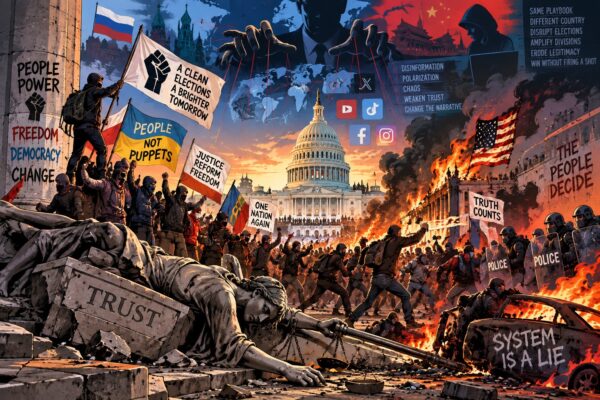
We are in a war in which our enemies use the veil of religion to seize power. Few understand this war in which past losses resulted in hundreds of millions of innocents being murdered, tortured, imprisoned or living for decades to centuries under tyranny. The use of religion to seize power is ancient in concept – and often uses one of two approaches. One is to attack or vilify a religion to advance tyranny. The other, to use the veil of religion to hide insidious efforts to advance tyranny. The genius (and danger) in using religion, in this perpetual cognitive war, is its subtlety. There are no tanks in the streets. Rather, memes, sermons, rhetoric, and false narratives and manufactured victims are employed using our cognitive biases (e.g., emotion, moral outrage) that erode shared reality over time.

Verdun with Drones: How the Future of War Looks Suspiciously Like 1916

We were promised glide paths into a frictionless era of war. Precision would replace mass. Networks would replace mud. Information dominance would compress decision cycles so tightly that victory would arrive before the coffee cooled. Instead, the war in Ukraine settled into trenches, minefields, artillery duels, and casualty math that feels uncomfortably familiar to anyone who’s ever read about 1916. The aesthetic is pure World War I, except now every trench has a charging cable.

World War III Watch: Maybe This Wasn’t the Best Idea

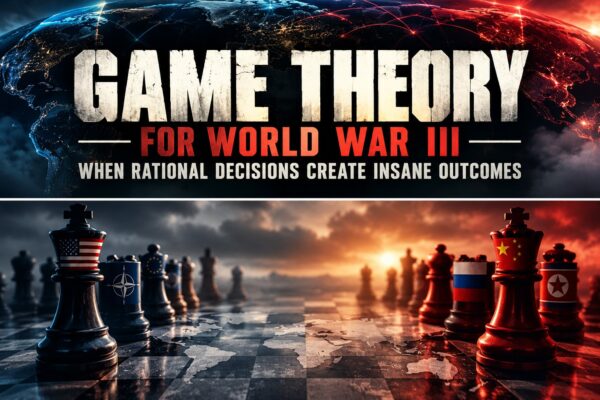
No, I don’t think this will result in World War III, despite my headline and stock illustration, but wars do not always turn out quite the way you expect. Der Führer certainly didn’t expect Germany to have been virtually destroyed, Hideki Tojo did not expect Japan to be utterly defeated and bombed to smoking ruins, …

Read more

Why Christians Feel Obligated to Defend Israel—and Why the Bible Never Commands It

There is a quiet anxiety baked into much of modern American Christianity: if you don’t support Israel—always, loudly, and without qualification—God might notice. Entire churches treat Israeli foreign policy as a third sacrament. Question a settlement policy or a military response and someone will reach for Genesis 12 like it’s a theological panic button. This fear wears the costume of faith, but it isn’t biblical. It’s superstition with a study Bible.

“The 51st Star We Never Voted On: How Israel Became America’s Problem Child”

Let’s dispense with the polite fiction. The United States has 50 states on paper and one premium subscription state overseas that gets all the benefits with none of the awkward obligations like paying federal taxes or pretending to listen to Washington. Welcome to Israel, America’s unofficial 51st state — the only one close enough to lecture Congress but far enough away that we pretend it’s “just an ally.”

From Garand to AR-15: When Service Rifles Stopped Belonging to the Nation and Started Belonging to Lawyers

When the M1 went ashore in Normandy, no one wondered who owned the blueprints. When the M16 went to Vietnam, arguments over chrome lining, ammunition specifications, and intellectual property simmered behind the scenes. The rifle itself became entangled in acquisition disputes and contract language. Even improvements—like later A2 modifications—unfolded within a world shaped by lawyers as much as logisticians.

Since 1942, the United States Has Been Going to War Illegally — and Everyone Pretends That’s Fine

Enter the War Powers Resolution — Congress’s attempt to look relevant after Vietnam without actually reclaiming its authority. The War Powers Resolution is often defended as a guardrail. In reality, it’s a constitutional fig leaf stapled to a surrender note.

Acorns, Aggression, and Melanin: Why the Black Squirrels Run Northern Michigan

If NATO ever needs a real-world case study in territorial conflict, dominance hierarchies, and cold-weather logistics, they can skip the war colleges and simply hang a bird feeder in northeastern Michigan. Within hours, it becomes a contested supply hub. Within days, a full-blown squirrel conflict emerges—predictable, ruthless, and strangely educational.