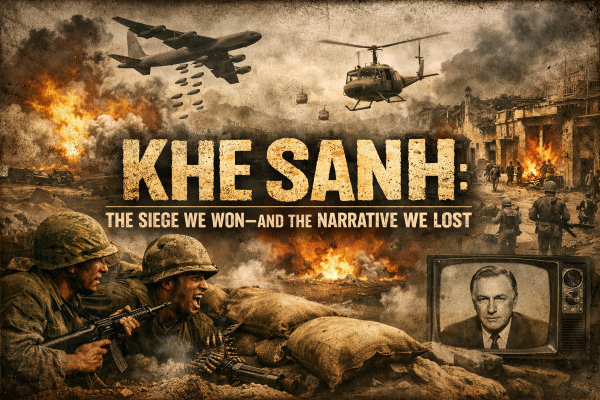
Khe Sanh: The Siege We Won—and the Narrative We Lost

There’s a reason Khe Sanh still gets brought up in war colleges, smoky VFW halls, and late-night strategy debates. It wasn’t just a battle. It was a live-fire experiment in something we didn’t have a name for yet—what we now call fifth-generation warfare. Not bullets versus bullets. Not even armies versus armies. It was narrative versus reality. And narrative won.

Reefer Madness Wasn’t a Movie—It Was a 100-Year Information Operation

There’s a comfortable lie Americans like to tell themselves: that we are too smart, too informed, too free to be manipulated at scale. That propaganda is something that happens in other countries, to other people, under other flags. Then you dig up a grainy black-and-white relic like Reefer Madness and realize—no, we ran one of the most effective information operations in modern history… on ourselves.

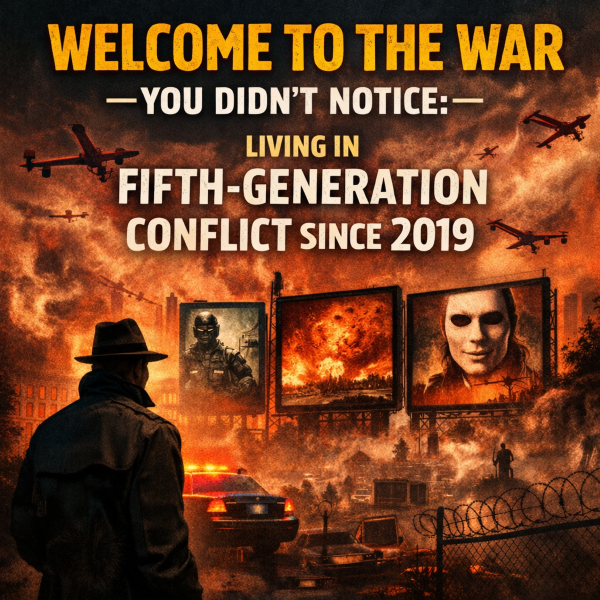
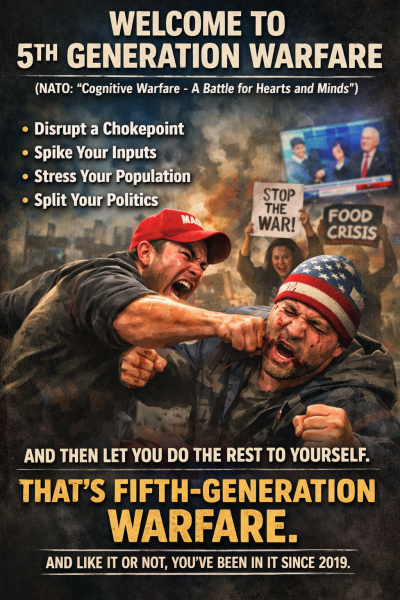
Welcome to the War You Didn’t Notice: Living in Fifth-Generation Conflict Since 2019

There was no declaration. No troop movement you could point to on a map. No shock-and-awe campaign lighting up the night sky. And yet somewhere around 2019, the world shifted—and it hasn’t felt normal since. That’s because the battlefield changed. We are now living inside what military thinkers call Fifth-generation warfare. And unlike every war that came before it, this one isn’t being fought over land. It’s being fought over you.

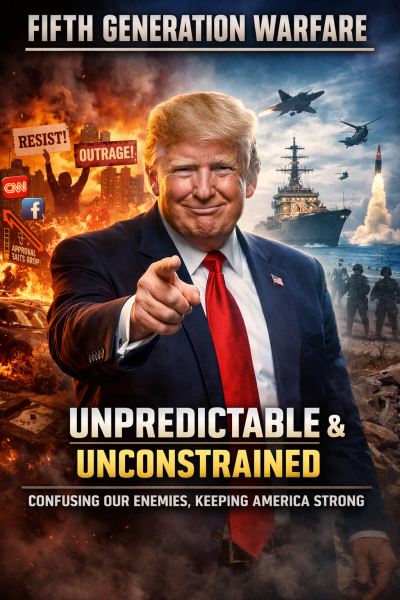
Weaponized Chaos: How Unpredictability Became America’s New Deterrent

We’ve seen this movie before, and the lesson was written in blood during the Vietnam War. The United States didn’t lose because it ran out of bombs, bullets, or body armor. It lost because it ran out of public will. The battlefield shifted from the jungle to the living room, and once the American people stopped believing, the strategy collapsed under its own weight. Since then, every adversary worth their salt—from insurgent groups to near-peer competitors—has studied that vulnerability like it’s the Rosetta Stone of defeating the United States: fracture the narrative, erode domestic support, and time will do the rest.

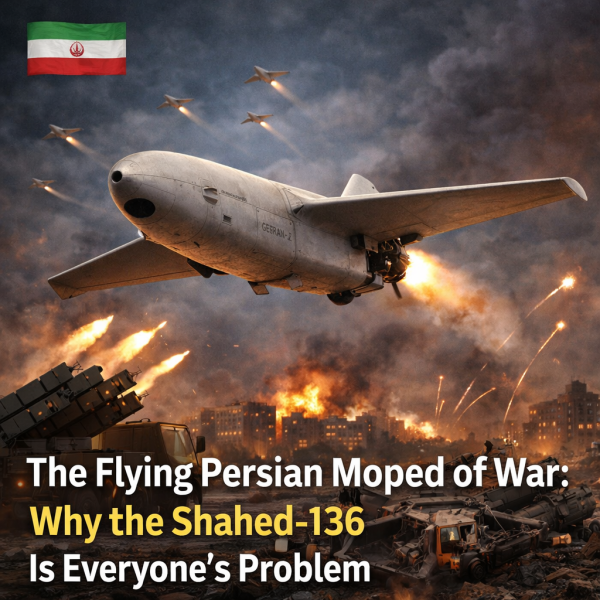
The Flying Persian MoPed of War: Why the Shahed-136 Is Everyone’s Problem

The Shahed-136 is not a masterpiece of engineering. It’s not stealthy, not fast, not elegant, and certainly not impressive in the way a fifth-generation fighter is. It sounds like a weed whacker with anger issues. It flies like a lawn dart with a GPS addiction. And yet—this ugly little flying triangle has exposed a brutal truth about modern warfare: You don’t need to be advanced to be effective. You just need to be cheap, numerous, and good enough.

Clausewitz, Jomini, and DIME-FIL: Why a 200-Year-Old War Theory Still Explains the Iran War

Start with Clausewitz. His most famous line remains the most brutally accurate description of war ever written: war is the continuation of politics by other means. In other words, wars are not random explosions of violence. Nations fight because they want political outcomes—territory, influence, regime survival, deterrence, or control of strategic regions.

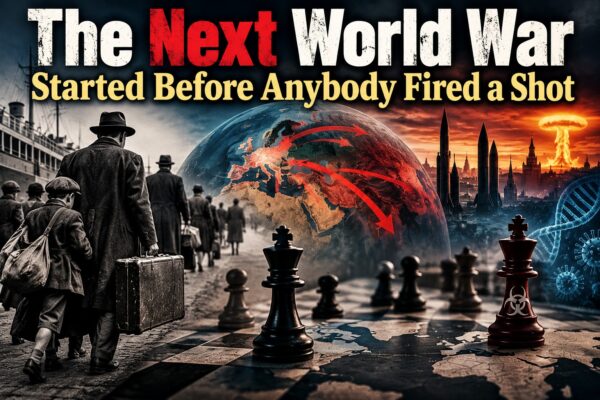
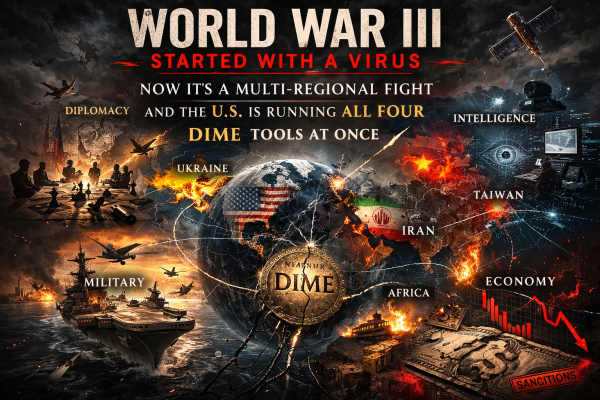
World War III Started With a Virus — Now It’s a Multi-Regional Fight and the U.S. Is Running All Four DIME Tools at Once

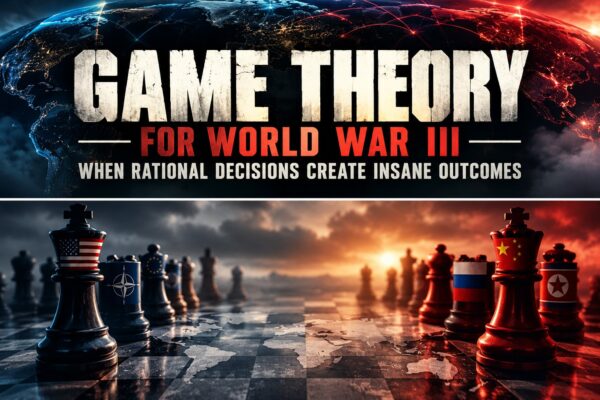
The modern battlefield isn’t just military anymore. It’s what the national security crowd calls DIME — Diplomacy, Intelligence, Military, and Economy — and right now the United States is fighting on all four fronts at the same time, in multiple regions, with fewer resources than it had even ten years ago. That’s not a conspiracy theory. That’s just what happens when a superpower tries to hold together a global order that is starting to come apart.

Since 1942, the United States Has Been Going to War Illegally — and Everyone Pretends That’s Fine

Enter the War Powers Resolution — Congress’s attempt to look relevant after Vietnam without actually reclaiming its authority. The War Powers Resolution is often defended as a guardrail. In reality, it’s a constitutional fig leaf stapled to a surrender note.

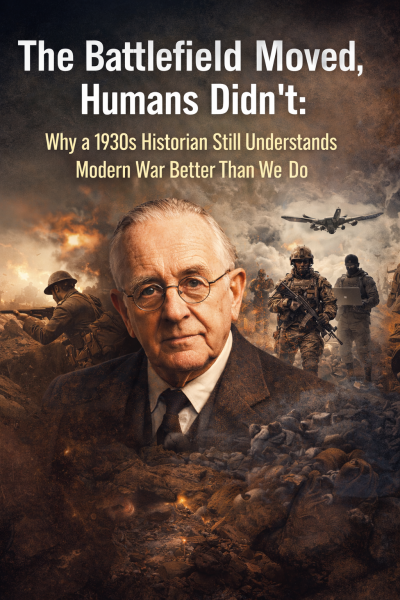
The Battlefield Moved, Humans Didn’t: Why a 1930s Historian Still Understands Modern War Better Than We Do

Nearly a hundred years ago, Sir Herbert Butterfield sat down and committed the unforgivable sin of telling historians, strategists, and polite academics something they still hate hearing today: war is not a clean system. It is not a spreadsheet problem. It is not solved by better charts, prettier maps, or a PowerPoint deck with the right color palette. War—every war—boils down to frightened human beings trying to reconcile self-preservation, honor, faith, and meaning while other frightened human beings try to kill them.

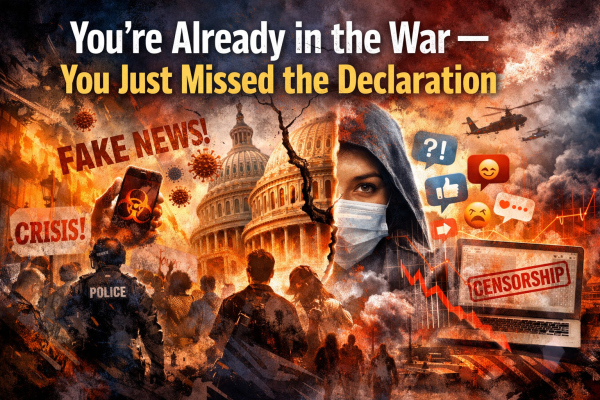
You’re Already in the War — You Just Missed the Declaration

The wars of the future—and increasingly, the wars of the present—will not announce themselves with bombs and bullets. They will arrive as confusion, contradiction, outrage, and exhaustion. You won’t know when they start. You won’t know who started them. You won’t even agree with your neighbors on whether they’re happening at all.

Welcome to Fifth-Generation Politics: When Revolutions Don’t Need Guns

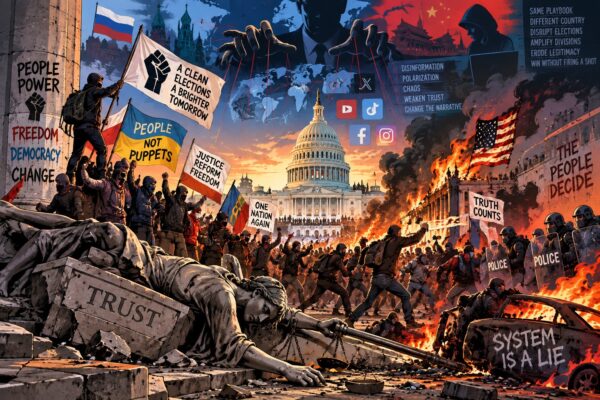
A color revolution isn’t primarily about violence. Violence is sloppy. It scares donors and ruins the optics. The real weapon is narrative. The objective is to convince enough people that the existing authority has morally expired. Once that belief spreads, the government doesn’t collapse from force — it collapses from ridicule and doubt.

NATO Was Yesterday: The New Fight Starts in the Western Hemisphere

The National Security Strategy tells you what’s coming, what matters, and—most importantly—what’s about to get funded. Not because the NSS is magical. Because in Washington, priorities aren’t real until money gets thrown at them like confetti at a parade.

Department of War: The1947 Worst Rebrand in U.S. History (From Hero to Zero)

“Defense” sounds noble. It sounds like you’re protecting your kids. It sounds like you’re holding the line. It sounds like Mom, apple pie, and a golden retriever that would never bite anybody unless it absolutely had to.