What’s Going On With The Seemingly Sudden Emergence of Scary Data Centers That Threaten To Run Your County Water Supply Dry, Overwhelm Your Power Banks And Drive Your Utilities Through The Roof? Part 2

These two big government muscle movements encompassing the neutering or watering down of citizen’s rights reflected in the PATRIOT Act combined with the influx of DERF–color less money—represented too much of a lessening of the best practice government oversight functions which we are still paying for today in terms of the expansive growth of government post 9-11. Which continued relatively unabated until DOGE sliced some 250K or so government positions.

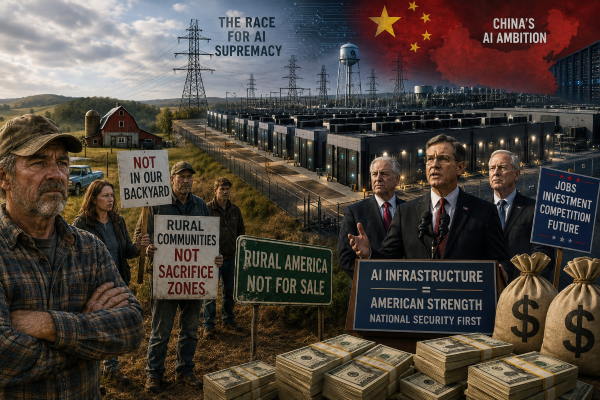
The AI Civil War Nobody Saw Coming

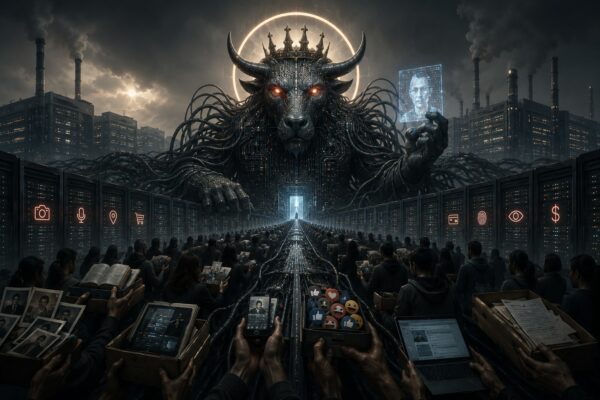
America’s next great divide may not be red versus blue. It may be the people who benefit from artificial intelligence versus the people forced to host its infrastructure. Across rural America, communities are being asked to accept massive data centers, increased power demands, and growing water consumption in the name of national security and the AI race with China. Meanwhile, the economic benefits often flow elsewhere. As politicians, tech companies, and investors promise prosperity and strategic advantage, local residents are left asking a simple question: who gets the rewards, and who carries the burden? The emerging battle over data centers is about far more than technology—it’s about trust, fairness, and whether rural America is a partner in the future or merely the place where the future gets built.

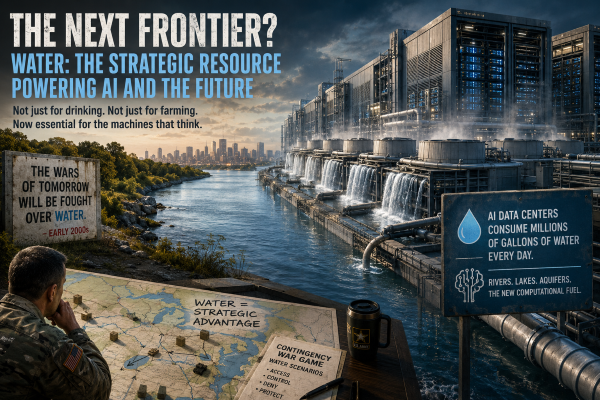
Water Wars Were Supposed to Be Here by Now. AI May Have Other Plans.

Twenty years ago, military planners and policy experts warned that the wars of the future would be fought over water. The wars never came—at least not in the way we expected. Today, however, a new competitor is entering the fight for one of humanity’s most precious resources: artificial intelligence. As massive data centers consume vast amounts of power and cooling water, rivers, lakes, and aquifers are becoming strategic assets once again. The future battle for water may not involve tanks and soldiers, but corporations, regulators, and communities struggling to determine who gets access to the fuel that powers the digital age. Perhaps the water warriors of the early 2000s weren’t wrong. They were simply ahead of their time.

The Potomac and the “Weightless” Cloud

The Potomac River’s designation as America’s most endangered river isn’t really a story about one river. It’s a warning about an entire civilization rushing headlong into a technological revolution without fully understanding the consequences. More than 300 data centers already operate within the Potomac watershed, with hundreds more proposed to support the explosive growth of artificial intelligence and cloud computing. The same digital infrastructure powering our modern lives is quietly consuming vast amounts of electricity and billions of gallons of water. The cloud was never weightless. It was always connected to power plants, cooling towers, transmission lines, and rivers. The question isn’t whether technology will continue advancing. The question is whether we’ll recognize the second and third-order consequences before they become tomorrow’s crisis.

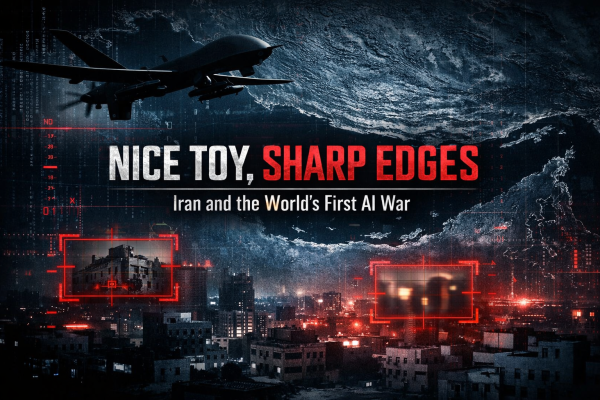
Nice Toy, Sharp Edges: Iran and the World’s First AI War

We’ve got a new toy. It’s sleek, fast, doesn’t get tired, doesn’t argue, and it can chew through more data in a minute than a staff section could in a week. We bolted it onto the most capable military on earth and told it to help us find targets. Then we dropped it into a live fight in one of the most complex battlespaces on the planet and acted surprised when the results were… mixed. Welcome to the world’s first real AI war.

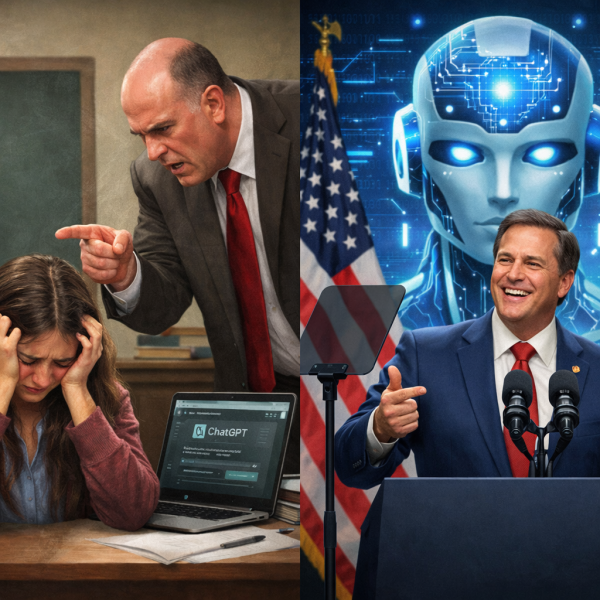
AI for Me, Not for Thee: When Students Get Punished for What Leaders Get Paid to Do

A couple years ago, when ChatGPT first exploded onto the scene, I was teaching at a Christian school. My philosophy with technology has always been simple: learn it before you fear it. Every major technological shift in history has followed the same pattern—first confusion, then panic, then acceptance once people realize it’s not going away. So I did what teachers are supposed to do. I explained the technology to my students.

Atlas Rebooted: When the Department of War Decides Your Company Belongs to the State

In Atlas Shrugged, the government doesn’t seize Rearden Metal with bayonets. It does something far more modern. It surrounds it with emergency language, regulatory edicts, patriotic necessity, and administrative suffocation until saying “no” becomes illegal in everything but name. The state never shouts, “We are stealing this.” It simply declares the product too important to be privately controlled.

The Clipboard Strikes Back: Why Washington Wants You to Confess Your AI

Over the past two years, federal agencies have quietly moved from curiosity about artificial intelligence to formal requirements to identify, inventory, and govern its use. If an AI system influences decisions, analysis, or operations—especially if that system is commercial, third-party, or not owned by the government—someone is now expected to document it. Contractors are learning this lesson the fastest. If AI touches a deliverable, an auditor somewhere wants to know about it.

Satire-When Humans Tried to Outsmart God: A Tale of Arrogance and AI

When Humans Tried to Outsmart God: A Tale of Arrogance and AI; Scientist’s Project ‘Lucifer’ Reveals Ambitious Attempt to One-Up the Divine Ah, dear readers, prepare yourselves for a tale of unparalleled audacity and a grand display of human brilliance—or so they thought. In a dark corner of the scientific community, a sinister scientist by …

Read more