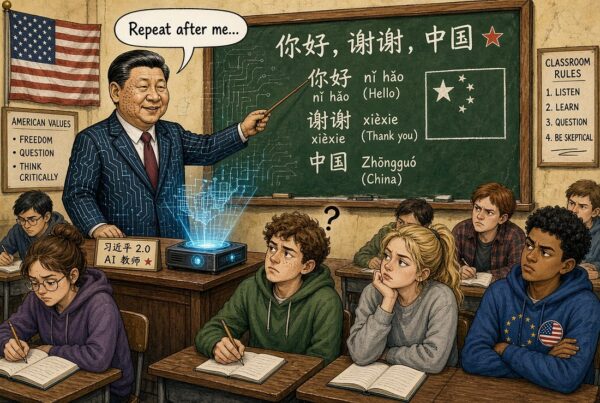
Why Does the CCP (China) Believe Americans Can Be Easily Deceived?

“Americans have three fatal weaknesses: 1. Greed (especially among Wall Street and American corporations); 2. Naïvety; 3. Ego (especially among politicians). As long as we grasp these three weaknesses, America will turn into a kite in our hands.”

How the CCP Perceives Americans

The Western Hemisphere

Trump’s next Moves to reassert Western Hemisphere Primacy[1]. When President Donald Trump convened selected hemispheric partners at Doral, Florida on March 7 for the Shield of the Americas security cooperation conference, the stated purpose was to solidify a regional alliance against illegal narcotics. But the subtext was clear: to limit Chinese engagement and reduce Chinese influence in the Western Hemisphere. The world has changed dramatically, and we have witnessed the transition of world regions and countries. President Trump and the United States are responsible for the majority of these shifts. Globalism and Globalists have taken a back seat to these initiatives. Just look at the changes in the Western Hemisphere from the Arctic to the Antarctic. The changes in Europe and the Middle East are mindboggling. The strike on Iran has now changed the Middle East forever and into a future of hope for peace and prosperity.

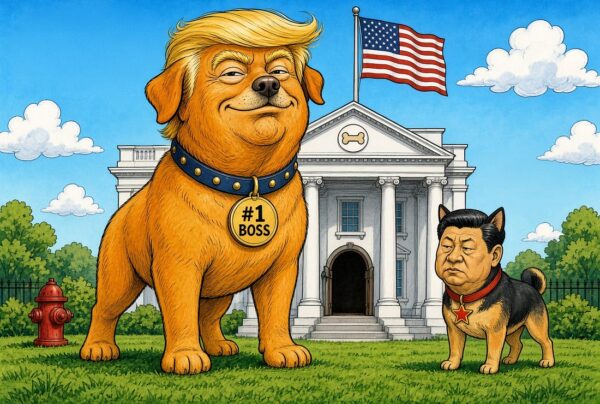
Red China bows Trump has Chairman Xi over the barrel. Oil barrel, that is

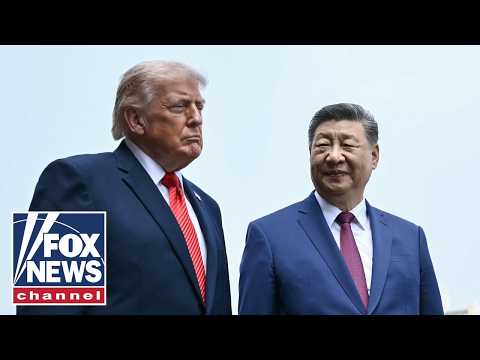
Wednesday morning began with the capitulation of Chairman Xi.

Trump announced on Truth Social, “China is very happy that I am permanently opening the Strait of Hormuz. I am doing it for them, also—and the World. This situation will never happen again. They have agreed not to send weapons to Iran.

History of China and the People’s Democratic Dictatorship: Mao Zedong’s Era, Part 2

Mao Zedong’s leadership from 1949 until his death in 1976 reshaped China’s political, social, and economic landscape in profound ways. Central to Mao’s vision was the concept of the People’s Democratic Dictatorship, a term he used to describe a communist political system based on Marxist-Leninist principles adapted to Chinese conditions. Mao believed that a dictatorship of the proletariat, led by the Communist Party, was necessary to combat capitalist forces, achieve social equality, and transition to socialism.

From Shield to Sword: Japan Quietly Loads the Tomahawk

There was a time—not long ago—when the Japan Maritime Self-Defense Force operated like a disciplined sentry: alert, capable, and formidable, but fundamentally reactive. Their destroyers were built to defend sea lanes, hunt submarines, and intercept incoming threats, not to reach deep into an adversary’s homeland. That posture wasn’t an accident. It was the product of history, law, and a deliberate national choice to remain a shield in a dangerous neighborhood. But shields, as it turns out, are only comforting until someone realizes they don’t have to stand in front of them.

China: The New World Order They Intend—And the Life You’d Live Inside It

Under a Chinese-led global order, you wouldn’t necessarily feel “ruled” by China in a direct sense. You would feel aligned to it. Your country’s economy would be plugged into Chinese supply chains. Your infrastructure might be financed, built, or maintained through Chinese-linked systems. Your technology stack—networks, platforms, standards—would quietly converge with theirs because it’s cheaper, faster, and already widely adopted.

Hormuz: The Reality TV War and China’s Unfortunate Front-Row Seat

Modern war has acquired an odd new feature. It now comes with graphics, dramatic music, and a nightly highlight reel. Precision bombs streak across the screen. Drones glide in cinematic slow motion. Social media fills with grainy infrared footage of things exploding in the desert while commentators nod gravely and say phrases like “escalation dynamics” and “rules-based order.”