Do Your Rights Come from God?

There are no “God Given Rights” explicitly laid out in the Bible. The concept of a human rights began in 1215 under the Magna Carta. Rights come from the Government, but God issues principals and values. Not rights. Rights: Rights are inherent to individuals by virtue of their humanity. They are typically regarded as fundamental, …

Read more

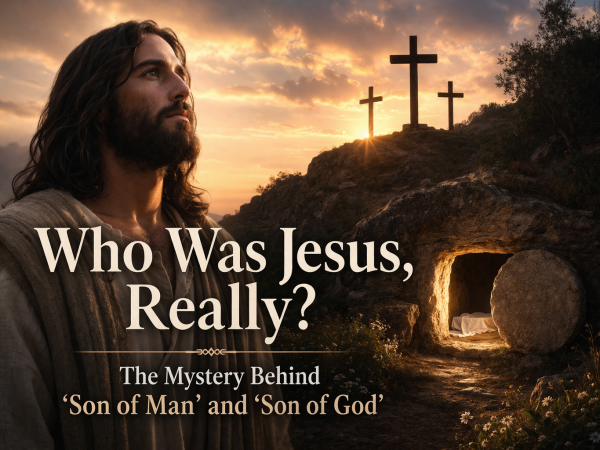
Who Was Jesus, Really? The Mystery Behind ‘Son of Man’ and ‘Son of God

Who was Jesus? It is a question that has echoed across centuries, whispered in quiet prayer, debated in universities, and argued in the streets. For Christians, the answer is not a simple label but a profound tension held together in Scripture: Jesus is both the Son of Man and the Son of God. And the confusion surrounding these titles is not accidental—it is the result of trying to compress a divine mystery into human categories.

Stones, Spectacle, and Shortcuts: The Wilderness Temptation and the Blueprint We Pretend Not to See

The temptation of Jesus Christ in the wilderness is one of those passages Christians nod at politely and then immediately ignore when Monday morning rolls around. Forty days of fasting, a barren desert, and Satan offering three proposals that look suspiciously like modern self-help advice. If you think it’s a children’s Sunday school story about resisting candy, you’ve missed the plot. It’s a masterclass in how power, identity, and survival actually work in the real world.

You Never Heard This Story in Sunday School

One of the quiet tragedies of church history is not that Christians rejected the Bible, but that—at a critical moment—they reinterpreted it to survive cultural pressure. Instead of allowing Scripture to challenge the assumptions of the age, parts of the Church chose to soften the Bible’s worldview so it would sound reasonable to the world it was trying to convert. Over time, that accommodation didn’t just adjust emphasis; it changed how entire passages were understood.

250 Years of Free Speech in America: Endowed, Not Granted

For most of human history, speech was a permission, not a right. Kings, emperors, churches, and councils decided what could be said, written, or taught—and dissent was treated as disorder. The idea that ordinary people could openly criticize power was not just discouraged; it was dangerous.

Thank God for Jesus

Our country — and the world — has become something I never thought I’d live to see. I suppose every generation experiences some of that as they reminisce about the “good old days.” And in retrospect those “good old days” were not as good as we probably remember them