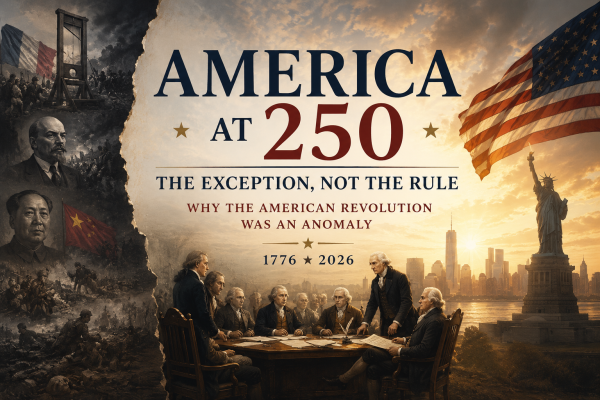
The Exception, Not the Rule: Why the American Revolution Was an Anomaly

Most revolutions begin with promises of freedom and end with new forms of power. The French Revolution produced the Terror and Napoleon. The Russian Revolution produced Lenin and Stalin. The Chinese Revolution produced Mao and mass famine. History’s pattern is clear: tearing down institutions is far easier than building stable replacements. The American Revolution was different. The Founders inherited functioning local governments, a tradition of self-rule, and a deep understanding of human nature. Rather than trusting power, they divided it. Rather than creating permanent revolution, they created a constitutional republic capable of reform without collapse. As America approaches its 250th birthday, the greatest lesson of 1776 may not be that revolution is glorious, but that the true miracle was what came after—the creation of a nation where change could occur without needing another revolution.

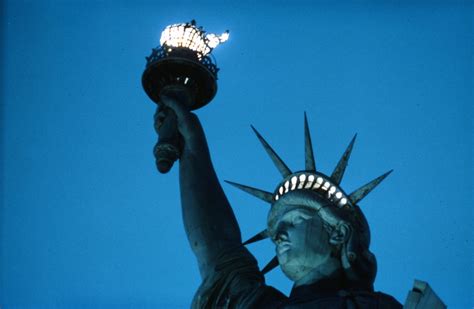
America’s Birthday Leading Us Out of the Darkness Into the Light!

Out of the darkness and into the light is a metaphorical phrase that means moving from despair, sadness, or negativity to a state of happiness, peace and positivity. It often describes a personal journey of overcoming challenges and finding renewal.

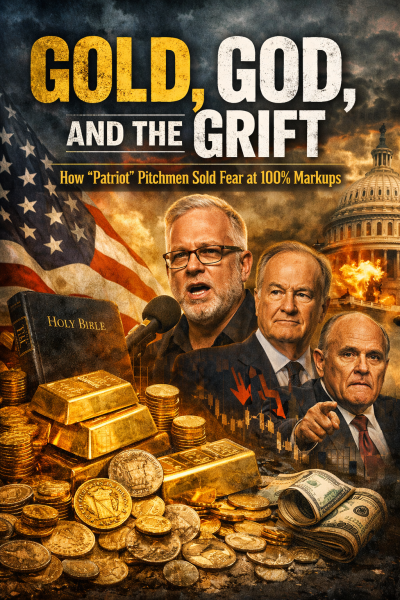
Gold, God, and the Grift: How “Patriot” Pitchmen Sold Fear and Made Millions

There’s a hard truth nobody likes to say out loud: this didn’t just happen because of a few shady coin dealers—it happened because trusted voices carried the water. When names like Glenn Beck, Bill O’Reilly, and Rudy Giuliani lent their platforms—directly or indirectly—to gold pitches, it wasn’t background noise. It was a credibility transfer. And when shows hosted by Laura Ingraham, Mark Levin, and Mike Huckabee ran those same ads day after day, it didn’t just sell metal—it sold trust. That trust had value, and someone cashed it.

George Washington – Legislator

The great George Washington was born in Westmoreland County, Virginia on February 22, 1732, and served about seventeen years as a delegate in the Virginia colony’s House of Burgesses. He is remembered for many other things as well. The Father of his Country was known as a successful merchant, farmer, and horticulturalist, a prominent frontier …

Read more

The Plain of Weehawken, and the Loss of a Hero

Reflections on the anniversary of America’s most tragic duel… Early in the morning of July 11, 1804, the Vice President and the former Secretary of the Treasury stood on the Plain of Weehawken – a wild land in New Jersey, where the laws were different from civilized New York, across the water – and they …

Read more