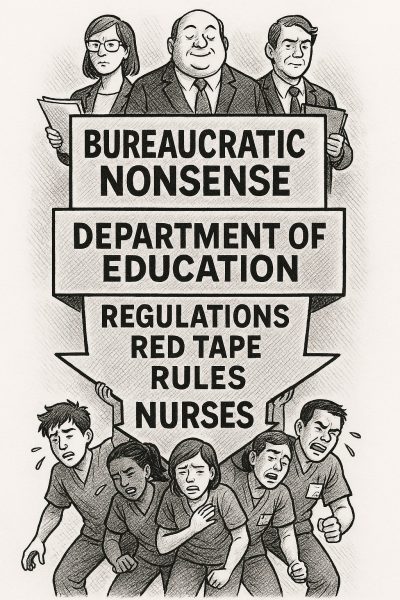
America doesn’t have a nursing problem—we have a bureaucracy problem. Every time Washington claims it’s going to “fix” something, it adds another layer of paperwork, redefinitions, and unelected decision-makers who have never set foot in a hospital at 3 a.m. The latest mess involves student loan limits and degree definitions, where federal agencies are once again tinkering with language instead of reality. And as usual, the people who actually do the work—nurses—are the ones who get squeezed.
This particular nonsense comes from the habit bureaucracies have of governing by spreadsheet and statute instead of common sense. Somewhere inside a federal office, someone decided that decades-old definitions of “professional” and “graduate” degrees should determine who gets access to education financing today. Not doctors. Not hospitals. Not patients. Bureaucrats. The result? Nursing education—already strained by staffing shortages and burnout—gets quietly downgraded because it doesn’t fit neatly into an outdated regulatory box.
This is how modern governance fails: not with dramatic tyranny, but with sterile memos that wreck real lives. Advanced nursing programs cost real money. They produce real clinicians who fill real gaps in care—especially in rural America. But instead of addressing tuition inflation at the source or fixing federal loan programs system-wide, Washington does what it always does: moves the pain downstream and calls it “reform.” Nurses didn’t cause the student debt crisis, yet they’re being asked to pay for it.
And let’s talk about why this hits a nerve. Nurses are not theoretical contributors to healthcare—they are the blood and guts of it. They are the ones who notice when something is wrong before a chart ever reflects it. They are the ones families remember. Anyone married to a nurse knows the toll: missed holidays, exhausted bodies, emotional weight that never quite comes off at the end of a shift. To have faceless regulators casually restrict their education pathways is more than policy failure—it’s disrespect.
What makes this especially infuriating is that the same system happily preserves every advantage for the professions already at the top. Medical education remains fully protected. Institutional prestige remains untouched. But nursing—despite being the largest healthcare workforce in the country—gets treated as an administrative afterthought. That’s not an accident. Bureaucracies always protect the most credentialed, centralized, and politically insulated groups first. Everyone else gets “adjusted.”
The Department of Education deserves criticism here—but it’s a symptom, not the disease. This is what happens when unelected agencies are allowed to define reality through regulation instead of law, accountability, or lived experience. No one voted for this interpretation. No nurse consented to it. No patient benefits from it. Yet it moves forward because that’s how bureaucratic power works: quiet, technical, and devastatingly detached.
If Washington were serious about healthcare, it would stop micromanaging education through archaic definitions and start listening to the people who actually keep hospitals running. Until then, nurses will keep doing what they’ve always done—holding the system together while bureaucrats pull threads from a distance. And Americans should start asking a simple question: how many times do unelected agencies get to “fix” things before we admit they’re the problem?
If you enjoyed this article, then please REPOST or SHARE with others; encourage them to follow AFNN. If you’d like to become a citizen contributor for AFNN, contact us at managingeditor@afnn.us Help keep us ad-free by donating here.
Substack: American Free News Network Substack
Truth Social: @AFNN_USA
Facebook: https://m.facebook.com/afnnusa
Telegram: https://t.me/joinchat/2_-GAzcXmIRjODNh
Twitter: https://twitter.com/AfnnUsa
GETTR: https://gettr.com/user/AFNN_USA
CloutHub: @AFNN_USA