History of China and the People’s Democratic Dictatorship: Mao Zedong’s Era, Part 2

Mao Zedong’s leadership from 1949 until his death in 1976 reshaped China’s political, social, and economic landscape in profound ways. Central to Mao’s vision was the concept of the People’s Democratic Dictatorship, a term he used to describe a communist political system based on Marxist-Leninist principles adapted to Chinese conditions. Mao believed that a dictatorship of the proletariat, led by the Communist Party, was necessary to combat capitalist forces, achieve social equality, and transition to socialism.

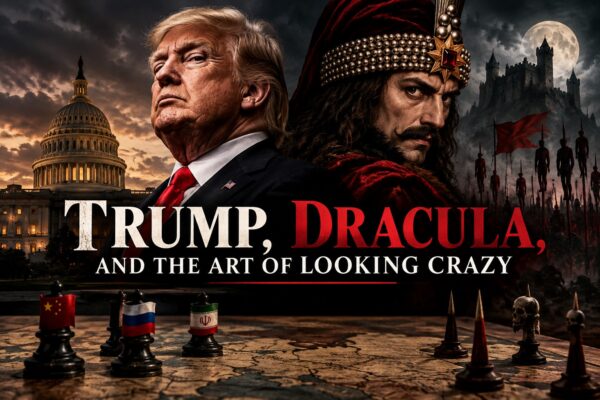
Weaponized Chaos: How Unpredictability Became America’s New Deterrent

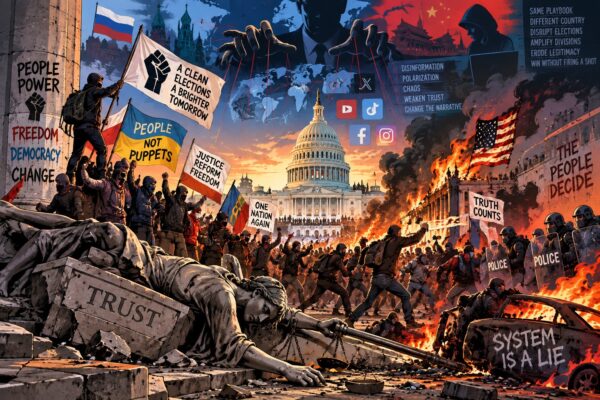
We’ve seen this movie before, and the lesson was written in blood during the Vietnam War. The United States didn’t lose because it ran out of bombs, bullets, or body armor. It lost because it ran out of public will. The battlefield shifted from the jungle to the living room, and once the American people stopped believing, the strategy collapsed under its own weight. Since then, every adversary worth their salt—from insurgent groups to near-peer competitors—has studied that vulnerability like it’s the Rosetta Stone of defeating the United States: fracture the narrative, erode domestic support, and time will do the rest.

History of China and the People’s Democratic Dictatorship: Pre-Mao Era, Part I

China’s history before Mao Zedong’s leadership was characterized by centuries of imperial rule, followed by attempts at modernization and political transformation. The Qing Dynasty, ruling from the mid-17th century until 1912, faced internal rebellions, foreign invasions, and economic challenges that weakened its authority. By the early 20th century, calls for reform and revolution grew louder, culminating in the Xinhai Revolution of 1911 and the overthrow of the Qing Dynasty.

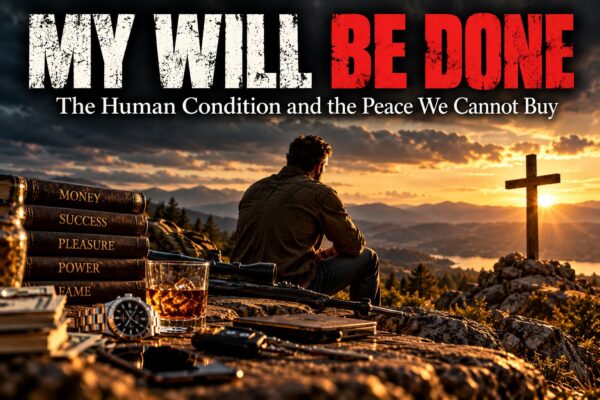
Men Striving for Godliness: Architects of Order or Architects of Chaos?

In the quest to emulate godly attributes, men often find themselves at a crossroads: to transform chaos into order or to unleash chaos upon order. This dichotomy, inspired by the insights of scholar Michael Heiser but infused with my own perspective, delves into the essence of human nature and the paths we choose.

Elite, Exhausted, and Exposed: Inside the Fort Bragg “Cartel”

Seth Harp’s The Fort Bragg Cartel is built around a real, unsettling case that anchors the entire narrative: the December 2020 deaths of two soldiers at Fort Bragg—Master Sgt. William “Billy” Lavigne, a Delta Force operator, and Chief Warrant Officer Timothy Dumas, a logistics (quartermaster) officer tied to Special Forces units. Both were found shot in a remote training area. The pairing alone raises eyebrows inside the military: one man from the most elite operational tier, the other from the supply and accountability side of the house. Those lanes don’t normally intersect socially, much less end together in a homicide scene.

Gold Medal, Mystery Saboteur: The Matthew Emmons Story That Still Doesn’t Add Up

There are Olympic stories about grit, discipline, and the triumph of the human spirit—and then there’s the one about Matthew Emmons, whose rifle got mysteriously vandalized right before the biggest competition of his life. Not misplaced. Not dropped. Not “oops, I leaned it against the rack wrong.” We’re talking deliberate, tool-in-hand, someone-wanted-this-gun-dead sabotage at the U.S. Olympic Training Center in Colorado Springs. In a sport where competitors track wind shifts measured in whispers and bullet holes measured in decimals, somebody decided to go full blunt-force caveman on precision equipment. And just like that, Olympic-level marksmanship briefly turned into a low-budget whodunit.

Night Witches and the Art of Terror: How Improvised Bombers Haunted the Wehrmacht After Dark

In 1941, the Soviet Union was being dismantled at industrial speed. Entire armies vanished. Cities fell. Aircraft factories were evacuated east while German armor drove forward. There was no time for elegance. The Red Army needed pilots, aircraft, and pressure on the enemy—immediately. So they did something profoundly unromantic and brutally practical: they took civilians who could fly and turned them into combat airmen.

The Day the Blue Dot Died

Somewhere far above the planet, an unnamed adversary (or possibly a very angry solar flare with a sense of humor) popped off an EMP that politely but firmly unplugged every satellite we’d been leaning on since the late 20th century. GPS—born in the 1970s as a military system and later handed to civilians like candy—vanished in a blink. Along with it went the internet, streaming music, weather apps, and that calm, robotic voice that had spent decades telling Americans when to turn left.

Nice Toy, Sharp Edges: Iran and the World’s First AI War

We’ve got a new toy. It’s sleek, fast, doesn’t get tired, doesn’t argue, and it can chew through more data in a minute than a staff section could in a week. We bolted it onto the most capable military on earth and told it to help us find targets. Then we dropped it into a live fight in one of the most complex battlespaces on the planet and acted surprised when the results were… mixed. Welcome to the world’s first real AI war.

Trusted There. Restricted Here; Restoring Trust and Rights

If we trust a service member overseas with a loaded rifle, real rules of engagement, and life-and-death decisions in a combat zone, it makes no sense to suddenly treat that same disciplined professional like a liability the moment they step onto a stateside installation; this policy correction acknowledges a simple truth long overdue—responsibility doesn’t evaporate at the gate. The men and women we entrust to defend the nation are trained, vetted, and held to standards far above the civilian baseline, and if we truly believe in that system, then extending reasonable trust for personal defense at home isn’t radical, it’s consistent. And if someone genuinely cannot be trusted with a firearm under controlled conditions on base, then the harder question isn’t about policy—it’s about why they’re in uniform in the first place.

Two Wings, One Bird: How We Traded a Republic for a Revenue Machine

We like to pretend we live in a fierce two-party system. Red vs. blue. Left vs. right. Cable news gladiators screaming like it’s the Super Bowl of righteousness. But step back far enough and the illusion fades. What you actually see is one bird with two wings—and that bird doesn’t care about your values, your vote, or your virtue. It worships one thing: money.

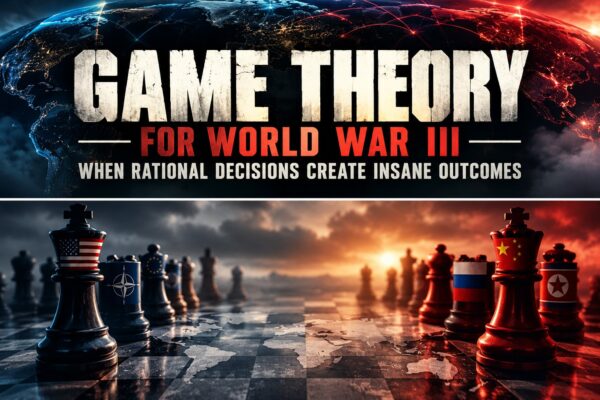
Hormuz Isn’t Guadalcanal: Iran Is Playing Chess While We’re Still Planning Amphibious Landings

Somewhere in the Pentagon filing cabinets sits a 2017 document that reads less like doctrine and more like a warning label we ignored. The Joint Concept for Access and Maneuver in the Global Commons (JAM-GC) laid it out plainly: the United States wins wars because we can show up anywhere on earth, kick in the door, and maneuver freely across air, sea, space, and cyber. That’s our superpower. Not just firepower—access. And the bad guys figured that out.

From Freedom Convoy to Financial Control: The Rise of Instant Compliance

If you want a glimpse of how modern pressure can scale fast, look north to the winter of 2022 and the protests known as the Freedom Convoy. What began as a cross-country movement of truckers opposing cross-border vaccine requirements turned into a broader protest against mandates and restrictions. The response from the Canadian government under Justin Trudeau was decisive: emergency powers were invoked, certain financial accounts connected to the protests were frozen, and law enforcement moved to clear blockades. Supporters called it necessary to restore order; critics saw it as a warning shot—how quickly financial access and mobility can be restricted in a modern, digitally connected system.

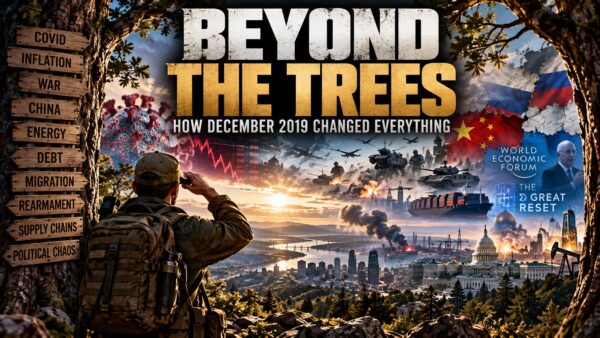
The Fog of Fear – Emergency Powers, Permanent Habits: What We Did in COVID

By late 2020, vaccines arrived under emergency authorization. That should have been the turning point—the moment where risk became individualized again. Instead, the dial kept turning in one direction: more control, more pressure, more compliance. By September 2021, the federal government, under Joe Biden, pushed for sweeping mandates, including a requirement aimed at large employers through OSHA. It was framed as necessity. It was enforced as urgency. And it was received, in many corners, as coercion.

The Real Virus: How Fear, Stress, and Certainty Changed Us

You didn’t need a history degree to recognize what was happening during the pandemic—you just needed to pay attention to how quickly ordinary people changed under pressure. Not all at once, not everywhere, but enough to notice a pattern. Stress, fear, and anxiety didn’t just shape policy; they reshaped behavior. And in many cases, they …

Read more

From Wolf to Weapon System: How Man Engineered the Dog After the Reset

Forget the timeline arguments for a minute. Set aside the academic cage match over dates, carbon curves, and who’s got the better spreadsheet of ancient dust. Start instead with something far more obvious—there was a world before everything went sideways, and there was a world after.

Who Was Jesus, Really? The Mystery Behind ‘Son of Man’ and ‘Son of God

Who was Jesus? It is a question that has echoed across centuries, whispered in quiet prayer, debated in universities, and argued in the streets. For Christians, the answer is not a simple label but a profound tension held together in Scripture: Jesus is both the Son of Man and the Son of God. And the confusion surrounding these titles is not accidental—it is the result of trying to compress a divine mystery into human categories.

Smoke, Steel, and 1,000 Yards: The Great International Rifle Match at Dollymount

The year was 1875, and long before ESPN, endorsement deals, or even organized leagues as we know them, one of the most electric sporting events on earth unfolded on a windswept stretch of Irish coastline at Dollymount, just outside Dublin. This was the Great International Rifle Match—a transatlantic clash that, for a brief window in history, made precision rifle shooting a premier spectator sport.

The War on Man: How Western Civilization Was Taught to Hate Itself, PART II

By the 1980s and 1990s, the ideology had outgrown academia. It entered culture.

This is how psywar works: you don’t argue the premise—you embed it.

Film, television, and literature stopped asking whether humans were the problem and started asking how many humans were too many. Environmental messaging quietly shifted from stewardship to guilt. Children were framed as carbon footprints. Population decline was reframed as progress.