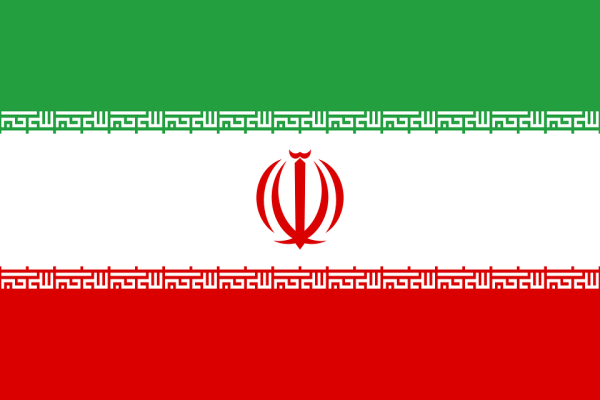
News that the U.S. had assassinated Islamic Revolutionary Guard Corps General Qasem Soleimani as his convoy departed the Baghdad International Airport in the early morning hours of Jan. 3, 2020, left the international community reeling. As Iranian Supreme Leader Ayatollah Ali Khamenei vowed “harsh revenge” for “Soleimani’s martyrdom” and liberal politicians in the U.S. condemned then-President Donald Trump’s “dangerous” decision, the world braced for the regime’s brutal retaliation.
Five days later, Iran launched more than a dozen ballistic missiles at two Iraqi air bases that housed U.S. forces. Due to a warning from Iraqi Prime Minister Adel Abdul Mahdi, precautions were taken and there were no casualties. Iran’s attacks ceased shortly thereafter.
There are two reasons for Iran’s relatively mild response to the killing of Soleimani. First, due to the crippling U.S. sanctions enacted by the Trump administration in 2018 and the low price of oil at the time, Iran’s economy was in the midst of a deep recession. They simply lacked the resources for a powerful response. Second, Trump had responded with force, something the mullahs understand and respect.
But that was then. In their relentless pursuit of a nuclear deal that Iran will never honor, the Biden administration has both coddled and enriched the regime. Their failure to enforce Trump-era sanctions against Iran has added an estimated $60-80 billion from oil sales to their coffers since Biden took office.
One month before Hamas’s barbaric attack on Israel, the Biden administration agreed to release $6 billion in frozen Iranian funds during negotiations for a deal that led to the release of five imprisoned Americans — a concession that has since been put on hold. Team Biden claimed the funds could only be used for humanitarian purposes, but Iranian President Ebrahim Raisi told NBC News that the money would be used “wherever we need it.”
And just two weeks ago, the Associated Press reported that the Biden administration had “extended a sanctions waiver to allow Iran to access upwards of $10 billion in electricity revenue once held in escrow in Iraq.” Nothing says “smart diplomacy” quite like enriching one’s enemy.
It’s true that Biden has strongly condemned Hamas’s brutal massacre and has vowed to stand by Israel. However, conspicuously missing from Biden’s public remarks on the conflict has been any meaningful discussion of Iran’s complicity in the atrocities that occurred on Oct. 7 in Israel or the 73 rocket and drone attacks against American forces in Iraq and Syria since Oct. 17. Through its proxy terrorists groups, Hamas, Hezbollah, and the Houthis in Yemen, Iran has committed acts of war against both Israel and the U.S.
It took the Wall Street Journal one day to determine that Iran had helped plan the deadly Oct. 7 attack. According to their sources, “Officers of Iran’s Islamic Revolutionary Guard Corps had worked with Hamas since August to devise the air, land, and sea incursions.” The report said further that Iranian officials had given “the green light for the assault at a meeting in Beirut” just five days earlier. Still, Biden administration officials refuse to admit the regime’s involvement.
Does the fact that Iran is using proxy groups to carry out their military operations diminish the reality that they are funding and directing terrorism against Israel and the U.S.? Hamas is bankrolled by Iran (and to some extent by Qatar).
Lebanese militant group Hezbollah, bigger and more powerful than Hamas, is totally reliant upon Iran. Hezbollah’s Secretary-General Hassan Nasrallah admitted as much in a 2016 speech. “We are open about the fact that Hezbollah’s budget, its income, its expenses, everything it eats and drinks, its weapons and rockets, come from the Islamic Republic of Iran. … As long as Iran has money, we have money. … Just as we receive the rockets that we use to threaten Israel, we are receiving our money. No law will prevent us from receiving it.”
In a Nov. 3 speech, Nasrallah said, “I am telling you, we have been engaged in this battle since October 8. The Islamic resistance in Lebanon started operation the very next day. What’s taking place on our front is very important and significant… Yet I assure you this will not be the end. This will not be sufficient.”
So, how is Iran escaping responsibility for setting the Middle East on fire again?
Early on, Biden warned “any country, any organization, anyone thinking of taking advantage of this situation,” that he had just “one word” for them: “Don’t. Don’t.” Iran clearly wasn’t deterred by Biden’s words. Nor have they been deterred by Biden’s feeble airstrikes on Iranian-linked targets in Syria.
Sen. Tom Cotton (R-AR) told Fox News on Sunday the situation calls for “massive retaliation” against Iran. First, he said the U.S. should hit “Iranian targets who are operating in Iraq and Syria.”
He continued, “I would also send a clear message to Iran, if these attacks don’t stop immediately, then we will begin to threaten their assets. The way to stop these attacks is not to be fearful and hesitant and cautious in our response, but massive retaliation to make it clear we will not tolerate these attacks.”
Sen. Cotton is right. The mullahs were stunned by Trump’s bold airstrike on Soleimani and it impacted their foreign policy for the remainder of his term. He had shown strength, something they were not accustomed to seeing from the U.S., and it changed everything. If only the U.S. would show the same strength and resolve today.
A previous version of this article appeared in the Washington Examiner.
If you enjoyed this article, then please REPOST or SHARE with others; encourage them to follow AFNN. If you’d like to become a citizen contributor for AFNN, contact us at managingeditor@afnn.us Help keep us ad-free by donating here.
Truth Social: @AFNN_USA
Facebook: https://m.facebook.com/afnnusa
Telegram: https://t.me/joinchat/2_-GAzcXmIRjODNh
Twitter: https://twitter.com/AfnnUsa
GETTR: https://gettr.com/user/AFNN_USA
CloutHub: @AFNN_USA