The Looming NCO Crisis, Part 4: Education
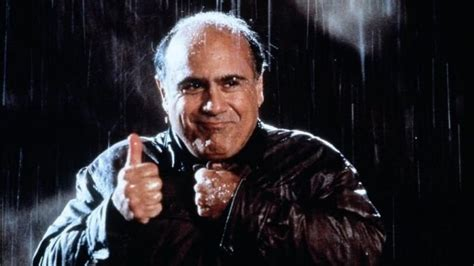
Danny DeVito in The Renaissance Man (source: alchetron)

Education is the middle section of the figure shown in Part 1 of this series. Part 2 reviewed the low recruiting base and Part 3 looked at the impact of military culture. Education bridges the issues in recruiting issues and culture. From an organizational perspective, there are two dimensions to Education:
- External education. For recruiting, this is primarily the public K-12 education system. By most measures, the public education is failing. US education is barely in the top 30 countries in the world is falling. See the series Reconstructing History, especially part 5 and part 3 of the Punctuated Equilibrium series.
- Internal education. This is the military’s extensive professional education system. They include short courses to teach particular skills and techniques and longer courses, such as the War College and Sergeants’ Major Academy for more in-depth learning.
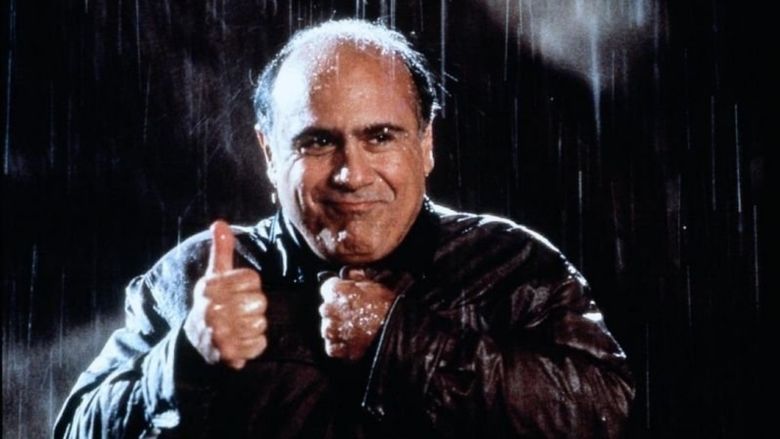
In the short-term, there is little the military can do to shape and influence K-12 education. If the recruit pool has educational issues, the military may need to remedy them after enlistment. It has done that before. The picture above is Danny DeVito in The Renaissance Man. In the movie, the Army hired Devito’s character to run a remedial education program for soldiers that recruited with educational shortfalls. In the scene above, one of his student soldiers in basic training recites the St. Crispin’s Day speech from Shakespeare’s Henry V.
The speech and the scene are important. At the Battle of Agincourt during the 100 Years War, the French outnumbered Henry V’s army. The speech motivates the soldiers and reminds them of why they are fighting. In the scene, during a training exercise in a hard rainstorm, a Drill Sergeant that is skeptical over the education program challenges the soldier to show what he has learned. The soldier recites the St. Crispin’s Day speech flawlessly. For me, it is one of the most powerful scene in cinema.
Whether DeVito’s character consciously melded the warrior ethos and learning is hard to tell. But he did. In the military, learning and skill development are critical. The soldier must apply his or her skills in difficult situations, sometimes at the worse moments in their lives when hell comes to visit them. If the military does not fuse the warrior ethos with the skills, the soldier and the team may not survive the crucible. The soldier must apply technical skills as part of a team and rely on the team.
Take, for example, the medic in the painting First Wave at Omaha: The Ordeal of the Blue and Gray. The medic is totally focused on saving a life while his teammates are all fighting for their lives and to get off the beach. Without this teamwork and warrior ethos, they may never have made it off the beach that day. Without their technical skills, they would have not made it off the beach. The medic relies on his teammates to protect him while he cares for them.
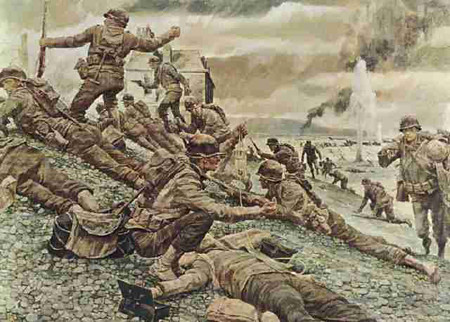
First Wave at Omaha: The Ordeal of the Blue and Gray by Ken Riley
Military education mus fuse the warrior ethos into everything they teach. A sense of excellence and striving for both individual and team excellence is critical to winning our nation’s wars and preserving our way of life in an increasingly complex world.
The Army recognizes the education crisis at least and started The Future Soldier Prep Course. The pilot begins n early August 2022 and is “investment in America’s youth to help them overcome academic and physical fitness barriers to service so they can earn the opportunity to join the Army.”
The question is whether a culture that emphasizes social justice and uses surface level diversity employed by Diversity, Inclusion, and Equity (DIE) initiatives for selection and promotion can sustain a warrior ethos? This question has several effects:
- Does selection and promotion based on DIE dampen or push out excellence?
- Does the social justice reconstruction of American history sap citizens’ will to fight for the country?
- Will soldiers have confidence in and follow leaders that are selected on DIE rather than excellence?
- What will happen to the military’s capability to fight and win wars?
- Will social justice classes:
- Take time away skills training?
- Set up problems between groups?
- Undermine the warrior ethos?
Education reflects and amplifies culture. If the military does not have a culture that supports the warrior ethos and excellence, it will not sustain a vital NCO corps. Education without this ethos might do more damage to the military than no education at all.
The Army needs more days like that stormy day in The Renaissance Man, with the soldier reciting the St. Crispin’s Day speech and helping everyone there to feel connected to their common warrior ethos.
Follow AFNN:
- Facebook: American Free News Network on Facebook
- Telegram: American Free News Network: Join Channel..
- Twitter: @AFNNUSA
- GETTR: @AFNN_USA
Great series.
I think streiff used the Russian military as an object lesson in the value of a professional NCO corps and why the Russian military are not able to perform on a par with the Western nations’ that actually have a professional NCO corps.
On the flip side of the object lessons the Russians are providing on the NCO corps seems, at least to me, to be the development and progression of our military’s after the Vietnam era and how closely correlated that increase in lethality with the increase in the educational attainment of the recruits into both the enlisted and officer ranks.
There’s something about a trained warrior, trained both intellectually and emotionally… and their ability to learn new and complex tasks and operate at a high tempo that the seems like pure conjecture to those that can’t master it. The US, and most of its allies, can do it while the Russians, and its autocratic kin, can’t.
With Multidomain war and increasingly dispersed units based on battlefield lethality, an effective NCO corps is more now than at any other point in our history. If a near-peer adversary wanted to cripple combat effectiveness in a clandestine manner, compromising our education system is a sure way to go about it.
Jeff, I’d be very interested in seeing a broad treatment of lessons learned with respect to the Russian-Ukrainian war… including the NCO corps (Russia or Ukraine vs the US, lack of air superiority or for that matter air superiority, the enhanced ISR space we have with our systems, and how the conditions that this war could be used as proxy conditions for a conflict with near-peer adversary like China.
That said, again… great series.
Tony, I was the EUCOM Deputy J5 when Russia invaded Georgia. Immediately after the crisis ended we formed an Armed Forces Assessment Team (AFAT) and sent it to Georgia to assess their needs and capabilities. I recommend we do something similar for Ukraine as soon as possible. This should look not only at the Ukraine Armed Forces, but also the impact of the NCO corps, the impact of drones, and other issues that came out during the war.