
During the Biden-Harris years, the United States suffered the worst period of inflation since the 1970s.
The Trump-Vance administration took office after four years of this, with both the intention – and the promise – of delivering relief.
It’s always dangerous for a politician to make broad promises because some things are out of that politician’s control. For many policies, a President needs to get the support of Congress; the Judiciary mightn’t allow him to give perfectly legitimate orders to the federal bureaucracy, and independent agencies like the Federal Reserve can also stymie such plans.
When we look at economic issues, there are even more hands on the wheel, hands that can either support or vehemently oppose a President’s agenda, for good or ill. States, counties and cities, and even public school districts, all have a huge impact on the public tax burden. Bad local policy can counter the effects of good federal policy, while even the best local policy is often unable to stop the inevitable consequences of bad federal policy.
In short, promising to solve a big economic problem like rampant inflation is a dangerous promise to make.
And yet, the Trump administration tackled the issue of inflation head-on, and had more success, more quickly, than most of us could fairly have expected.
They brought inflation down almost immediately; it’s been running under 3%, effectively in the low 2s, for most of the past year.
So that aspect of the problem is essentially solved: the rapid increases in consumer prices of the prior four years have stopped.
The administration should get credit for that, but instead, there’s a different – and utterly unfair – expectation that’s much harder to accomplish: people want prices to go back to where they were during the first Trump administration, before the economic calamity of the Biden-Harris years hit us like a wrecking ball.
Getting prices to stop climbing is one thing. Getting prices to drop back to where they were is quite another.
But it is happening, to an extent. The signs are there. I went to Walmart the other day (a better example than a grocery or department store because Walmart operates on low fixed pricing, rather than inflated prices alternating with sales and coupons).
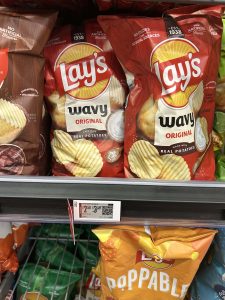
I’ve seen a few of our regular purchases – dry cat food, frozen pizza, generic potato chips and taco chips, and so forth – not just stop going up, but drop significantly, by ten to twenty percent, sometimes even more, over the past couple of months. The “rollback” signs are everywhere.
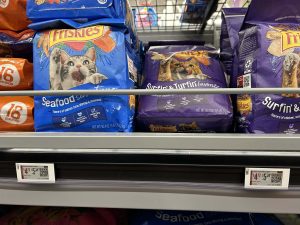
And this rings true across the economy – seemingly constant price increases finally slowed to a stop last year, and many products – not all of course, but many – have begun to drop.
That’s harder, because there are a lot of causes when prices go up, and each of those individual causes has to be addressed.
The three biggest – usually – can be lumped into these three buckets:
- Government overspending. Broad inflation is caused by government monetary policy. Spend too much (no matter whether you borrow it or tax to pay for it or print it out of thin air) and the government causes its currency to be worth a little less every year. Whenever you expand the money supply at a rate greater than the private sector is creating wealth, that’s inflation. You can blame Congress or the Fed or the administration or your Aunt Augusta, but the fact remains that government overspending is the primary cause of broad-based inflation.
- Temporary market conditions. Some specific price increases are caused by momentary issues that may recede later, such as spikes in energy or transportation costs, shortages in some commodities because of a bad crop, etc. Such price increases can be reversed when the underlying cause is reversed. A bad year for oranges drives up the price of orange juice; a good crop the following year drives the price back down again.
- Permanent market conditions. Some price increases are caused by a permanent commitment or a long-term issue. If it’s going to permanently cost more for a seller to obtain a necessary material, you can’t blame him for permanently building that unavoidable increase into his pricing calculation.
That first one is the easiest for government to address, because it’s the one that government caused.
If government devalued the money by spending too much, all it needs to do is stop spending so much, or to spur the economy so that the economy is again creating enough new wealth that the government isn’t horrifically expanding the money supply anymore.
This is a forward-looking issue, however. It can’t do anything retroactively. Government spent a mint – a mint that it didn’t have – during the Biden-Harris years. The federal government doled out money to states and cities and counties and individuals, all at an outrageous pace.
And those trillions of dollars are gone. From airfare to import illegal aliens by the planeload, to “forgivable loans” to green energy companies that were functionally bankrupt or shells to begin with, from medicare fraud to illegal aliens’ hotel bills, from child-free Somali “learing centers” in Minnesota to patient-free home-care services in California. It’s all gone, and it can’t be recovered.
We can stop it going forward, and the economy can gradually recover, but this is permanent damage done to our currency, largely by the Biden-Harris administration and a few specific, very wasteful and corrupt cities and states.
Now, what about the temporary cost increases?
Every distinct price of every item on a store shelf is made up of a ton of different inputs, from salaries to property taxes, from raw materials to the cost of factory equipment, from utilities to packaging.
If transportation costs are high because of fluctuating fuel prices, then when transportation costs come back down, that part of the price will actually drop. Frozen foods are dependent on electricity prices; when electricity comes back down, everything in that freezer case costs a bit less to the seller, in the utility portion of the costing model.
For over two years now, about a third of the world’s trans-oceanic cargo, which used to go through the Suez Canal, has had to go around the continent of Africa because Iran’s Houthi terrorists in Yemen have blocked that shortcut. This costs the world somewhat over a billion dollars per day, inflating prices all over the world, unnecessarily, just because of Iran’s puppets. Once the current war eliminates the threat of the Houthis, the Suez Canal will reopen, and the global economy will be saved that unnecessary billion dollar per day cost, so that share of the globe’s prices will go back down.
And finally, we have the permanent cost increases.
Now, you might assume from the above that nothing’s permanent, that when the driver of a cost goes back down, then the price can reflect that fact.
Not necessarily.
Consider domestic transportation, which fluctuates with such wild cost impacts as truck driver shortages, trucking company bankruptcies, fuel prices, repair parts, insurance rates and state licensing fees.
During the period known as “the supply chain crisis” – that period of high diesel prices, dreadfully slow repair parts availability, volume glut and driver shortages of the post-covid period, roughly 2021-to-2022 – many trucking companies had to find some way to keep their drivers from leaving for a signing bonus somewhere else, while having to pay a fortune to lease additional vehicles because some tractors were broken down for months at a time, as they awaited service parts from China.
Some truckers kept their drivers by keeping their salaries stable but paying one-time windfall bonuses. These truckers saw their costs come back down when the temporary driver shortages ended.
Other truckers kept their drivers by granting them permanent salary increases instead of windfall bonuses. The permanent salary increases were usually not sustainable once the freight glut was over and transportation prices had to come down to stay competitive. As a result, many of these companies have struggled since 2022, having to lay off some or many drivers and other staff, and some have gone out of business entirely.
This problem also applies to other industries. Factories had the same problem; some gave their staffs one-time bonuses and others gave out permanent raises that they grew to regret. Once a cost is made permanent, such as higher salary or a labor contract guaranteeing permanent annual raises at a level above the expected inflation rate (Remember the UPS contract negotiation of 2022? Remember the Yellow Freight negotiation of the same year, and its result?), that part of a product’s price is locked in stone.
We have states where energy costs are higher because state or federal government policy has mandated that the utilities must produce energy with inefficient means instead of efficient means. The more the utilities are forced to depend on solar and wind, and the less they are allowed to depend on coal, nuclear, and natural gas, for example, the higher the energy costs will be in that state.
Is this one a temporary cost increase or a permanent one? Well, that’s harder to say, isn’t it?
Once you’ve bought and destroyed tens of thousands of acres of farmland to fill them with turbines or solar panels, even if you just shut them off and return to rational energy sources, you’re stuck with the long-term cost of both the equipment and the land – which is now so full of concrete, steel and toxic plastic that it can likely never be returned to agricultural use, ever again. Even if you could switch the coal plant back on tomorrow, the wasteful creation of those solar and wind farms will be a long-term cost, increasing the price charged for energy in that state for decades, and therefore continuing to have that upward pressure on the pricing of all goods made or sold in that jurisdiction for years to come.
What we have therefore is a perfect storm of problems during the Biden-Harris years – the many causes of what came to be known as Bidenflation: a mix of direct government policy and indirect government policy, and a mix of thoughtful private sector efforts and well-intended but perhaps ultimately unwise private sector decisions.
But despite this painful mix of issues, we are still seeing prices coming down, not just the general inflation being brought to heel, but also product-specific causes being alleviated, one by one, so that stores can actually reduce real bottom-line prices.
Usually stores can only cut prices by tougher negotiating with vendors or ambitious cost-cutting measures, such as cheapening the products, selling deceptively smaller quantities, cutting staff, and redesigning a distribution network.
But as we have seen in recent months, the reductions in the overhead costs to the business sector – largely the tax and regulatory improvements of last year’s “Big Beautiful Bill” – have made it possible for many businesses to actually reduce their bottom line prices for many products.
It’s not enough, of course. It’s never enough. There is more to accomplish. We still need to rebuild our manufacturing economy, get health insurance costs in line, straighten out our disastrous education and criminal justice systems. We have miles to go before we sleep.
But for just 14 months into this presidency, these improvements in the direction of affordability have been impressive.
If only certain blue cities and blue states would join the effort.
Copyright 2026 John F. Di Leo
John F. Di Leo is a Chicagoland-based international transportation and trade compliance trainer, speaker, and consultant. A President of the Ethnic American Council in the 1980s and Chairman of the Milwaukee County Republican Party in the 1990s, his book on vote fraud (The Tales of Little Pavel), his political satires on the Biden-Harris administration (Evening Soup with Basement Joe, Volumes I, II, and III), and his first nonfiction book, “Current Events and the Issues of Our Age,” are all available in either eBook or paperback, only on Amazon. His trade compliance training practice is available either in person or by webinar.
If you enjoyed this article, then please REPOST or SHARE with others; encourage them to follow AFNN. If you’d like to become a citizen contributor for AFNN, contact us at managingeditor@afnn.us Help keep us ad-free by donating here.
Substack: American Free News Network Substack
Truth Social: @AFNN_USA
Facebook: https://m.facebook.com/afnnusa
Telegram: https://t.me/joinchat/2_-GAzcXmIRjODNh
Twitter: https://twitter.com/AfnnUsa
GETTR: https://gettr.com/user/AFNN_USA
CloutHub: @AFNN_USA