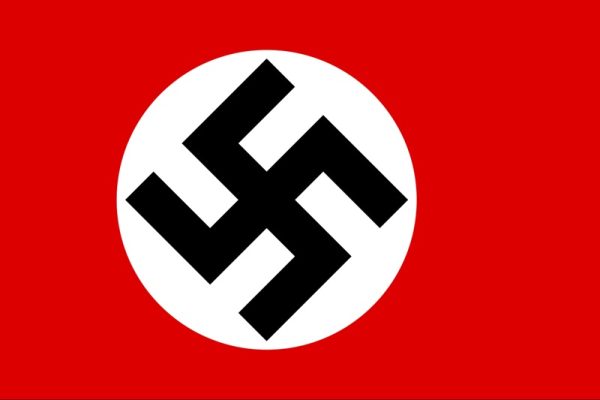
One of the most overused words in American politics today is “fascist.”
The label is thrown around so casually that it has nearly lost all meaning. Many Americans are told daily that Donald Trump is a fascist, that MAGA supporters are fascists, and that anyone who supports conservative policies is somehow a threat to democracy.
But before we condemn millions of our fellow citizens with one of history’s most serious political accusations, perhaps we should take a moment to understand what fascism actually is.
Historian Robert O. Paxton, in his landmark work “The Anatomy of Fascism,” offered one of the most respected scholarly definitions of the term:
“Fascism may be defined as a form of political behavior marked by obsessive preoccupation with community decline, humiliation, or victimhood and by compensatory cults of unity, energy, and purity, in which a mass-based party of committed nationalist militants, working in uneasy but effective collaboration with traditional elites, abandons democratic liberties and pursues with redemptive violence and without ethical or legal restraints goals of internal cleansing and external expansion.”
That definition is far more complex than the simplistic political slogans we hear every day.
Notice what Paxton does not say.
He does not define fascism as patriotism.
He does not define fascism as support for secure borders.
He does not define fascism as nationalism.
He does not define fascism as voting for a Republican candidate.
Most importantly, he does not define fascism as holding opinions with which we disagree.
Instead, Paxton focuses on behavior.
He points to the abandonment of democratic liberties, the suppression of dissent, the pursuit of ideological conformity, and the use of violence as a political tool.
That should cause every American to pause and reflect.
For several years now, Americans have witnessed organized groups physically disrupt speakers, shut down public events, intimidate opponents, vandalize property, and justify political violence in the name of a supposedly higher cause. We have seen increasing demands for censorship, deplatforming, speech restrictions, and punishment for those who hold dissenting views.
One need not agree with every position held by conservatives to recognize that these behaviors are deeply troubling.
Recent events should concern every American regardless of political affiliation.
We have witnessed multiple assassination attempts against President Donald Trump. We have seen armed attacks directed at political figures and institutions. We have watched a culture emerge in certain corners of American politics where the suffering, injury, or even death of political opponents is increasingly treated as acceptable, humorous, or justified.
Americans should be able to agree on at least one principle regardless of party: political violence is unacceptable. Whether the target is Donald Trump, Charlie Kirk, a Democratic officeholder, a Republican candidate, a judge, a journalist, or an activist, violence is an assault not merely on an individual but on the constitutional process itself.
The assassination of Charlie Kirk shocked many Americans not merely because of the loss of a prominent public figure, but because it demonstrated how political violence had moved from heated rhetoric into deadly action. Equally disturbing were the reactions from some ideological extremists who appeared more interested in celebrating the death of a political opponent than condemning the violence itself. A healthy republic cannot survive if citizens begin viewing the assassination of political adversaries as a cause for celebration rather than national mourning.
These are not healthy signs in a constitutional republic.
When political disagreement evolves into hatred, and hatred evolves into violence, a society begins moving away from persuasion and toward coercion. The moment citizens conclude that ballots are less effective than bullets, democracy itself is endangered.
Paxton’s warning about “redemptive violence” is particularly relevant here. Throughout history, extremist movements have justified violence by convincing themselves that their cause is so righteous that normal legal, ethical, and constitutional restraints no longer apply. Once that line is crossed, political opponents cease to be fellow citizens and instead become obstacles to be removed.
That mindset should alarm every American, whether conservative, liberal, independent, or otherwise.
The irony is that some of the loudest voices warning about “fascism” often display behaviors that bear a closer resemblance to Paxton’s warning signs than the people they accuse.
This does not mean that all liberals are fascists. Nor does it mean that conservatives are beyond criticism. No political movement is immune from extremism, and every movement should be willing to examine its own excesses honestly.
However, when organized intimidation, ideological conformity, censorship, deplatforming, and the justification of political violence become increasingly common within any movement, Americans should be willing to acknowledge the danger regardless of which side of the political spectrum is responsible.
History teaches us that political movements frequently accuse opponents of the very offenses they themselves are committing.
Psychologists refer to this as projection.
Political strategists have long understood its value. If a movement can successfully convince the public that its opponents are guilty of authoritarian behavior, attention is diverted from its own actions.
This tactic is not unique to the political left or right. It has appeared throughout history in regimes of every ideology. It is as old as politics itself.
The lesson is simple: accusations should never substitute for evidence.
When Americans stop debating ideas and begin labeling one another as enemies, fascists, traitors, racists, or extremists, meaningful discussion becomes impossible. Once opponents are portrayed as evil rather than mistaken, compromise becomes betrayal and disagreement becomes grounds for exclusion.
That is a dangerous path for any republic.
As Americans, our loyalty should not be to a political party, a politician, or an ideology. Our loyalty should be to the Constitution and the principles of liberty that have sustained this nation for nearly two and a half centuries.
Free speech matters.
Due process matters.
Open debate matters.
The right of our political opponents to speak matters.
The answer to bad ideas has never been censorship. It has always been better ideas.
The answer to political disagreement has never been intimidation. It has always been persuasion.
Perhaps the greatest threat facing America today is not fascism itself, but our growing inability to recognize it accurately because the term has become little more than a political insult.
Words matter.
Definitions matter.
Facts matter.
And if we hope to preserve our constitutional republic, thoughtful discussion must once again triumph over emotional rhetoric.
The next time someone casually labels half the country as fascists, perhaps the proper response is not anger, but a simple question:
“Can you define fascism?”
The answer may reveal far more than the accusation itself.
Faith, Family, Freedom, and Common Sense

Walt Tollefson is a West Point graduate, former Army aviator, airline pilot, author of Project Providence, and Christian commentator shaped by a lifetime of service, close calls, and faith. Now living with primary progressive multiple sclerosis, he writes with hard-earned perspective on faith, family, freedom, civic responsibility, and the moral dangers of hatred, propaganda, and cultural division.
If you enjoyed this article, then please REPOST or SHARE with others; encourage them to follow AFNN. If you’d like to become a citizen contributor for AFNN, contact us at managingeditor@afnn.us Help keep us ad-free by donating here.
Substack: American Free News Network Substack
Truth Social: @AFNN_USA
Facebook: https://m.facebook.com/afnnusa
Telegram: https://t.me/joinchat/2_-GAzcXmIRjODNh
Twitter: https://twitter.com/AfnnUsa
GETTR: https://gettr.com/user/AFNN_USA
CloutHub: @AFNN_USA