
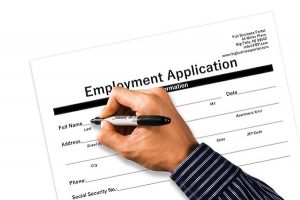
State Rep. Darisha Parker, a Democrat who represents the Philadelphia County district of Pennsylvania, introduced a bill on Tuesday that would seriously restrict an employer’s ability to consider a job applicant’s criminal history in their hiring decisions.
Off-limits to employers under the Fair Criminal Record Screening Act would be questions about an applicant’s juvenile criminal history, summary offenses, “cases that did not result in convictions, and cases that were expunged or pardoned,” according to The Pennsylvania Daily Star.
“All too often otherwise qualified individuals are not considered for jobs because they have a past criminal offense,” Parker said in a news release on her government website.
The state representative pointed to U.S. Department of Justice statistics which show that almost one-third of all Americans have a criminal record.
“Many of these offenses are unrelated to the job in question, are non-violent in nature, or occurred in adolescence,” she explained.
On the other hand, some offenses are relevant to many jobs. A criminal history of repeated thefts comes to mind.
Parker continues: “While both federal and state law offer some protections in this area, it is clear more needs to be done to give these job seekers, as well as those currently employed, a second chance by removing unfair roadblocks to economic stability. Not only is this good for job seekers, it is also good for employers who might overlook otherwise qualified individuals because of a mistake made years ago.”
“This legislation is a win-win for employees and employers alike,” Parker said.
How exactly is this a win for employers? Parker explains it will help those “who might overlook otherwise qualified individuals.”
The Star reports that Pennsylvania has already enacted similar “ban the box” reforms as this type of legislation is called.
The article cites Democratic Governor Tom Wolf’s elimination of “questions about past criminal convictions from most state employment applications” in 2017.
In addition, the city of Philadelphia banned employers from asking about a job applicant’s “past criminal offenses” in 2016. This leniency may help explain their reputation as one of the most corrupt cities in the U.S.
In a 2017 essay about “ban the box” reforms, Heritage Foundation senior legal fellows John Malcolm and John-Michael Seibler wrote that an ex-convicts’ ability to find a meaningful job is perhaps the most critical “factor in reducing recidivism.”
That said, they believe that public ban-the-box policies may actually hurt job prospects for “young, low-skilled, minority male job seekers” more than they help.
Employers, they maintain, prevented from conducting proper background checks, will resort to racial profiling as they seek to protect themselves and their businesses.
“Specifically,” wrote Malcolm and Seibler, “private employers, if prohibited from inquiring into an applicant’s criminal background, may resort instead to assumptions or stereotypes based on observable characteristics such as race or gender in order to infer the likelihood that the applicant has a criminal history, thereby increasing racial or gender disparities beyond what they would have been had the employer been able to do a background check in the first instance.”
Above all, they argue that these initiatives should be voluntary.
“Some jurisdictions have gone so far as to make it a crime for an employer to ask about an individual’s criminal history,” Malcolm and Seibler explain. “Such overcriminalization takes ban the box fervor too far.”
“Further complicating the landscape, the U.S. Equal Employment Opportunity Commission has published Enforcement Guidance on the use of criminal records in employment decisions and has sued private employers, alleging unlawful discrimination for not following its guidance. This is both unsound and possibly unlawful.”
Ban the box laws make it extremely difficult for employers to fill sensitive positions in a secure way.
Imagine that you are the owner of a store which sells high-end, easily concealable items such as jewelry or electronics. You are considering a 20-something applicant and you have no idea he or she has a 50-page long juvenile criminal history which includes theft.
Or you run a nursery school and you’re looking to hire a teacher’s aide. The point is that an employer has a right to know a potential employee’s criminal history.
Criminal justice reform in the U.S. has reached the point of absurdity. Should no one be held accountable for crimes they’ve committed anymore? Soft on crime liberals have taken these reforms so far they are now engendering a spike in crime rates.
A question for the bleeding hearts. At what point are the rights of law-abiding citizens taken into account? Oh … that’s right.
A previous version of this article was published on The Western Journal.
Follow AFNN
Facebook: https://m.facebook.com/afnnusa
Telegram: https://t.me/joinchat/2_-GAz…
Twitter: @AFNNUSA
GETTR: @AFNN_USA
CloutHub: @AFNN_USA
Patriot.Online: @AFNN
To throw this back in that politician’s face, she should enter into the legislature, a bill to allow firearms to be purchased without background checks. I wonder how that would fly, with her, wouldn’t you?
I might even go along with her version of my suggestion as including the words “severely restricting” concerning background checks, also, just to make a point.
Workers should expect that their workplaces are safe. They should be secure in knowing that their employer has done everything possible to ensure they are safe while going about their jobs. This should include coworkers that are not violent or have criminal tendencies. Democrats seem hell bent on protecting and coddling criminals while hurting the rest of us. Other than through fraud, I don’t see any reason why there are Democrats in office.