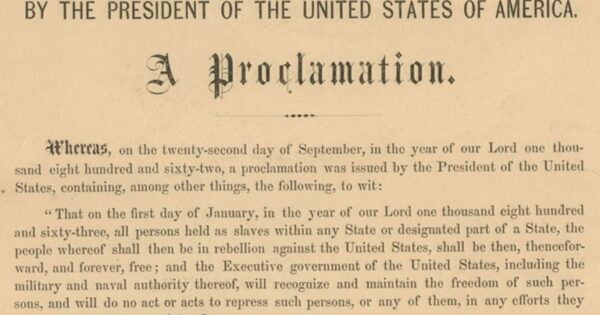
Emancipation Proclamation: When Two Wrongs Make a Right
The Emancipation Proclamation, issued by President Abraham Lincoln on January 1, 1863, was a monumental step toward abolishing slavery in the United States. Initially, the Civil War was primarily a conflict over state versus federal powers, with slavery being a secondary issue. However, in fear of losing, Lincoln strategically shifted the focus to slavery, using it as a moral and political tool to strengthen the Union cause.
This change in focus played the “race card” and redefined the war’s purpose, ultimately leading to significant opposition and delays in the actual emancipation of enslaved people, particularly from Democrats who fought to nullify the proclamation after Lincoln’s assassination. This resistance was most pronounced in Texas, where slavery persisted for an additional two and a half years due to a lack of enforcement and deliberate efforts to maintain the status quo.
Following Lincoln’s assassination, President Andrew Johnson, a Democrat, took office and his administration created significant confusion regarding the enforcement of the Emancipation Proclamation. Johnson’s attempts to nullify Proclamation 95 through legal challenges and political maneuvering stalled the progress of emancipation. His actions, or lack thereof, signaled to slaveholders, especially in remote regions like Texas, that the federal government might not enforce the abolition of slavery rigorously.
The situation in Texas exemplified this delay. Isolated from the main theaters of the Civil War and Union enforcement, Texas slaveholders continued to exploit enslaved people, confident that federal authorities would not intervene. This confidence was bolstered by President Johnson’s ambiguous stance on the issue, leaving the Emancipation Proclamation unenforced in many areas.
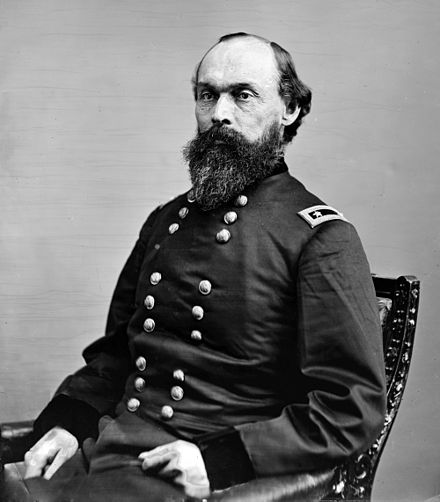
Major General Gordon Granger’s role in this historical context was pivotal. He was a Federal Army Officer, Known for his outspoken criticism of Johnson’s attempts to undermine the Emancipation Proclamation, Granger was labeled insubordinate and sent to Galveston, Texas, ostensibly to deal with Mexican and Indian bandits. This assignment was intended as a punishment, effectively a death sentence, by isolating him with minimal support in a volatile region. However, Granger seized the opportunity to uphold the principles of emancipation instead.
On June 19, 1865, in an act of defiance and commitment to justice, and to “stick it” to his boss, Major General Granger announced the enforcement of the Emancipation Proclamation in Galveston. He would use the Federal Army as law enforcement (violating the constitution). This declaration, now celebrated as Juneteenth, marked the beginning of the end of slavery in Texas. Granger’s rebellion against the attempts to continue slavery highlighted his dedication to the cause, despite the considerable risks and opposition from the highest levels of government.
In conclusion, the journey from the Emancipation Proclamation to the actual freedom of enslaved people was protracted and contested, and full of human stupidity. The opposition from Democrats, particularly under President Andrew Johnson, significantly delayed emancipation. Major General Granger’s courageous actions in Texas ultimately enforced the proclamation, symbolizing a critical victory for justice and the abolitionist cause amidst a backdrop of political resistance and delay.
If you enjoyed this article, then please REPOST or SHARE with others; encourage them to follow AFNN. If you’d like to become a citizen contributor for AFNN, contact us at managingeditor@afnn.us Help keep us ad-free by donating here.
Substack: American Free News Network Substack
Truth Social: @AFNN_USA
Facebook: https://m.facebook.com/afnnusa
Telegram: https://t.me/joinchat/2_-GAzcXmIRjODNh
Twitter: https://twitter.com/AfnnUsa
GETTR: https://gettr.com/user/AFNN_USA
CloutHub: @AFNN_USA