Federalist 75: On the Power to Make Treaties
Federalist 75 deals with the President and his power to make treaties with other nations, subject to approval of two thirds of the Senate.
Citizen Writers Fighting Censorship by Helping Americans Understand Issues Affecting the Republic.
Federalist 75 deals with the President and his power to make treaties with other nations, subject to approval of two thirds of the Senate.
With the exception of impeachment, the Power to Pardon is absolute. Nixon’s resignation is what enabled Ford to pardon him.
Hamilton continues his series on the nature of the Presidency by discussing both the Presidential salary and the veto power assigned to that office.
Presidential Term Limits are a two-sided issue balancing necessary powers of the presidency, with checks and balances that prevent a return to monarchy.
A new Department of Labor report on men found that the American labor force is missing about 7 million men who would otherwise be working. This means close to one-third of all men of working age are not included in the labor force.
Hamilton: “Energy in the Executive is a leading character in the definition of good government.” However, there is a downside to an energetic presidency.
Hamilton as Publius, discusses the differences between the nature of our President, European Kings, and even the Governor of New York.
Federalist 68 describes the Founders’ concerns over choosing our Presidents and the dangers of doing so by “popular vote.”
Hamilton turns here, and for the next eleven Federalist Papers, to the subject of the Presidency, an important topic, today more than ever.
The enlightenment as a philosophical movement is sometimes difficult to understand in that many of the arguments seem to be contrived in the style of the Sophists that so angered Plato.
John Parillo, Federalist 65 and the Public’s Trust and Senate’s Power to Impeach
NATO was created to keep Europe from destroying itself again. Instead, decades after the Cold War ended, the alliance kept marching east while pretending Russia would simply accept endless expansion with polite concern and a diplomatic smile. From the Balkans to Ukraine, the promises of “not one inch further” slowly became a geopolitical punchline written in bureaucratic doublespeak and missile deployments. Meanwhile, Europe outsourced its defense, America paid the bill, and the alliance drifted from deterrence into an ideological security machine increasingly disconnected from reality. The question now is no longer whether NATO once served a purpose. The question is whether it still protects peace — or whether it has become a Cold War institution sleepwalking the West toward a conflict nobody truly wants to fight.
John Parillo expounds on Federalist 64 and the Power to Entangle the United States in the Affairs of Others
Federalist 84 is an interesting read because it includes Hamilton defending the fact that there is no Bill of Rights in the draft constitution.
It will be of little avail to the people, that the laws are made by men of their own choice, if the laws be so voluminous that they cannot be read, or so incoherent that they cannot be understood;
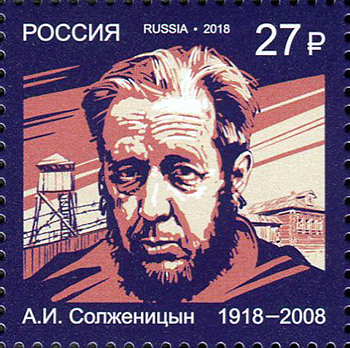
“Socialism does not collapse because it runs out of money. It collapses because it runs out of truth. Aleksandr Solzhenitsyn understood this better than almost anyone alive. The Soviet Union was not held together by productivity, innovation, or freedom. It was held together by fear and a mountain of compulsory lies. Citizens learned to repeat obvious nonsense simply to survive. Newspapers reported record harvests while shelves sat empty. The state called itself a workers’ paradise while millions disappeared into camps. As the Bible warns in The Bible, Satan is ‘the father of lies,’ and every authoritarian system follows the same blueprint: suppress truth, punish dissent, and force the population to publicly kneel before fiction. The gulag was not the beginning of the process. It was the final invoice.”
Parillo explores elections and why only one Senator can stop legislation
In this chapter, Hamilton (and Parillo) address the opposite question, why should the new federal government not regulate all elections?
After his last bombing raid over Germany, my father-in-law wrote in his journal: “I can’t explain the way I feel – a tremendous relief; the knowledge that I will see my wife and family again is like having your life handed to you – like a reprieve from a death sentence.”