South Dakota is a Republican-dominated state. All statewide elected officials are Republicans. So, too, are its two US senators and the single US representative. And of the 105 members of its state legislature 97 are Republicans.
Thus, the Republican primary for any particular office is where the real political battle is fought. Candidates for statewide office are nominated at party conventions held prior to the general election on 3 November. The Republican convention is scheduled for 27 June while the Democrat convention is scheduled for 6 June.
Let’s examine some questions that should be asked of PUC candidates this year.
THE PUC
The South Dakota PUC is an elected three-member body that regulates investor-owned electric, natural gas, and telephone utilities. It ensures safe, reliable service at just and reasonable rates, while also handling siting permits for energy facilities (wind, solar, transmission lines), certain pipelines (including CO₂ and hydrogen), and related infrastructure. It has more limited oversight of cooperatives, municipal utilities, and telecommunications.
The PUC plays a direct, everyday role in the lives of most South Dakotans because it regulates the essential services that power homes, heat buildings, enable communication, and support businesses. The three elected commissioners make decisions that influence the cost, reliability, and safety of these services for individuals and families across the state.
Thus, it is important that PUC candidates be fully vetted prior to the State Conventions.
KEY QUESTIONS FOR PUC CANDIDATES
Key ongoing issues in South Dakota include electric rate increase requests (e.g., from Black Hills Energy, Otter Tail Power, and Xcel Energy), infrastructure investments, the balance between reliable/affordable power and new energy development, siting of large projects like wind farms or data centers, pipeline proposals, and emerging demands from hyperscale data centers that could strain the grid or raise bills for other customers.
Two important rate cases are pending before the SD PUC.
· The Black Hills Energy Rate Case (Docket EL26-003) was filed on 19 February 2026 (the first general rate review since around 2013–2014). The company is requesting an annual revenue increase of approximately $50.6 million, which the company states would result in about a 25% overall increase in total revenue (or roughly a 39% increase in the portion affecting residential bills in some descriptions). For the average residential customer, this translates to an estimated $25 per month increase on their electric bill.
· The Xcel Energy Rate Case (Docket EL25-024) was filed on 20 June 2025 (by Northern States Power Company, doing business as Xcel Energy). The company requested an annual incremental revenue increase of $43.6 million (about 15%), which would raise the average residential customer’s bill by roughly $21 per month. Xcel serves around 107,000 customers in South Dakota, primarily in the Sioux Falls area. On 11 May, Xcel settled for a $25.6 million increase — a 9.5 percent hike, which is 41 percent less than Xcel’s original request. Officials say the average residential customer will see an increase of around $13.48 per month.
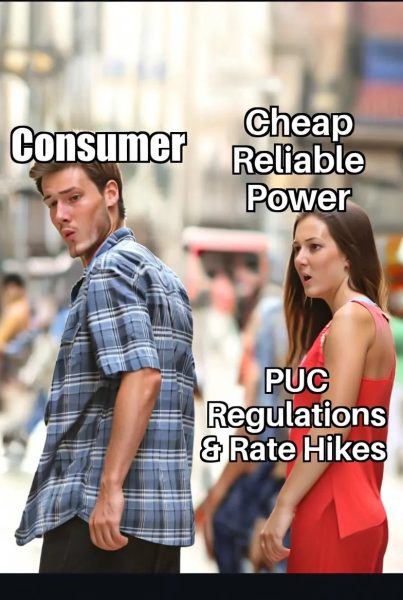
Rate cases like these directly affect affordability for households and businesses, while ensuring utilities can fund reliable service. They often spark public interest because even modest monthly increases add up annually, especially amid inflation or other economic pressures. The PUC’s role is to balance consumer protection with the utilities’ need to maintain and upgrade infrastructure.
With the above rate cases provided as key context, here are important categories of questions that should be asked of PUC candidates, along with sample questions in each area. These help assess their understanding of the role, priorities, approach to regulation, and ability to balance consumer protection with utility viability and infrastructure needs.
Rate Regulation and Affordability
The PUC reviews utility rate cases to determine if proposed increases are justified by costs, while protecting ratepayers from excessive charges. Recent cases have involved requests for monthly bill hikes of $14–$25 for residential customers due to infrastructure, inflation, and other factors.
- How do you evaluate whether a utility’s requested rate increase is “just and reasonable”? What specific factors (e.g., capital investments, operating costs, return on equity) would you scrutinize most closely?
- South Dakota’s residential electricity rates are currently below the national average. What steps would you take to keep rates affordable for families and businesses while allowing utilities to recover legitimate costs and maintain reliable service?
- In recent rate cases (e.g., Black Hills Energy or Xcel), what would you have done differently, if anything, to better protect consumers?
Energy Infrastructure and Siting
The PUC issues permits for wind, solar, transmission, and pipeline projects. South Dakota has significant wind and hydropower resources, with ongoing debates over project approvals, environmental reviews, easements, and balancing local impacts with statewide benefits.
- How should the PUC balance the need for new energy infrastructure (e.g., transmission lines or renewable projects) with concerns from landowners and local communities about land use, visual impacts, or property rights?
- What criteria would you use to approve or deny a large energy facility permit? How important are factors like economic development, grid reliability, environmental considerations, and decommissioning plans?
- Recent discussions have included faster permitting processes and debates over carbon pipelines or data center-related infrastructure. What is your view on streamlining siting reviews while maintaining thorough public input?
Reliability, Grid Modernization, and Emerging Demands
Utilities must provide reliable service amid growing loads from potential data centers, electrification, or industry. The state participates in regional transmission organizations like SPP and MISO.
- What are the biggest threats to electric reliability in South Dakota over the next decade, and how should the PUC address them (e.g., through incentives for grid upgrades or backup generation)?
- Hyperscale data centers have been a topic in the legislature due to potential impacts on rates and infrastructure. How should the PUC handle applications or rate designs involving large new loads to avoid disproportionate cost shifts to residential customers?
- Should the PUC encourage or require utilities to invest in technologies like energy storage, demand response, or efficiency programs? Why or why not?
Role of Renewables, Natural Gas, and Resource Mix
South Dakota generates a large share of its electricity from wind and hydropower, with natural gas and coal also in the mix. There is no mandatory renewable portfolio standard.
- What is the appropriate role for the PUC in guiding South Dakota’s energy resource mix? Should it remain technology-neutral, or actively promote certain sources like wind, solar, nuclear, or gas?
- How would you ensure that the state’s strong wind resources benefit South Dakota ratepayers (e.g., through exports or local development) without compromising reliability or raising costs?
Consumer Protection, Transparency, and Process
The PUC resolves customer disputes, oversees safety programs, and emphasizes public processes in dockets.
- How would you improve transparency and public participation in PUC proceedings, especially for rate cases or siting dockets that can be technically complex?
- What experience or approach would you bring to fairly resolving complaints between customers and utilities (e.g., billing disputes, service quality)?
- The PUC sometimes requires utilities to fund independent reviews of their proposals. Under what circumstances would you support or oppose such measures, and how do you view the balance between regulatory oversight and avoiding unnecessary costs that get passed to ratepayers?
Independence, Conflicts, and Qualifications
State law prohibits commissioners from having financial interests in regulated companies.
- Do you have any financial, employment, or other ties to utilities, energy companies, or related industries that could create a conflict of interest? How would you handle potential appearances of bias?
- What specific qualifications or experiences (e.g., in law, engineering, economics, or public service) make you suited to serve on the PUC?
- How do you view the PUC’s independence from legislative or executive influence while still operating within state law?
Broader Priorities and Vision
- What do you see as the top 2–3 challenges facing the PUC in the next six years, and how would you address them?
- How should the PUC coordinate with federal agencies, regional bodies (like MISO or SPP), or neighboring states on issues like transmission or wholesale markets?
- In your view, what is the core mission of the PUC: primarily protecting consumers, ensuring utility financial health, promoting economic growth, or something else? How do you balance these sometimes competing goals?
CONCLUDING THOUGHTS
These questions probe both policy substance and the candidate’s reasoning process. Follow-up questions based on their answers (e.g., asking for specific examples or data) can reveal depth of knowledge and experience. Reviewing recent PUC dockets on the official website (puc.sd.gov) or past rate cases can provide context for more targeted questions to ask the candidate.
Good candidates should demonstrate impartiality, familiarity with South Dakota’s rural context and energy strengths and weaknesses, a respect for private property rights, and a commitment to evidence-based decisions.
The end.
StuinSD is a reader-supported publication. To receive new posts and support his work, consider becoming a free or paid subscriber.
This article originally appeared in Stu Cvrk’s Substack. Reprinted here with permission
If you enjoyed this article, then please REPOST or SHARE with others; encourage them to follow AFNN. If you’d like to become a citizen contributor for AFNN, contact us at managingeditor@afnn.us Help keep us ad-free by donating here.
Substack: American Free News Network Substack
Truth Social: @AFNN_USA
Facebook: https://m.facebook.com/afnnusa
Telegram: https://t.me/joinchat/2_-GAzcXmIRjODNh
Twitter: https://twitter.com/AfnnUsa
GETTR: https://gettr.com/user/AFNN_USA
CloutHub: @AFNN_USA