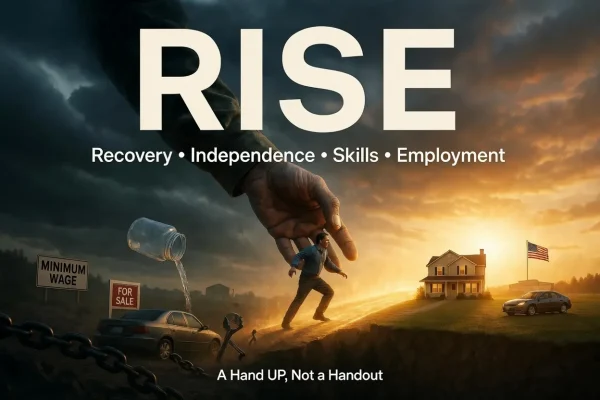
The Hendersons owned their home.
Not a mansion. A three-bedroom in a neighborhood where people wave from porches and kids ride bikes till the streetlights come on. Dave Henderson worked at the same manufacturing plant for eleven years. Sarah worked part-time at a daycare. They had a truck, a sedan, and a mortgage they never missed. Two kids. Dog named Biscuit. Normal American family doing normal American things.
Then Dave got hurt. Back injury. Couldn’t work the line anymore. Sarah’s daycare hours got cut. Medical bills stacked up. Savings evaporated. And suddenly, the family that had done everything RIGHT needed help.
So Dave went to apply for government assistance.
You know what they told him?
“You have too many assets.”
See, Dave and Sarah had committed the cardinal sin of being responsible adults. They owned a home. They had a car that was paid off. They had $3,200 in a savings account — money they’d been scraping together for years to have SOMETHING in case of emergency. And now the emergency was here, and the government said, “Sorry, you’re too rich for help.”
So here’s what happened next, and I need you to sit with this because it’s the most backward thing you’ll read today.
The Hendersons SOLD their paid-off sedan. Leased a cheaper car instead — because a leased car isn’t an “asset.” They burned through their savings so the account would be low enough to qualify. They literally had to make themselves POORER on paper to access a system that was supposed to help poor people.
They gave up the financial stability they’d spent a decade building… to qualify for food stamps.
Let that marinate.
And it gets worse. Because once Dave starts feeling better and wants to pick up a part-time job — nothing fancy, just something at a hardware store or stocking shelves to start building his resume back — he finds out that every dollar he earns gets clawed back from his benefits almost one-for-one. The system PUNISHES him for trying to climb out.
Meanwhile, the state just raised the minimum wage again, so that entry-level stepping stone job? The hardware store cut the position entirely because they can’t afford to pay $15 an hour for someone to learn how a register works. Dave doesn’t need $15 an hour. He needs EXPERIENCE. He needs something on his resume that says “I showed up and worked” so the next employer takes a chance on him. But the minimum wage crowd — the ones who claim to fight for workers — just made sure Dave can’t get his foot in the door at ALL.
So now Dave sits at home. Collecting benefits. Getting broker. Getting more dependent. Getting more hopeless. Every month that passes, his resume gets thinner and his confidence gets smaller.
The government’s solution to Dave Henderson’s problems is the same as giving a dog treats to stop barking. Just keep tossing snacks until he shuts up. Never train the dog. Never address WHY he’s barking. Just keep the treats coming and hope he stays quiet long enough for you to forget he exists.
That’s welfare in America. That is the system $98.4 billion a year buys us. A system that forces families to destroy their own financial stability to qualify for “help,” then punishes them for trying to leave.
Dave Henderson doesn’t need a handout. He needs a hand UP.
And THAT is what I built.
I KNOW THIS WORKS BECAUSE I LIVE IT
I feed my family of six on $520 a month. Fresh chicken every night. Fresh vegetables with every meal. Homemade everything. Debt free except the mortgage. Single teacher salary. And Ohio SNAP gives families my size $1,421 a month — nearly TRIPLE what I spend — to buy Hot Cheetos and Mountain Dew while their kids develop Type 2 diabetes at fifteen.
I’m not mad about it. Okay, I’m a little mad. But mostly I’m tired of watching a system designed to fail pretend it’s compassionate while it destroys the people it claims to help.
So I built something better. It’s called RISE.
THE WELFARE TRAP ISN’T BROKEN — IT’S WORKING AS DESIGNED
$8.2 BILLION per month on SNAP alone nationally. $98.4 billion a year shoveled into a system with a 25% success rate for permanently getting people out of poverty. A 40% return rate. Zero skills development built in.
You know what has a 25% success rate in the military? Nothing. Because we’d scrap it and build something that works.
Quinn’s Law #1: “Liberalism always generates the exact opposite of its stated intent.” SNAP was supposed to SUPPLEMENT nutrition. The word “supplemental” literally means “to add to something existing.” Instead, it REPLACED personal responsibility, created a massive bureaucratic industry whose employees’ JOBS depend on keeping people poor, and generated a permanent underclass of voters who pull the lever for whoever promises to keep the checks coming.
Same playbook, different century. Plantations became projects. Chains became welfare checks. Overseers became social workers. The Democrats didn’t switch parties — they switched methods.
And for anyone tracking the 45 Communist Goals read into the Congressional Record on January 10, 1963 by Congressman Albert Herlong — Goal #32: “Support any socialist movement to give centralized control over any part of the culture.” Creating permanent dependency through government programs that EXCEED what working families provide for themselves isn’t a glitch. It’s the feature.
Goal #40: “Discredit the family.” Black American families had the HIGHEST rates of intact two-parent households in the 1950s — roughly 80-85%. After decades of Democratic welfare programs with marriage penalties BUILT INTO the system? Fewer than 30% of Black children live with both parents today. Out-of-wedlock births went from 21% in 1965 to 77% now.
That wasn’t an accident. That was an engineered catastrophe wearing a compassion costume.
THE RISE PROGRAM: TWO PATHWAYS OUT
RISE stands on a simple principle: if you want Big Brother’s money, Big Brother is going to get into your life and make sure the investment is WORTH IT.
There are two voluntary pathways. Nobody is forced into anything. You want government help? Here’s how it works. You don’t want structure? Fine. Freedom includes the freedom to struggle without a check.
PATHWAY ONE: TAP (Temporary Assistance Program)
Meet Lisa. Thirteen years at the same company. Accounting department. Good at her job. Never missed a deadline. Employee of the quarter twice.
Then the company rolled out an AI system that does in thirty seconds what Lisa used to do in three hours. Her entire department — gone. Not downsized. Not restructured. ELIMINATED. The job Lisa spent thirteen years mastering doesn’t exist anymore. It lives inside a server farm somewhere in Virginia now.
Lisa doesn’t need to learn how to show up on time. She doesn’t need a lecture about work ethic. She doesn’t need a social worker checking in on her feelings. She needs TIME and BREATHING ROOM to pivot to something new. She needs the system to HELP her instead of treating her like she’s either too rich to qualify or too dependent to leave.
TAP is for people like Lisa and Dave. People who hit a rough patch. Job eliminated by AI. Medical emergency. Natural disaster. People who fundamentally KNOW how to be self-sufficient but need short-term support to bridge a difficult period.
Here’s what TAP provides for 12 months (up to 18 in extreme cases, one-time use, EVER):
A monthly stipend equivalent to the VA 50% disability rate — roughly $1,100 per month for an individual, scaling for dependents. That’s not luxury living. That’s breathing room. It covers the basics while you get back on your feet. Tricare medical coverage at reservist rates. And instead of an EBT card to blow at the gas station, you get TAP-SNAP — actual food, not cash.
But here’s the part that would’ve saved Dave Henderson’s family: TAP includes CREDIT PROTECTION MEASURES.
During your TAP participation, existing loan interest rates are CAPPED AT 6%. Federally mandated. Car loans, personal loans, credit cards — all capped. This lets people actually ATTACK their debt instead of treading water while interest compounds and buries them deeper.
No new unsecured credit cards allowed during the program. Secured cards for rebuilding credit? Yes. But we’re not letting people in crisis dig deeper holes while predatory lenders circle like vultures.
Monthly Dave Ramsey financial literacy workshops. Budgeting. Emergency funds. The debt snowball method. Accountability partners. Real financial education that teaches people how money ACTUALLY works instead of how to fill out another benefits application.
TAP creates a protective window. Instead of forcing families to liquidate assets and destroy their own stability just to QUALIFY for help, TAP says: “Keep your house. Keep your car. We’re going to help you stabilize, attack your debt, build skills, and get out. ONCE.”
TAP-SNAP: HOW WE ACTUALLY FEED PEOPLE
Every week, you pick one of three meal plans — Plan A, B, or C — designed by nutritionists. You get a box delivered or pick it up. Inside is EVERY ingredient for that week’s meals, pre-portioned, with printed recipes, step-by-step instructions, photos, cooking times.
“That’s controlling!”
Let me tell you what’s ACTUALLY controlling.
I teach at a high-need, high-risk district. ALL my students get free lunch. I watch kids who’ve never seen a parent cook from scratch. They don’t know what a cutting board is for. Dinner comes in a microwave tray or a drive-thru bag because $1,421 a month in unrestricted SNAP benefits taught their family NOTHING.
THAT is controlling. Keeping three generations dependent on a system that never teaches them to feed themselves isn’t compassion. It’s a leash with a longer chain.
My family’s actual weekly menu (posted here:
):
Monday — Chicken Caesar Salad, garlic bread. $1.65/person. Tuesday — Chicken pasta, homemade sauce, broccoli, cucumber. $1.40/person. Wednesday — Creamy spinach chicken, fresh side salad. $1.50/person. Thursday — Chicken scampi, bowties, steamed broccoli. $1.47/person. Friday — Chicken taco night, fresh vegetables. $1.65/person. Saturday — Chicken hotdish (dinner PLUS two days of lunches). $1.75/person. Sunday — Roasted chicken drumsticks, fresh vegetables. $1.60/person.
Breakfasts: English muffins, eggs, cereal, fresh fruit. Six people. $520-560 a month. HALF of what SNAP provides. Every meal has fresh produce, lean protein, zero processed garbage.
You can’t sell meal boxes for cash. Can’t trade pre-portioned chicken for cigarettes. Can’t convert it to drugs. And every dollar spent on fresh broccoli TODAY is a dollar NOT spent on insulin and dialysis TWENTY YEARS from now.
TAP WORK-STUDY: EARN WHILE YOU LEARN
TAP partners with skilled trades employers in each community. Plumbers, electricians, HVAC techs, mechanics, construction companies. Recipients work 3-4 days at a partner employer, earn 60-70% of journey-level rate, attend classroom instruction 1-2 days for certification prep, and get a GUARANTEED JOB OFFER upon completion.
No relocation. Kids stay in the same school. Income during training. Industry-recognized certifications at the end.
This is what Dave Henderson needed. Not a check that keeps him quiet. A PATHWAY that gets him working.
PATHWAY TWO: CSIP (Comprehensive Skills & Independence Program)
CSIP is for people stuck in generational poverty. People who lack marketable skills, never learned to cook or budget or manage time, because nobody in their family ever knew those things either.
This isn’t judgment. Poverty isn’t just lack of money — it’s lack of skills, structure, and opportunity. CSIP provides all three, modeled directly on the U.S. Army’s Advanced Individual Training system.
“Military structure for CIVILIANS?”
The military takes kids from every background and trains them at 85-90% completion rates. The Army took me — a kid from Northeast Ohio — and turned me into a combat medic who built schools and hospitals in Iraq. Structure isn’t cruelty. For people who’ve never HAD structure, it’s the most supportive thing you can offer.
Participants live on repurposed military installations. The infrastructure already exists — barracks, family housing, dining facilities, medical clinics, training workshops. Single participants get barracks. Families get apartments. Kids attend on-base schools with small class sizes and tutoring. Free daycare for infants through pre-K.
Training covers skilled trades certifications, financial literacy, cooking classes, apartment maintenance, interview skills, resume writing, time management. Even the cable TV runs public service announcements — financial literacy tips, career spotlights, health and wellness messages — just like Armed Forces Network does for military overseas. Participants absorb life skills during leisure time without it feeling like homework. Over 18 months, someone watching 2-3 hours of TV daily sees THOUSANDS of budgeting, career, and motivational messages. That’s hundreds of hours of education delivered naturally.
Drug testing? Random. Health and welfare inspections? Random. First positive drug test: mandatory treatment through ASAP (Alcohol and Substance Abuse Program), not punishment. Second: intensive treatment with monitoring. Third: dismissal, with option to reapply after 12 months of sobriety. Military ASAP programs achieve 65-70% long-term sobriety rates — far exceeding civilian treatment outcomes.
Room inspections TEACH life skills. Many participants never learned basic housekeeping. Landlords WILL inspect apartments. Security deposits REQUIRE maintenance. Better to learn in a supportive environment than get evicted six months after graduation.
THE PAYBACK: GRADUATES WHO BUILD THE NEXT GENERATION
Here’s what separates RISE from every other government program ever proposed: it feeds ITSELF.
CSIP graduates don’t just leave and disappear. Many of them come BACK — as staff, instructors, and mentors. The electrician who graduated last year? She’s now teaching the next class of electricians. The guy who came in unable to boil water and left with a welding certification? He’s an assistant instructor helping the new cohort.
Why? Because nobody understands the fear of walking through those doors better than someone who already did it. Nobody can look a scared single mom in the eye and say “I was sitting exactly where you are fourteen months ago, and now I’m earning $55,000 a year” with the kind of credibility that changes someone’s entire belief about what’s possible.
This creates a SELF-SUSTAINING ECOSYSTEM. Graduates become instructors. Instructors become mentors. Mentors become living proof that the program works. New participants don’t just hear from some bureaucrat with a clipboard who’s never missed a meal in their life — they hear from someone who LIVED the program and came back to pull the next person through.
Every base becomes a community. Alumni networks. Annual gatherings. Peer support systems. People who understood rock bottom helping others climb out of it. It’s the same principle the military has used for centuries — the experienced train the inexperienced, because shared experience creates trust that no government manual can replicate.
CARS, FURNITURE, AND THE STUFF YOU NEED TO START A LIFE
Let me ask you something. You just graduated CSIP. You’ve got a welding certification, a job offer, and an apartment lined up. You’ve learned to budget, cook, and maintain a home. But how do you get to WORK?
The current system’s answer: figure it out. Good luck. Here’s a bus schedule.
RISE’s answer: we already thought of that.
Each CSIP base runs an AUTO SHOP where participants in the automotive trades buy cars from government and private auctions — seized vehicles, fleet turnover, trade-ins that dealers can’t move. The auto shop students strip them down, rebuild them, paint them, and bring them to reliable working condition. It’s TRAINING for the students and TRANSPORTATION for the graduates.
Graduating and need a car? Here’s a rebuilt 2016 Civic for $2,500. It runs. It’s inspected. It was fixed by your neighbor two dorms down as part of his certification. That $2,500 comes out of your housing establishment stipend — and you just avoided a $400/month car payment that would’ve crippled your budget before you even started.
Same principle for furniture. Woodworking and upholstery students refurbish donated and auctioned furniture. You need a couch, a kitchen table, a bed frame? The furniture shop has them. Quality pieces that cost a fraction of retail, rebuilt by the hands of people learning a TRADE.
Appliances too. Refrigerators, washers, dryers — brought in from auctions, surplus, and donations, rebuilt by the appliance repair students, and made available to graduates at cost. Every item a graduate needs to set up a functioning home becomes a training opportunity for a current participant.
It’s elegant. It’s practical. And it means graduates aren’t walking out the door with a certification in one hand and a pile of debt from furnishing an apartment in the other. They start clean, start stable, and start with every physical thing they need to succeed already in place.
THE MATH NOBODY IN WASHINGTON WANTS TO HEAR
Traditional welfare: Average 8 years on assistance. $20,000/year. Total: $160,000. 25% success rate. 40% return rate. Effective cost per successful exit: $896,000.
RISE (maximum — TAP plus CSIP): TAP 14 months = ~$37,000. CSIP 18 months = ~$122,600. Total maximum: ~$160,000. 75% projected success rate. 15% projected return rate. Effective cost per successful exit: ~$213,000.
Savings per success: over $680,000.
And that’s BEFORE reduced Medicaid costs, tax revenue from employed graduates, reduced criminal justice costs, and the generational impact of children who grow up watching their parents BUILD something.
10-year projection per 1,000 participants: traditional welfare costs $224 million with 250 successful exits. RISE costs roughly $115 million with 750 successful exits.
Return on investment: 174%.
Quinn’s Law #9: “To liberals, intentions are more significant than the outcomes they achieve.” They’d rather spend $896,000 per success with a 25% rate and FEEL compassionate than spend $213,000 per success with a 75% rate and actually FIX the problem.
WHY THIS MATTERS TO ME
I didn’t dream this up in a think tank. I lived the ingredients.
23-year Army veteran. Combat medic. I watched the military take kids from backgrounds most social workers would call hopeless and turn them into competent professionals in 18 months. I watched structure, accountability, and belief in human potential transform lives that every government program had already written off.
Then I became a teacher in a district where the public schools gave up on these kids. Where every student qualifies for free lunch. Where I see daily the consequences of a system that hands out checks instead of teaching skills. Where fourteen-year-olds have never seen anyone in their family hold a job, manage a budget, or cook a real meal.
I feed my own family on careful budgeting while Congress demands trillions for programs that trap another generation in the same poverty their parents couldn’t escape. I’m not rich. I’m not special. I just learned skills that nobody taught my students’ families.
THE CHOICE
RISE isn’t a mandate. It’s an option. Want government help? Here it is — structured, accountable, time-limited, designed to actually work. Don’t want structure? Don’t participate. Find your own path.
But there will not be another program. No more unlimited checks with no accountability. No more paying people to stay poor. No more funding a $98.4 billion annual industry whose primary product is human dependency.
You want Big Brother’s money? Fine. Big Brother is going to make sure the investment produces results.
The current system says: “Here’s money. Good luck. See you next month.”
RISE says: “Here’s everything you need to never need us again.”
One creates dependents. The other creates citizens.
Dave Henderson doesn’t need more dog treats. He needs someone to open the gate.
But what do I know? I’m just a science teacher who feeds six people on $520 a month and thinks the government should get RESULTS for the billions it spends instead of just getting reelected.
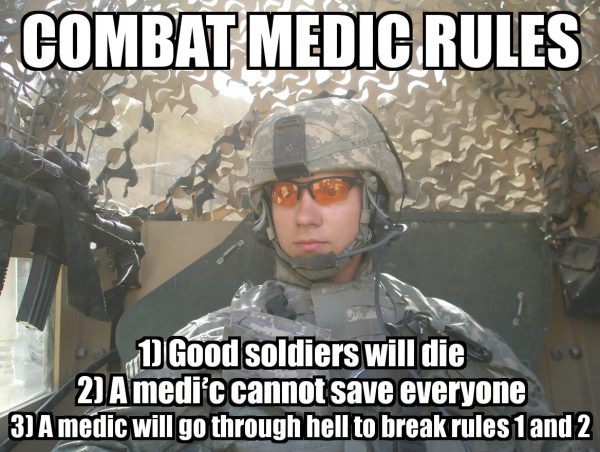 Mike Borowski is a medically retired Army combat medic with 23 years of service, including a combat deployment to Iraq, and a high school Anatomy and Physics teacher at a high-need Career Technical district in Northeast Ohio — where he also wrote and published the textbooks for both courses. He runs “Bski’s Classroom,” a platform dedicated to cutting through political noise with data, history, and the kind of blunt honesty that comes from someone who has seen both war and the American classroom up close.
X (Twitter): x.com/BskiMike22802
Substack: substack.com/@bskimike22802
YouTube: www.youtube.com/@BskiMike22802
AFNN: https://afnn.us/author/mikeborowski/
If you enjoyed this article, then please REPOST or SHARE with others; encourage them to follow AFNN. If you’d like to become a citizen contributor for AFNN, contact us at managingeditor@afnn.us Help keep us ad-free by donating here.
Substack: American Free News Network Substack
Truth Social: @AFNN_USA
Facebook: https://m.facebook.com/afnnusa
Telegram: https://t.me/joinchat/2_-GAzcXmIRjODNh
Twitter: https://twitter.com/AfnnUsa
GETTR: https://gettr.com/user/AFNN_USA
CloutHub: @AFNN_USA