Introduction to Business 101: Golf with THE Chuck
A Tribute to Enduring American Grit: The Golf, Mulligans & NGAUS Edition
Indianapolis, Indiana | August 27–31, 2026
Co-written by Chuck Cordak and Col. Reggie Sanders, U.S. Army (Ret.)
From the fairways of the Indianapolis Motor Speedway to the National Guard exhibition floor, a look at the citizen-soldiers, industry partners, and relationships that help keep America ready.
Some weekends are about business. Some are about golf. Others are about catching up with old friends, meeting the people responsible for equipping America’s warfighters, and remembering that behind every uniform is a family, a community, and a commitment to something bigger than ourselves.
Then there are weekends when all of those things come together, with a little bourbon, a couple of cigars, and a golf ball that refuses to listen to instructions.
Welcome to another edition of Introduction to Business 101: Golf with THE Chuck, where the lessons aren’t confined to a boardroom, and the scorecard doesn’t always tell the whole story.
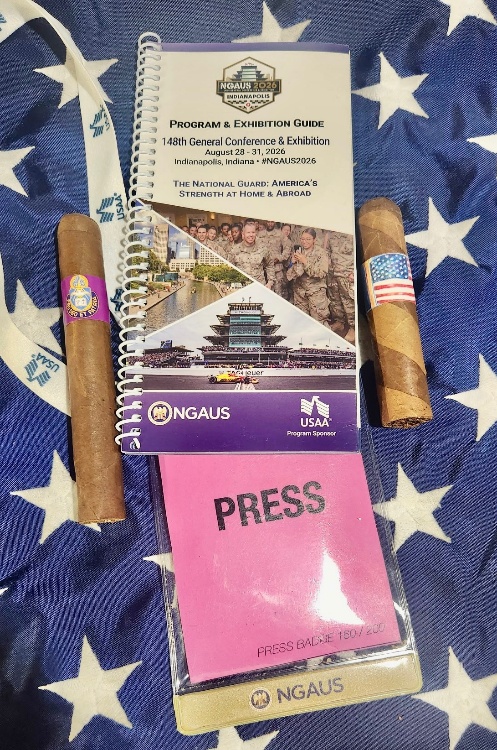
This time, I headed to Indianapolis for the 148th General Conference & Exhibition of the National Guard Association of the United States (NGAUS), held August 28–31, 2026, with golf and other events beginning earlier in the week.
For those who have never attended, NGAUS is far more than a military trade show. It brings together Army and Air National Guard officers from all 50 states, three territories, and the District of Columbia, along with military leaders, family members, elected officials, and industry representatives. The purpose is serious: strengthen the Guard, develop legislative priorities, improve readiness, and ensure citizen-soldiers and airmen have the equipment, resources, and benefits needed to perform their missions.
For me, the conference also carried a personal meaning. I’m a proud father whose family has seen military service up close, including sons who served in the National Guard. When you have watched your own children and friends put on a uniform, you understand that military readiness isn’t an abstract policy discussion. It is about real people, real families, and the possibility that a phone call can change everything.
That perspective shaped the way I looked at this year’s conference.
The National Guard: America’s Citizen-Soldiers
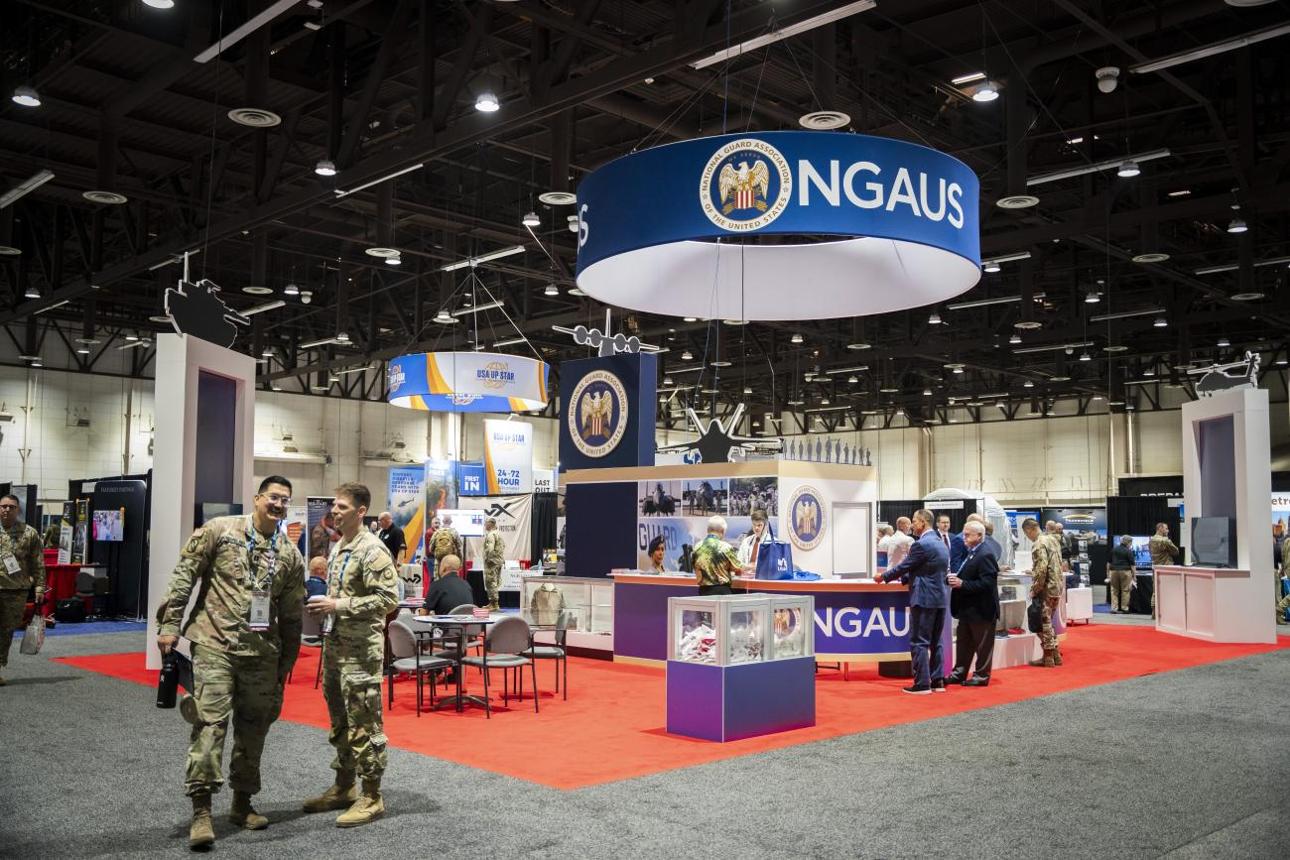
One of the most important things to understand about the National Guard is its dual mission.
Guard members serve their country overseas and can be mobilized for federal missions. They also serve their home states, responding to natural disasters, emergencies, and other needs when governors call upon them.
A Guard member might spend the workweek as a teacher, police officer, mechanic, engineer, business owner, or healthcare professional. That same person may train on weekends, deploy overseas, or respond to a hurricane, flood, wildfire, or other emergency at home.
That’s a remarkable commitment. It also places real demands on the individual, the family, the employer, and the state.
The command relationship matters, too. When National Guard members serve in state active-duty status, they operate under their governor through the state’s military command structure. Under Title 32, they generally remain under state command while performing federally authorized and funded duties. When federalized under Title 10, they enter the federal military chain of command.
In other words, the governor is not simply a ceremonial figure for the Guard. The governor has an important role in directing state missions, while federal authorities can activate Guard forces for national missions under the applicable laws and command arrangements.
And that responsibility doesn’t change just because a state votes red or blue.
The National Guard serves the people of every state, regardless of political affiliation. Disasters don’t check voter registration, and a citizen-soldier’s oath doesn’t come with a party label. When a community needs help, the Guard’s value is measured by its readiness, professionalism, and ability to respond.
That is one of the central reasons the Guard deserves sustained support from state and federal leaders alike.
NGAUS exists in part to make sure the Guard’s needs are heard in Washington. Its legislative priorities address issues ranging from personnel policy and GI Bill parity to aviation modernization, military construction, equipment, and readiness. Those priorities are grounded in the experiences and requirements of Guard members in the field.
The business lesson is straightforward: an organization cannot deliver on its mission if the people doing the work lack the tools, training, and support they need.
That is true in a company, and it is true in the National Guard.
Golf, Indianapolis, and the Business of Relationships

Friday’s golf experience brought us to Brickyard Crossing Golf Course, a venue that combines the game with one of the most recognizable landmarks in American motorsports: the Indianapolis Motor Speedway.
Brickyard Crossing is distinctive because 14 holes sit outside the Speedway’s oval, while four holes are located inside the track. It is a setting where golf and racing share the same landscape.
Now, if you know anything about Golf with THE Chuck, you know I believe golf is one of the most underrated tools in business. You can learn a lot about someone over 18 holes. You see how people handle pressure, whether they own their mistakes, how they treat the people around them, and whether they can laugh at themselves when a supposedly simple shot ends up somewhere in the next zip code.
I won’t claim every business deal begins on a golf course. But relationships built on trust, shared experiences, and honest conversation can create opportunities that a stack of business cards never will.
At NGAUS, golf offered an opportunity to reconnect with friends, meet people from other states, and continue conversations that began on the exhibition floor. The conference schedule also included tours of the Indianapolis Motor Speedway and Museum, receptions, and opportunities for Guard leaders and industry partners to meet outside formal sessions.
The setting was memorable, but the people were the point.
The National Guard is a nationwide network. A conversation with someone from another state or territory can reveal a different approach to training, logistics, recruiting, equipment, or supporting military families. A handshake with an industry representative can become the start of a discussion about a capability a unit needs.
And occasionally, a conversation that starts over golf or a cigars turns into something that helps the mission.
That is the business of relationships.
Inside the Exhibition Hall: The People Behind the Equipment
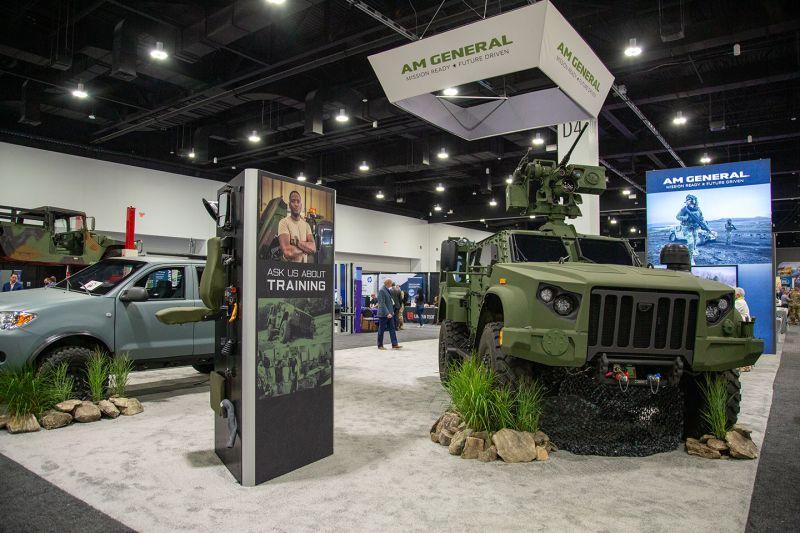
The exhibition floor was a reminder that supporting the National Guard requires an enormous network of people and organizations.
Senior officers and enlisted leaders from across the country and U.S. territories were there to discuss requirements, exchange lessons learned, and explore ways to better equip the warfighter. Industry partners were there to demonstrate technology, discuss capabilities, and understand the realities facing the people who use their products.
NGAUS reported that more than 300 companies and organizations were expected at the exhibition, representing everything from aviation and ground vehicles to communications, tactical equipment, and domestic-response capabilities.
I had the opportunity to speak with several companies whose work illustrates how different pieces of the defense and public-service ecosystem fit together.
AM General: Supporting the People Who Serve
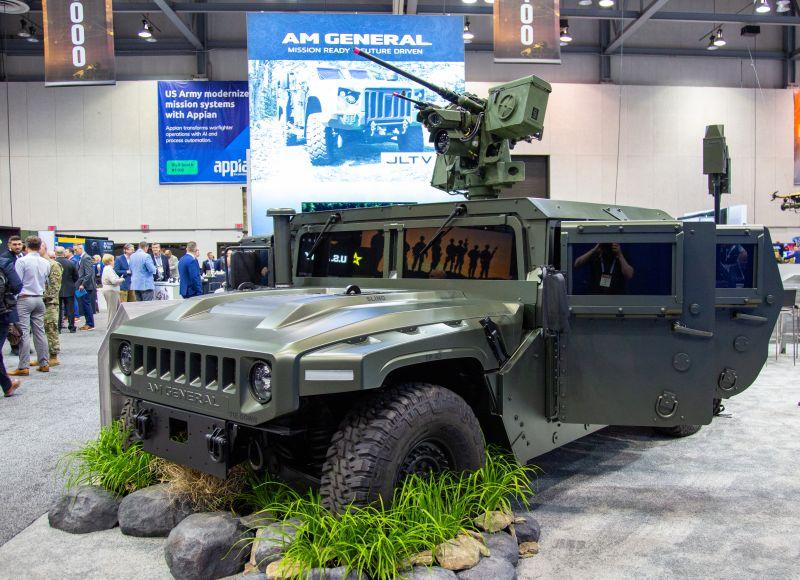
One of the companies we discussed was AM General.
AM General is well known for its military vehicle heritage, including the High Mobility Multipurpose Wheeled Vehicle, better known as the HMMWV or Humvee. Ground mobility is not glamorous in every conversation, but it is fundamental to how military units move personnel, equipment, and supplies.
We also discussed the company’s We Ride with Sgt. Smith program, which I had seen referenced through its social media presence. The conversation was a reminder that companies supporting the military can contribute to the broader story of service, not just the procurement of equipment.
For businesses that work with the military, understanding the end user matters. A vehicle is not merely a product specification on a page. It is a platform that must meet operational needs, survive demanding conditions, and support the people who depend on it.
That is a lesson any business can use: listen to the customer, understand the mission, and build around the problem that actually needs solving.
Mercedes-Benz: More Than a Familiar Name on the Road
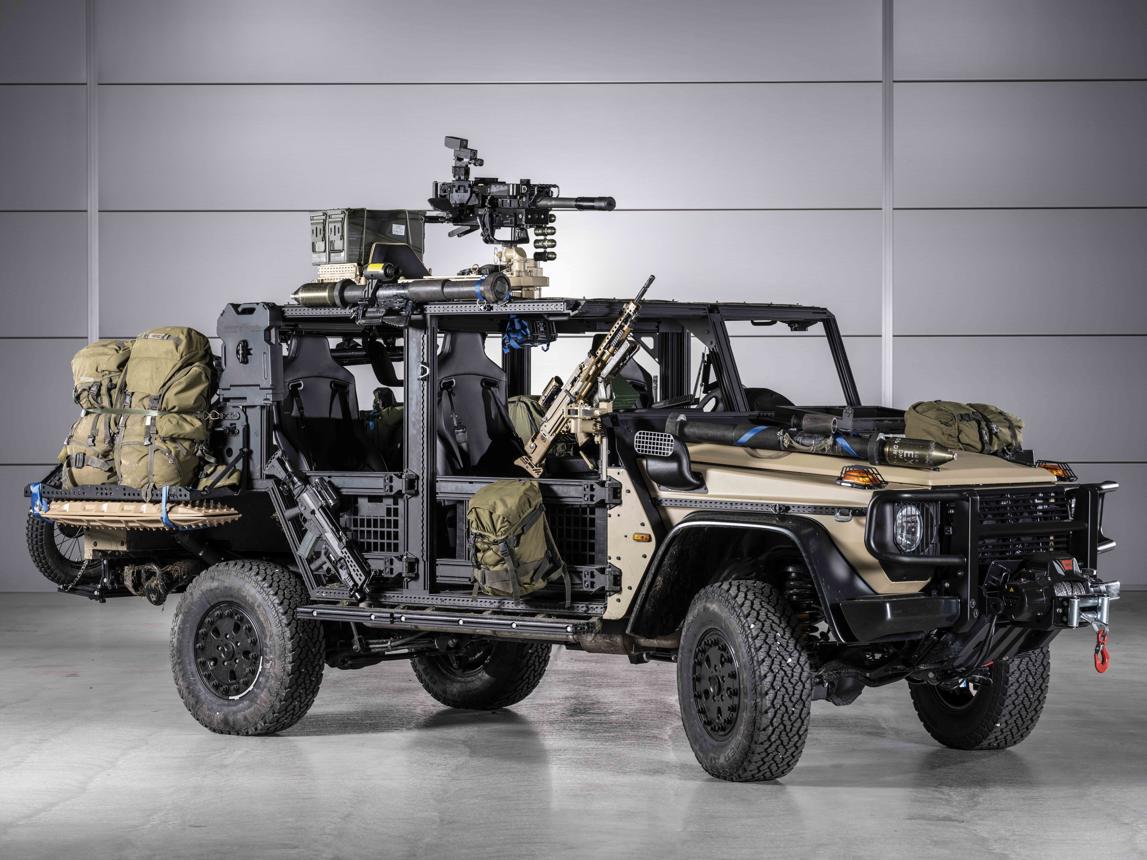
We also discussed Mercedes-Benz and its governmental vehicle business, including the company’s military and specialized G-Class platforms.
The conversation included the W464 series and the Caracal, an airborne-oriented vehicle developed for specialized military requirements. Mercedes-Benz’s G-Class Governmental Business describes its vehicles for state authorities, rescue operations, and special operations, with an emphasis on mobility and reliability in demanding conditions.
We also discussed Military AutoSource (MAS), a separate program relevant to eligible military personnel and their vehicle-purchasing options.
What interested me was the breadth of the conversation. A well-known automotive name may be associated with luxury in the civilian market, but its governmental and defense work serves a different set of requirements. Military customers need to evaluate capability, suitability, reliability, support, and lifecycle costs.
It is another example of why an exhibition like NGAUS matters. It allows Guard leaders and industry representatives to discuss real-world needs, understand each other’s challenges, and explore solutions that might not emerge through a brochure or a sales presentation alone.
Cyalume: Small Products, Important Missions

Another company we discussed was Cyalume Technologies.
Cyalume produces chemical lighting products and other technologies used for military, law-enforcement, training, and emergency-response applications. Its military lighting products can support marking, signaling, identification, and other field requirements.
It might be tempting to overlook a small light source when compared with a large tactical vehicle or aircraft. But anyone who has spent time around operational requirements understands that the smallest items can make a meaningful difference when visibility, communication, and safety matter.
This is another important business lesson: value is not determined by the size of the product. It is determined by how well that product serves the people who depend on it.
The conversation with Cyalume reinforced a larger point about the exhibition. The Guard’s operational readiness depends on a broad supply chain, including companies that manufacture specialized components and essential support equipment.
The major platforms may draw the crowds, but the supporting products and technologies matter, too.
The Broader Industry Partnership
Beyond these conversations, we met and spoke with smaller suppliers and other companies supporting Guard requirements. Each brought a different perspective on what it takes to serve military customers.
These companies need to understand procurement processes, operational environments, and the realities of supporting units across the country. Guard leaders, in turn, benefit from having access to manufacturers and suppliers who can explain what is available, what is evolving, and where further development may be needed.
The exhibition floor also offered a chance to build relationships that extend beyond a single conference. The strongest partnerships are not built on one handshake or one sale. They develop through continued communication, trust, and a willingness to understand the other side’s challenges.
For a business owner, that is familiar territory. For the National Guard, it can have consequences that reach well beyond the balance sheet.
Why NGAUS Matters Beyond the Conference
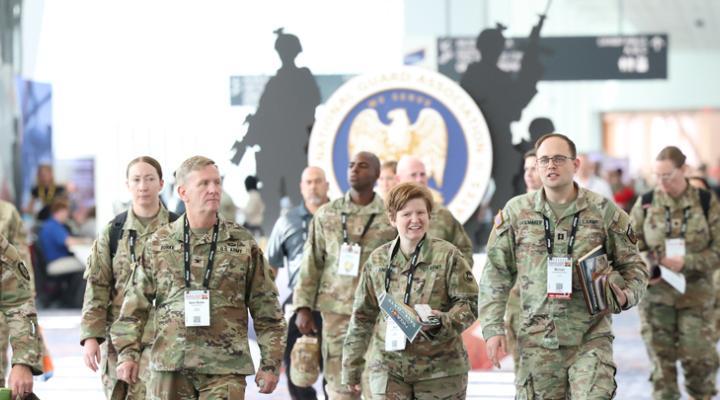
The conference is not simply a gathering of people who already agree that the Guard is important. It is also where priorities are debated, requirements are explained, and a collective voice is organized.
NGAUS develops its legislative agenda through input from Guard members and subject-matter experts. Its current priorities include aviation modernization, vehicle sustainment, air-defense capabilities, personnel reform, and benefits for Guard members. The exact priorities evolve as operational requirements and funding decisions change.
This work matters because the Guard is expected to maintain readiness for two very different kinds of demands: responding to emergencies at home and preparing to serve alongside active-duty forces overseas.
Those responsibilities require equipment that works, training that prepares people for real conditions, and policies that recognize the demands placed on Guard members and their families.
The advocacy process also demonstrates the importance of engagement. Grassroots input from soldiers and airmen helps identify the needs that should be raised with Congress. State associations, national leadership, and industry partners all have roles in ensuring those needs are understood.
No single conference can solve every challenge. But bringing the people involved into the same room creates an opportunity to establish priorities, develop relationships, and keep attention on the requirements that matter.
That is what makes NGAUS valuable long after the exhibit hall closes.
The Personal Side of Service: Families, States, and Sacrifice
For me, the most important part of this experience was not a vehicle, a product demonstration, or a round of golf. It was the people.
Having sons who served in the National Guard gives me a personal appreciation for the commitment these men and women make. Military service affects the entire family. It changes schedules, creates uncertainty, and sometimes requires loved ones to carry responsibilities at home while a service member is away.
That is why supporting the Guard must mean more than applauding its members at a ceremony. It means supporting readiness, ensuring access to appropriate benefits, helping military families, and recognizing the employers and communities that stand behind those who serve.
The same is true for the businesses that support the Guard. Their work may take place in factories, engineering offices, warehouses, and procurement meetings, far from the public spotlight. But their contributions can help provide the equipment and capabilities service members need.
When we bring these groups together, we see the bigger picture: a nationwide partnership involving citizen-soldiers, families, state governments, federal leaders, and private industry.
And that partnership belongs to all Americans, regardless of where they live or how they vote.
A Preview of Our Next Article: The Guard in Washington, D.C.
The NGAUS experience also leads naturally to a subject Chrisi and I explored during our visit to Washington, D.C., for America’s 250th anniversary celebrations.
During that trip, we had the opportunity to speak with several Guardsmen and hear more about their service and responsibilities.
Washington, D.C., offers a particularly interesting perspective on the National Guard because the District is not a state. Its Guard operates under a different legal and command structure than a state National Guard, with the President holding the ultimate authority over the D.C. National Guard and the Secretary of Defense exercising delegated authority.
That distinction is worth exploring, especially when considering the Guard’s role in the nation’s capital and how its responsibilities differ from those of state Guards.
In our next article, we’ll share more of those conversations and examine the National Guard’s role in Washington, D.C., as well as the broader relationship between state authority, federal missions, and the citizen-soldiers who serve both.
The Guard’s story is not just about what happens overseas. It is also about what happens in our own communities and in the nation’s capital.
The Final Round: Business 101, American Grit, and the People Who Deliver
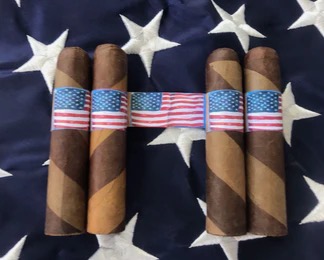
NGAUS reminded me why I keep writing this series. It’s not just for the pleasure of a round of golf but also a fine Deployment Brands David Webb Freedom cigar paired with Neeley Family Distillery’s Hidden Barn Kentucky Straight Bourbon Whiskey.
Business is ultimately about people. Relationships matter. Trust matters. Preparation matters. And when the mission is important enough, you need people who understand that showing up is only the beginning.
The golf course provided an opportunity to build relationships. The exhibition floor provided a look at the companies and technologies supporting our military. The conversations with Guardsmen and industry representatives reinforced the importance of readiness, equipment, benefits, and the families who share the burden of service.
And somewhere between the golf shots, handshakes, and conversations, we were reminded that the National Guard represents one of America’s most enduring commitments: citizens willing to serve their communities and their country.
To Col. Reggie Sanders, U.S. Army (Ret.), thank you for working with me on this article and helping bring the perspective of military service to the story. And to the Guardsmen, families, state associations, and industry partners we met in Indianapolis, thank you for the work you do.
The next time you see a Guardsman, remember that you may be looking at a neighbor, a coworker, a parent, a business owner, or the person who will respond when your community needs help.
They don’t stop being citizens when they put on the uniform. They bring the strength of their communities into their service, and they bring the lessons of service back home.
That’s American grit.
And as for golf? Well, I still believe it is one of the best ways to bring people together. Just don’t ask me to guarantee that every putt will fall.
Some lessons take a mulligan.
Until the next round,
THE Chuck Introduction to Business 101: Golf with THE Chuck American Free News Network (AFNN.us)
Co-written with Col. Reggie Sanders, U.S. Army (Ret.)
If you enjoyed this article, then please REPOST or SHARE with others; encourage them to follow AFNN. If you’d like to become a citizen contributor for AFNN, contact us at managingeditor@afnn.us Help keep us ad-free by donating here.
Substack: American Free News Network Substack
Truth Social: @AFNN_USA
Facebook: https://m.facebook.com/afnnusa
Telegram: https://t.me/joinchat/2_-GAzcXmIRjODNh
Twitter: https://twitter.com/AfnnUsa
GETTR: https://gettr.com/user/AFNN_USA
CloutHub: @AFNN_USA