
Harry S. Truman is one of my favorite presidents. And I’m not even a Democrat.
So why, then, is “give ‘em hell” Harry one of my favorite presidents?
Before I answer that, let me say that I doubt if Truman would even recognize today’s Democrat Party. It has moved so near to socialism as to be almost undistinguishable from that habitually failed governmental system and its more toxic cousin, communism.
Okay, so why is Harry Truman one of my favorite presidents?
First, I respect Truman’s genuine humility. Then there is the fact that of all American presidents, he was one of the most unlikely individuals to occupy the White House. Truman was a political figure who is almost non-existent in today’s Democrat Party. He was a moderate who didn’t hate Republicans or conservatives.
I also appreciate that he had a wry and blunt Midwestern sense of humor.
For example, here’s what Truman once said about his past and his improbable road to the presidency.
“My choices in life were either to be a piano player in a whore house or a politician. And to tell the truth, there’s hardly any difference!” (Truman was a competent pianist)
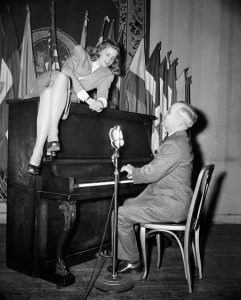
Yes, good old Harry Truman was a different kind of President. He probably made as many or more critical decisions as any of the other 32 Presidents preceding him. I will talk about those later on, but first, here are several quotes by Truman that tell you as much about the man as any of his accomplishments and deeds. Most of these seem especially prophetic given today’s ruinous political climate and pitiable leadership emanating from Washington.
- “Once a government is committed to the principle of silencing the voice of opposition, it has only one way to go, and that is down the path of increasingly repressive measures until it becomes a source of terror to all its citizens and creates a country where everyone lives in fear.”
- “The fundamental basis of this nation’s laws was given to Moses on the Mount…If we don’t have a proper fundamental moral background, we will finally end up with a totalitarian government which does not believe in rights for anybody except the State.”
- “Of course, there are dangers in religious freedom and freedom of opinion. But to deny these rights is worse than dangerous; it is absolutely fatal to liberty. Those who want the government to regulate matters of the mind and spirit are like men who are so afraid of being murdered that they commit suicide to avoid assassination.”
- It doesn’t matter how big a ranch you own or how many cows you brand, the size of your funeral is still gonna depend on the weather.
- “I never did give anybody hell. I just told the truth, and they thought it was hell.”
- “Never kick a fresh turd on a hot day.”
Before I go much further, it might be useful for you to learn a bit about our 33rd president’s early history and his political career. So please bear with me for a bit. (My thanks to the History Network for some of this background taken from its website)
Truman was born on May 8, 1884, in the farm community of Lamar, Missouri, to John Truman (1851-1914), a livestock trader, and Martha Young Truman (1852-1947). (Truman’s parents gave him the middle initial S to honor his grandfathers, Anderson Shipp Truman and Solomon Young, although the S didn’t stand for a specific name and, for that reason, was often affixed without a period.)
In 1890, the Truman family settled in Independence, Missouri, just east of Kansas City, where Harry attended school. As a child, he had to wear thick eyeglasses due to poor vision. Truman had hoped to attend the U.S. military academy at West Point, but his eyesight prevented him from gaining admittance.
Truman’s family could not afford to send him to college, so after graduating high school in 1901, he worked as a bank clerk and held various other jobs. Starting in 1906, he spent a decade helping his father manage the family’s 600-acre farm near Grandview, Missouri. During this time, Truman also served in the Missouri National Guard.
In 1917, when America entered World War I, Truman, then in his early 30s, reenlisted in the National Guard and was sent to France. He saw action in several campaigns and was promoted to captain of his artillery unit.
In 1919, after returning from the war, Truman married Elizabeth “Bess” Wallace (1885-1982), his childhood classmate. That same year, Truman and a friend opened a men’s clothing store in Kansas City; however, the business failed because of a bad local economy. The Truman’s had one daughter, Mary Margaret Truman (1924-2008), who grew up to become a professional singer and author of biographies and mystery novels.
In 1922, Harry Truman, with the backing of Kansas City political boss Thomas Pendergast, was elected district judge in Jackson County, Missouri, an administrative position that involved handling the county’s finances, public works projects, and other affairs. In 1926, Truman won the election as the county’s presiding judge. Earning a reputation for efficiency and integrity, he was reelected in 1930.
He was elected to the U.S. Senate in 1934 and became an avid supporter of FDR’s “New Deal” programs that were designed to lift the country out of the Great Depression that began with the stock market crash in 1929.
Truman was instrumental in the passage of the Civil Aeronautics Act of 1938, which established government regulation of the burgeoning aviation industry, and the Transportation Act of 1940, which established new federal regulations for America’s railroad, shipping and trucking industries.
From 1941 to 1944, Truman headed the Senate Special Committee to Investigate the National Defense Program, which worked to reduce waste and mismanagement in U.S. military spending. Commonly known as the Truman Committee, it saved American taxpayers millions of dollars and propelled Truman into the national spotlight.
In 1944, as Roosevelt sought an unprecedented fourth term as president, Truman was selected as his running mate, replacing Vice President Henry Wallace, a divisive figure in the Democratic Party. Truman, a moderate Democrat, was jokingly referred to as the “second Missouri Compromise.”
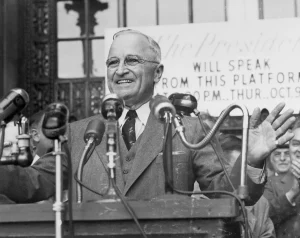
In the general election, Roosevelt easily defeated Republican Thomas Dewey, the governor of New York, and was sworn into office on January 20, 1945. Less than three months later, on April 12, 1945, the president died suddenly of a cerebral hemorrhage at age 63, and Harry S. Truman was thrust into the most powerful job in the world.
In April 1945, World War II in Europe was winding down, but the war with Japan was still raging. So President Truman had some critical decisions to make.
One of those decisions was whether or not to drop atomic bombs on Japan. Roosevelt had kept Truman in the dark about war matters and as vice president. Truman had little contact with the president and was asked to deal mostly with matters in the Senate. After FDR died, Truman had a steep learning curve to climb. He had to learn basic facts about the wars in Europe and Asia and, most importantly, the nation’s top-secret Manhattan Project.
He only learned of the nation’s development of the atomic bomb after taking office. Even though Imperial Japan was shattered and broken, it had refused American demands that it surrender unconditionally. American military and intelligence chiefs advised Truman that a military invasion of Japan would cost hundreds of thousands of American and Japanese lives and could extend the fighting into the 1950s.
They pointed out that the last major engagement, the battle for the southern Japanese island of Okinawa, lasted almost three months and cost more than 100,000 Japanese and American lives. There were still the four main Japanese islands to invade: Kyushu, Honshu, Shikoku, and Hokkaido, and Japan’s military leaders had ordered every Japanese man, woman, and child to fight to the death for every inch of Japanese ground.
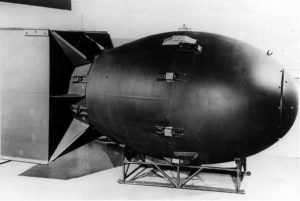
Truman used that intelligence and guidance, along with a desire to show an increasingly bellicose Soviet Union the might of the US military, to justify the use of the bombs on Japan.
Two sites were chosen, and on August 6, 1945, a bomb was dropped on Hiroshima. Three days later, one fell on Nagasaki. More than 200,000 Japanese were killed, and Japan formally surrendered on September 2, 1945.
Here is what Truman said to a critic about his decision to use the A-bombs on Japan.”
“The atom bomb was no “great decision.” It was used in the war, and for your information, there were more people killed by fire bombs in Tokyo than by the dropping of the atomic bombs. It was merely another powerful weapon in the arsenal of righteousness. The dropping of the bombs stopped the war and saved millions of lives.”
Other decisions Truman made between 1944 and 1953, when he left office, were much less controversial.
Truman instituted the Marshall Plan, which gave billions of dollars in aid to help stimulate economic recovery in war-torn Germany and other European nations. The president defended the plan by stating that communism would thrive in economically depressed regions. In 1948, Truman initiated an airlift of food and other supplies to the Western-held sectors of Berlin, Germany, that were blockaded by the Soviets. He also recognized the new state of Israel.
On the home front, Truman faced the challenge of transitioning America to a peacetime economy. Amid labor disputes, a shortage of consumer goods, and a national railroad strike, he saw his approval ratings plummet. He ran for reelection in 1948 and was widely expected to lose to Republican challenger Thomas Dewey. However, Truman conducted a vigorous whistle-stop campaign in which he traveled by train around the country, giving hundreds of speeches.
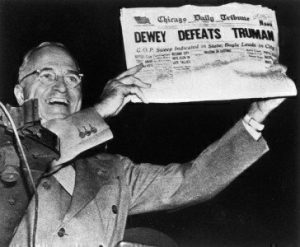
When the nation went to bed on election night, it was widely assumed Dewey was on the way to victory. My old employer, the Chicago Tribune, even published an early edition with a headline announcing Dewey’s win. The next morning Truman gleefully exhibited the Tribune’s front page. It was an embarrassment that the Tribune took decades to live down.
In June 1950, when communist forces from North Korea invaded South Korea, Truman sent in U.S. planes, ships, and ground troops to aid the South Koreans. The conflict turned into a lengthy stalemate that left Americans frustrated and hurt Truman’s popularity. However, his decision to intervene ultimately preserved South Korea’s independence, and today the country is an economic powerhouse.
However, a guage of his significance and integrity is demonstrated by what he did after he left the White House. He is the last president with a net worth under a million dollars. Other presidents have cashed in on the presidency, resulting in untold wealth. Joe Biden is a prime example, along with his corrupt and mendacious family. It’s the same in Congress, where members of the House and Senate have found ways to become rich by peddling access to their offices.
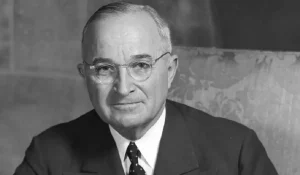
After leaving the presidency, Truman was offered high-paying positions on corporate boards. He declined, stating, “You don’t want me. You want the office of the President, and that doesn’t belong to me. It belongs to the American people, and it’s not for sale.”
When Truman left the White House and returned to life as a private citizen in Missouri in January 1953, the U.S. did not provide any form of pension to former presidents. Truman had little or no income beyond his Army pension of $112.56 per month and he bore all the costs of maintaining an office and staff himself. Prompted by the former president’s discomfiting financial circumstances, Congress finally enacted the Former Presidents Act (FPA) in 1958. The act provides former presidents with pensions and allowances to cover office and travel expenses.
Later, in 1971, when Congress was preparing to award him a special Medal of Honor on his 87th birthday, he refused to accept it, writing, “I don’t consider that I have done anything which should be the reason for any award, Congressional or otherwise.”
There is an enduring myth about Harry Truman that says when he and Bess left the White House after the inauguration of President Dwight Eisenhower, they drove themselves back to Missouri without secret service or bodyguards of any kind. Actually, the two took the train back to Missouri.
However, just a few months after leaving the White House, Harry and Bess did take a road trip. On June 19, 1953, Harry Truman got up early, packed the trunk of his Chrysler New Yorker, and did something no other former president has done before or since. They hit the road and drove 2,500 miles to the East Coast and back again. No Secret Service protection. No traveling press. Just Harry and Bess, off to visit old friends, take in a Broadway play, celebrate their wedding anniversary in the Big Apple, and blow a bit of the advance he’d just received to write his memoirs.
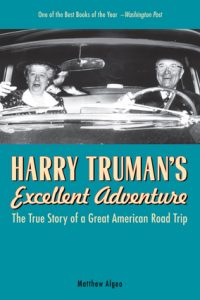
That trip is meticulously documented in author Matthew Algeo’s 2011 book “Harry Truman’s Excellent Adventure.” While Harry and Bess wanted to travel incognito, that was not to be. All along their route, they were recognized by gas station attendants, waitresses, fellow diners, bellhops, etc.
That trip says as much about Harry Truman as anything he ever did. He loved driving, and he just wanted to be another American couple on the road. Simple. No fuss. Just a hassle-free and relaxing road trip.
Harry Truman died at age 88 on December 26, 1972, in Kansas City, Missouri, after being hospitalized for lung congestion, heart irregularity, kidney blockages, and digestive system failure. He was buried in the courtyard of the Truman Presidential Library in Independence, Mo. Bess, who died at age 97 in 1982, was buried beside him.
Truman was, along with Abe Lincoln, one of the most plain-speaking presidents in history.
In 1953 a Washington columnist said this about the plain-speaking former president: “Since Truman left town, almost no one has spoken his mind.”
(Ronald E. Yates is a U.S. Army veteran, an author, a former Chicago Tribune foreign correspondent, and Professor & Dean Emeritus of Journalism at the University of Illinois.)
His website: http://www.ronaldyatesbooks.com/
If you enjoyed this article, then please REPOST or SHARE with others; encourage them to follow AFNN. If you’d like to become a citizen contributor for AFNN, contact us at managingeditor@afnn.us
Truth Social: @AFNN_USA
Facebook: https://m.facebook.com/afnnusa
Telegram: https://t.me/joinchat/2_-GAzcXmIRjODNh
Twitter: https://twitter.com/AfnnUsa
GETTR: https://gettr.com/user/AFNN_USA
Parler: https://parler.com/AFNNUSA
CloutHub: @AFNN_USA
As one who does song parody, I seem to recall Chicago had a minor hit in the mid 1970s on your subject:
America needs you
Harry Truman
Harry could you please come home?
Things are lookin’ bad
I know you would be mad
To see your favorite men
Prevail upon the land you love
America’s wondering
How we got here
Harry all we get is lies
We’re gettin’ safer cars
Rocket ships to mars
From men who’d sell us out
To get themselves a piece of power
We’d love to hear you speak your mind
In plain and simple ways
Call a spade a spade
Just like you did back in the days
You would play piano
Each mornin’ walk a mile
Speak of what was goin’ down
With honesty and style
America’s calling
Harry Truman
Harry you know what to do
The world is turnin’ round and losin’ lots of ground
Oh Harry is there somethin’
We can do to save the land we love?
Oh whoa whoa whoa
America’s calling
Harry Truman
Harry you know what to do
The world is turnin’ ’round
And losin’ lots of ground
Harry is there somethin’
We can do to save the land we love
Oh, Harry is there somethin’
We can do to save the land we love
Harry
Harry is there somethin’
We can do to save the land we love
I have never had respect for the man “Harry” who created the alphabet agency that’s not supposed to operate in the states united in America. He was the second pusher of the military industrial complex following that hammerhead Roosevelt. Oh and who allowed Rockefeller to convince him of the land deal for the UN? I’m sure he shook Prescott Bush’s hand also. I wish I could remember the agency director who said that their goals will be accomplished when all that the citizens in America believe is a lie.
Harry Truman was probably the last of the true public servants, in our history. He is a picture into the window of how you or I might try to keep the wheels on the rail, while every force imaginable was trying to fight against him.
My dad never said anything negative about him, and my dad was a very right leaning man. We can easily tend to view our so-called 20/20 hindsight as if we had no clue who was in charge of how history gets written. I choose to view Truman in a positive light, regardless of any negative noise about him.
And, I dare say that, for a Democrat, he was the last of that genre before the radicals took over.
This is great one of a kind article about who I agree was a great man.
The Democratic Party of Truman, JFK, and Hubert Humphrey does not exist now. While there are many issues one could disagree with them, there was no question about their love for the USA. Today’s Dem Party has been taken over by leftists who call themselves progressives because they do not want to answer for the history of leftism.
Harry Truman allowed the creation of the CIA. That in and of itself should give pause to wonder. He allowed the instrument of operation Paperclip to take place. That’s where they brought only the “good” Nazis to America. They allowed Kurt Waldheim to establish and build up the UN on our shores who then become Secretary General of that communist, globalist organization. Only to be found out that Kurt was a war criminal in later years. There has to be a reason he stopped Patton from going after Russian. Also what was the deal to stop MacArthur from destroying the Chinese and Russian effort in N. Korea?
Look at Harry and Bessie not through rose colored glasses but in their promotion of the military industrial complex……the ones Ike warned us about before he left office.