
I learned early on in my military career to consider Von Clausewtz’s principal of “center of gravity” carefully in any military planning. The most obvious target is often not the best course of action. Hitting the center of gravity for any opponent, something they depend on and cannot continue operations without, is often far more important than eliminating their soldiers and weapons. But It’s not always immediately apparent, and its often difficult to destroy. Sometimes its more important to control than destroy.
The current conflict in Iran is a case in point. From the Israeli perspective Iran’s center of gravity is clearly the senior leadership. Their initial strikes were designed to kill the ayatollah, the senior military leaders and as many senior government and security officials as possible. They have largely done so, but the system designed by the Iranian leadership has survived attacks on its leadership before, with mechanisms in place to rapidly fill vacant seats.
Soleimani was widely regarded as irreplaceable when President Trump authorized his assassination in Iraq. He was the architect of the alliances and militia forces in Lebanon, Syria, Iraq and other nations, but he was quickly replaced and the alliances continued.
In addition, the Iranian leadership developed a program of de-centralized control where security and military forces were provided war plans and authority to execute them absent orders from their national leadership in the event of conflict where the national leaders were eliminated. That allowed the Iranians to respond when the ayatollah was killed with barrages of missiles against a variety of targets.
US facilities within range in Iraq, Qatar and Bahrain were immediately attacked. But attacks were also carried out against the Saudi’s and for the first time the Emirati’s. This reflected the Iranian leadership’s philosophy of center of gravity for the United States. Namely, our political system and impending elections.
By damaging the critical infrastructure of our regional allies and disrupting the flow of oil out of the gulf the Iranians calculated that the pressure on our administration to stop attacks would quickly become irresistible. Oil refineries and pumping stations were hit. Desalination plants essential to life for gulf nations were attacked. And Dubai, long considered a safe haven from the region’s conflicts and a financial and transportation hub was directly attacked.
This may also have been a miscalculation on the part of the Iranians. For the first time, the Saudis and the Emirati’s have provided full and public support for attacks on Iran. European nations initially against the attacks are now moving to support them in response to Iran’s actions and the threat to their energy requirements.
Which brings us to the United States view of center of gravity. That’s been a bit more ambiguous. Initially we supported regime change. But absent boots on the ground that’s going to be difficult to attain. There has to be an armed force that can take over the government from the current one. The Iranians have been diligent in removing or killing anyone who even appears to not fully support the clerics, so that’s hard to come by.
The Iranian Republican Guard Corps are selected for their loyalty to the regime and they control most of the economy. They would require far more pressure than simply killing off the clerics and destroying their headquarters and weapons. They have an economic as well as an ideological reason to hang on. In addition they and their “neighborhood watch” organizations in the Basij are widely hated and would have to maintain population control through violence in order to survive.
The Iranian military also hates the IRGC but they are closely watched and controlled and don’t have as much power as the IRGC. The Kurds and other ethnic minorities would be happy to revolt of the IRGC could be overwhelmed, but they lack a unified leadership to attack the regime.
So the motivation for Iran, be it clerics or IRGC, is to hang on at all costs and declare victory, not matter what the cost, as long as they can continue to fund their security operations through the export of oil. This becomes the true center of gravity.
And that center of gravity lies on Karg Island. Karg Island lies about 15 nautical miles off the coast of Iran. 90% of Iran’s oil exports flow through Karg Island. The Persian Gulf is not very deep, only about 164 feet at its deepest point near the Strait of Hormuz. A fully loaded super tanker has a draft of about 80 feet. Iran doesn’t have a port deep enough to accommodate a loaded super tanker, so they had to build a pump station on Karg and pump their oil out there to load it onto tankers.
Take out Karg Island 90% of Iran’s oil exports stop. The IRGC and Baij salaries stop. The entire Iranian economy falls apart. But this also has a major impact on the economy of China, that gets about 15% of their oil from Iran, and 50% through the Straits of Hormuz. In addition, cutting off the flow of oil from Iran or closing the Strait of Hormuz is a big benefit to Russia, driving up the cost of oil and funding their war against Ukraine. Simply destroying Karg Island is not a solution.
It must be controlled. If it could be captured intact, that would be the lever that ultimately brings down the Iranian regime. On several occasions this has been considered by President Trump, but the risks are high. If destroyed it could be rebuilt but at cost to the worldwide economy. Iran can refuse to pump oil to the island for transport, and no doubt will if they cannot control who receives it on board ships. China would undoubtably object and apply pressure where ever they could. And it is a “boots on the ground” requirement.
Iran could use chemical or biological weapons to attack forces holding Karq to avoid destruction of infrastructure. The US could seize the island. We could defend it, since it lies fifteen miles off shore from Iran. But it would still be a waiting game to starve out the Iranian security forces.
US forces in that capacity are simply not politically acceptable with mid-term elections forthcoming. But if another nation were willing to provide occupying forces, it might become an option.
This is not something that the United Nations would support. Even if it could pass a vote, Russia and China would veto the measure. But the gulf states might. The attacks on the UAE, Saudia Arabia, Bahrain and Qatar have dramatically changed the perspective of those nations. They are now fully invested in removing the Iranian threat permanently. A return to the old status quo where the Iranian regime survives will simply insure they pursue nuclear weapons as a means of deterrent from future attacks.
In this context, a joint raid by US ships, aircraft, Special Operations, and gulf states to seize and take control of Karg Island might be an option. The UAE has long wanted to retake several small islands off their coast near the Straits of Hormuz that were seized by the Iranians in 1971. Qatar, Saudia Arabia and the other gulf states have a vested interest in removing the threat to their oil shipments through the Straits of Hormuz.
Gulf state occupation forces, supported by US aircraft and ships, could hold the island against Iranian attempts to retake it. It would not be in Iran’s interest to destroy the facilities. This could be the key to negotiations to permanently dismantle Iran’s nuclear capability with UN observers before Karg was returned to Iranian control. If controlled by the gulf states, the flow of oil could continue in the interim.
There is a lot that could go wrong with that concept. But it could present a path forward. No US administration before this one would have even considered it. The gulf states certainly would not have. The plan for decades has been to slow Iran’s efforts to achieve nuclear deterrence, and “kick the can down the road” in the hope of finding a long-term solution.
But we are now at the end of that road. Any solution that leaves the Iranian regime intact will inevitably result in a nuclear armed Iran. The risks of any solution are significant. But the risks of no solution are far greater. We now have a President who will not be eligible for a third term, who has shown a significant ability to accept risk, and is focused on not leaving any long term problem behind him.
There is no question that he will do something. The only question is what?
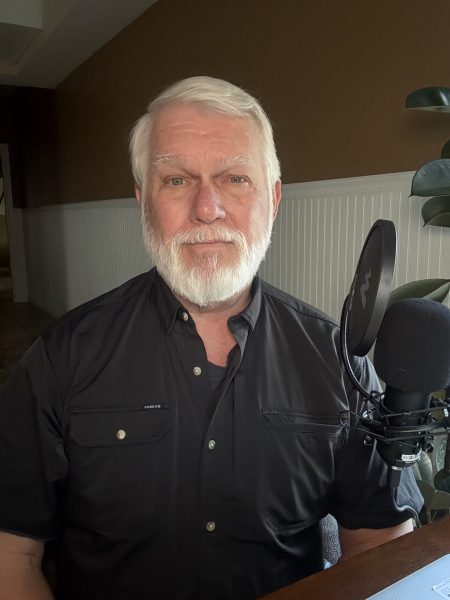
Chris Brewer is a retired Special Forces officer with a decade of experience in Central Asia and the Middle East. He is the author of “In the Shadows Between the Wars” and “Old Scroll Ranger”.
If you enjoyed this article, then please REPOST or SHARE with others; encourage them to follow AFNN. If you’d like to become a citizen contributor for AFNN, contact us at managingeditor@afnn.us Help keep us ad-free by donating here.
Substack: American Free News Network Substack
Truth Social: @AFNN_USA
Facebook: https://m.facebook.com/afnnusa
Telegram: https://t.me/joinchat/2_-GAzcXmIRjODNh
Twitter: https://twitter.com/AfnnUsa
GETTR: https://gettr.com/user/AFNN_USA
CloutHub: @AFNN_USA