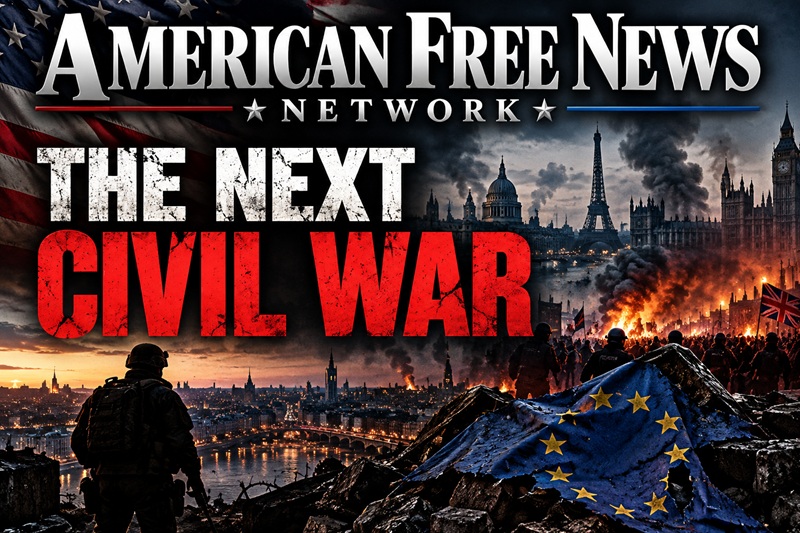
Professor David Betz is a smart dude. Not some basement-dwelling conspiracy theorist with a YouTube channel and a suspiciously large collection of canned beans. He’s a professor of war studies at King’s College London, specializing in insurgency, civil conflict, and military strategy. And he’s telling Western civilization something its political leadership desperately doesn’t want to hear: Civil war is coming. Not because people are inherently evil, but because the geniuses running the show have systematically dismantled the institutions that once kept everyone from killing each other.
Naturally, the establishment’s response is to call everyone concerned about it an extremist.
Brilliant strategy. I’m sure that’ll work.
Betz isn’t just throwing political grenades. He’s conducted red-team exercises examining how relatively small insurgent groups could exploit the vulnerabilities of modern Western societies. His conclusion is disturbing: You don’t need an army to cripple a modern civilization. You need determination, organization, and an understanding of how dangerously dependent we’ve become on interconnected infrastructure.
Think about that. We’ve constructed the most technologically sophisticated civilization in human history, where millions of people depend on electricity, fuel, water, telecommunications, and food deliveries functioning flawlessly every single day.
Then we congratulate ourselves on how advanced we’ve become.
Congratulations. We’ve engineered a civilization with a thousand interconnected dependencies and apparently forgotten that Murphy was an optimist.
I’ve spent time in Bosnia and Kosovo. I’ve seen what happens when political hatred becomes ethnic hatred, when institutions collapse, and when neighbors suddenly decide their neighbors are enemies. The ruins don’t care which political party had the better argument. Neither do the mass graves.
And here’s something Betz understands that our political leadership apparently doesn’t: Civil wars don’t begin with a declaration. They begin when enough people stop believing the system represents them, justice becomes tribal, and violence starts looking more effective than voting.
Betz predicted Ireland would be particularly vulnerable. Seven months later, Northern Ireland is again confronting sectarian tensions and political paralysis. That doesn’t prove civil war is inevitable, but it certainly doesn’t make his warning look ridiculous.
His analysis of Britain is equally unsettling. Political factionalization, declining institutional trust, competing communal identities, and increasing militancy are not imaginary problems. They’re recognizable warning indicators from conflicts throughout history.
But here’s where I disagree with the usual debate.
We’re asking the wrong question.
Everyone wants to argue about whether Betz is right. Will civil war happen? Which country goes first? Will another world war erupt?
Who cares about winning the prediction contest if we’re completely unprepared for the consequences?
Military planners don’t build contingency plans around what they hope happens. They prepare for what could happen. They red-team their assumptions, identify critical vulnerabilities, establish alternatives, and plan for the day everything goes sideways.
It’s called being competent.
Perhaps our governments should try it sometime.
And preparedness doesn’t mean buying camouflage and fantasizing about fighting your neighbors. It means protecting critical infrastructure, maintaining emergency supplies, preserving impartial law enforcement, strengthening community resilience, and ensuring that political disagreements don’t become ethnic vendettas.
Most importantly, it means planning for what happens afterward.
Who restores the courts? Who rebuilds the economy? Who feeds displaced families? Who reconciles communities after years of violence? Who prevents the victorious faction from becoming tomorrow’s tyrants?
I watched the consequences of those failures in the Balkans. Thirty years after Dayton, Bosnia still struggles with the political architecture of a war that supposedly ended in 1995.
Winning the shooting war is not the same thing as winning the peace.
Betz argues that reducing the duration of civil conflict is essential to limiting its destruction. Fair enough. But ending a war quickly without establishing a durable peace is just scheduling the sequel.
Proverbs 22:3 reminds us that the prudent recognize danger and take refuge, while the foolish continue forward and suffer.
Apparently, biblical wisdom remains considerably more sophisticated than modern political leadership.
Here’s my wager: Betz is probably right about the trajectory, even if his timetable and ultimate prediction remain uncertain. The warning signs are real. The vulnerabilities are real. And the political class seems determined to keep arguing about who gets blamed while the foundations continue cracking.
The question isn’t whether civil war or world war is guaranteed. Nobody knows that.
The question is whether we’ll have the intelligence to mitigate the damage before it starts, the courage to stop it when it does, and the wisdom to rebuild something better afterward.
Because when civilization collapses, nobody hands out participation trophies for having been politically correct.
And history doesn’t grade on a curve.
If you enjoyed this article, then please REPOST or SHARE with others; encourage them to follow AFNN. If you’d like to become a citizen contributor for AFNN, contact us at managingeditor@afnn.us Help keep us ad-free by donating here.
Substack: American Free News Network Substack
Truth Social: @AFNN_USA
Facebook: https://m.facebook.com/afnnusa
Telegram: https://t.me/joinchat/2_-GAzcXmIRjODNh
Twitter: https://twitter.com/AfnnUsa
GETTR: https://gettr.com/user/AFNN_USA
CloutHub: @AFNN_USA