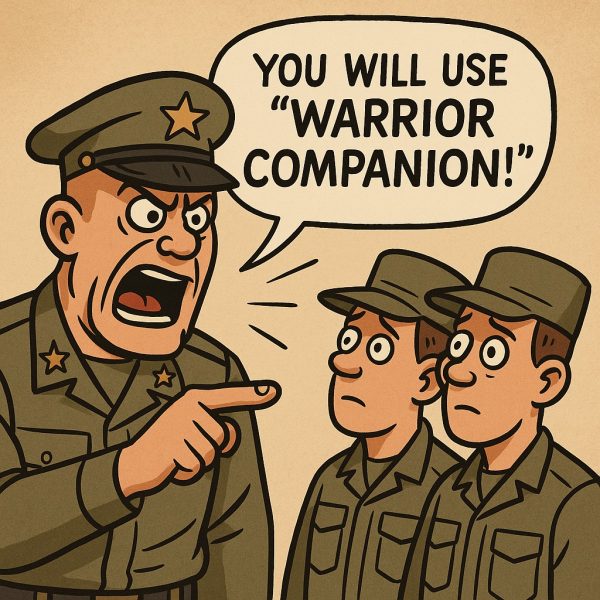
Leave it to bored NCOs in Iraq to stumble into one of the greatest military pranks of all time. Forget toilet-seat procurement scandals and million-dollar PowerPoints — a handful of clever sergeants with too much time and just enough sarcasm managed to send the entire U.S. Army chasing its own tail with two little words: Warrior Companion.
The setup was brilliant. Take the Army’s obsession with rebranding everything (because apparently “Battle Buddy” wasn’t warrior-esque enough), dress it up in the official bureaucratese of an ALARACT message, and watch the chaos unfold. Soldiers, never ones to waste a chance at gallows humor, started ribbing each other: “Don’t call me your Battle Buddy, I’m your Warrior Companion.” Before long, some poor specialists were actually being corrected by humorless leaders parroting the fake memo like it came down from Mount Sinai.
 The genius here isn’t just the joke — it’s the execution. The memo looked real. It read real. And in an organization trained to obey anything formatted in 12-point Arial with the right header, that’s all it took. What started as a prank in the desert grew legs, hit inboxes, and suddenly became a thing. For a short, shining moment, NCOs with a sense of humor ran circles around the entire Pentagon with nothing more than a spoof and a smirk.
But here’s where the story turns from funny to instructive. These pranksters, probably without realizing it, performed an impromptu stress test on the Army’s communication system. They showed that if you mimic the look and language of an official message, you can sneak bad information straight into the bloodstream of the force. This time it was harmless — just a laugh about swapping “Battle Buddy” for “Warrior Companion.” But what if the memo had been about something serious, like a safety procedure, reporting chain, or rules of engagement? The results wouldn’t have been so funny.
In other words: these bored NCOs did the Army a favor. They proved, in the lowest-stakes way possible, that our comms are vulnerable not just to outside adversaries, but to our own blind faith in format over fact. Soldiers trust the paperwork. If it looks legit, it might as well be scripture. That’s a glaring weak spot, and it took a couple of pranksters in Iraq to make it visible.
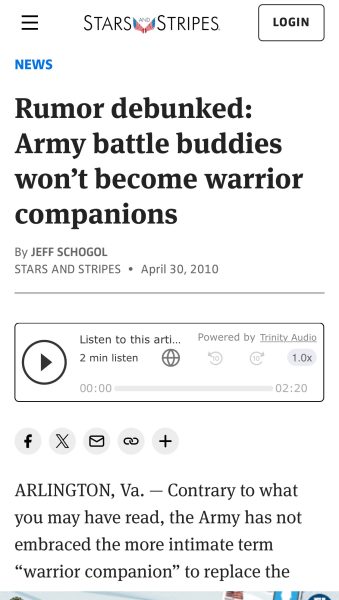
So here’s to those brilliant mischief-makers — the sergeants who weaponized boredom into a prank so good it actually made Stars & Stripes. They reminded us of two eternal truths: (1) you can’t keep soldiers from making fun of the Army, and (2) sometimes the best red-teamers don’t wear badges, they wear chevrons.
And somewhere, in a binder-filled office at the Pentagon, a colonel is still clutching a printout of the fake ALARACT, wondering why his Warrior Companion never called him back.
If you enjoyed this article, then please REPOST or SHARE with others; encourage them to follow AFNN. If you’d like to become a citizen contributor for AFNN, contact us at managingeditor@afnn.us Help keep us ad-free by donating here.
Substack: American Free News Network Substack
Truth Social: @AFNN_USA
Facebook: https://m.facebook.com/afnnusa
Telegram: https://t.me/joinchat/2_-GAzcXmIRjODNh
Twitter: https://twitter.com/AfnnUsa
GETTR: https://gettr.com/user/AFNN_USA
CloutHub: @AFNN_USA