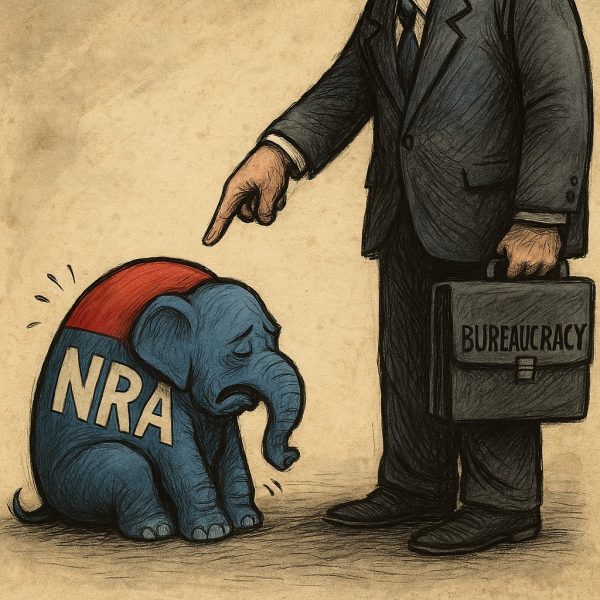
The Second Amendment didn’t erode in a single dramatic moment. It was smothered slowly, bureaucratically, and with just enough moral theater to keep polite people quiet. And while gun owners were told the NRA was “holding the line,” the line kept moving—always in one direction. The organization that once claimed to be the preeminent defender of the right to keep and bear arms gradually became a spectator, occasionally a negotiator, and too often an accomplice by omission.
The first great failure came early. In United States v. Miller (1939), the Supreme Court left the Second Amendment undefined, tied awkwardly to militia utility. The NRA, still styling itself as the voice of American marksmen, failed to ensure a robust defense. That silence mattered. When constitutional meaning is left vague, courts don’t protect rights—they ration them. For nearly seventy years, that vacuum allowed legislatures and agencies to experiment freely with restrictions.
Then came 1968, a year that permanently exposed the racial fault line beneath American gun control. The Gun Control Act of 1968 was sold as a response to assassinations and “crime,” but its timing was not subtle. Armed Black Americans—especially groups like the Black Panthers—had begun openly exercising the Second Amendment. The state responded not by addressing violence, but by tightening access, expanding prohibited-person categories, and federalizing gun regulation. Historically, gun control in America has rarely been about disarming criminals; it has often been about disarming the politically inconvenient and socially disfavored.
This wasn’t new. From post–Civil War Black Codes to Jim Crow-era permit schemes, firearm regulation has long been used as a tool of social control. The 1968 Act modernized that tradition under a federal banner, and the NRA—already leaning toward institutional caution—did not wage a moral or constitutional counteroffensive. Instead, the framework of licensing, categorization, and federal oversight became normalized.
The next betrayal was unmistakable. In 1986, the NRA backed the Firearm Owners’ Protection Act while allowing the Hughes Amendment to pass—permanently banning new civilian machine guns. This was not an accidental loss. It was a calculated concession. Gun owners were told it was necessary, strategic, unavoidable. Forty years later, the ban remains, untouched, and the precedent stands: rights can be traded away if the price is high enough and the victims are few enough.
After that, the erosion became procedural. Heller (2008) and McDonald (2010) were hailed as victories, yet they came decades late and were immediately undermined by hostile jurisdictions. Licensing delays, discretionary permits, exorbitant fees, and selective enforcement flourished. The NRA celebrated symbolic wins while states perfected regulatory nullification. A right that exists only after months of paperwork and bureaucratic mercy is not a right—it’s conditional tolerance.
When the administrative state went fully rogue, the NRA again lagged. The federal bump stock ban—an outright prohibition enacted without Congress—should have triggered all-out resistance. Instead, the NRA’s response was timid and delayed, floating amnesty language while the ban hardened into policy. The Supreme Court eventually corrected the overreach in Garland v. Cargill (2024), but not because the NRA led with urgency. Others carried that fight.
Meanwhile, Bruen (2022) finally imposed a historical test on gun laws, theoretically resetting the board. Hostile states responded with open defiance—“sensitive place” expansions, permit traps, and endless litigation. Once again, the NRA was reactive rather than anticipatory, while smaller organizations pushed injunctions and enforcement actions with speed and precision.
All of this unfolded alongside scandal. Financial mismanagement. Lavish executive spending. Internal power struggles. Jury findings of breached fiduciary duty. And yes, tone-deaf expenditures—branding campaigns, lifestyle marketing, and high-profile sponsorships—while gun owners watched rights disappear through a thousand legal cuts. Trust evaporated because results never followed rhetoric.
The final insult is that gun control’s racial and class impact remains unchanged. Today’s permit systems and “may-issue” remnants still fall hardest on the poor, the urban, and the politically unfashionable—precisely the people the Second Amendment was meant to protect. A right that requires time, money, lawyers, and bureaucratic goodwill is a privilege of the comfortable, not a safeguard for the vulnerable.
At this point, the NRA’s greatest remaining value is not leadership—it’s capital. The honest path forward is not another fundraising letter or nostalgia campaign. It is accountability. The NRA should acknowledge its failures and redirect its remaining funds to organizations that are actually winning—those filing lawsuits, forcing compliance, and defending the Second Amendment as the civil right it is.
The Second Amendment does not need caretakers who fear controversy. It needs fighters who understand history, power, and the consequences of surrendering ground inch by inch. If the NRA can no longer be that force, then stepping aside is not weakness.
It’s overdue.
If you enjoyed this article, then please REPOST or SHARE with others; encourage them to follow AFNN. If you’d like to become a citizen contributor for AFNN, contact us at managingeditor@afnn.us Help keep us ad-free by donating here.
Substack: American Free News Network Substack
Truth Social: @AFNN_USA
Facebook: https://m.facebook.com/afnnusa
Telegram: https://t.me/joinchat/2_-GAzcXmIRjODNh
Twitter: https://twitter.com/AfnnUsa
GETTR: https://gettr.com/user/AFNN_USA
CloutHub: @AFNN_USA