
As expected, the U.S. Mint will produce commemorative coins for the nation’s Semiquincentennial (250th anniversary) of the Declaration of Independence.
Also as expected, CNN turned in an anti-Trump diatribe under the headline, “Killing the penny was just the start. Trump is rewriting the rules on America’s coin.”
The Mint will issue a series of quarters honoring the Mayfield Compact, Washington, Jefferson (Declaration of Independence), Madison (Constitution) and Lincoln’s Gettysburg Address.
Yes, a Trump dollar coin is tacky but let the public decide if it is proper. During Coolidge’s presidency, the Mint put his likeness on the Sesquicentennial Half Dollar which commemorated the 150th anniversary of our independence.
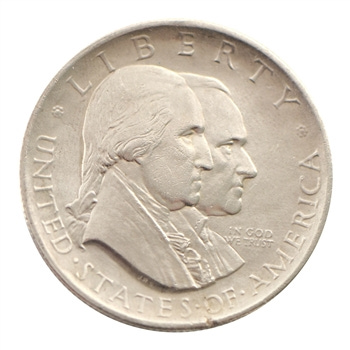 |
Fittingly, Silent Cal’s 50 cent piece was met with silence. The coin was less popular than lice or even the Susan B. Anthony Dollar. Most of the Coolidge coins were returned to the Mint, which melted them down to make other coins.
But when it comes to tacky, few things match CNN reporting. The news channel said:
Instead of quarters honoring the abolition of slavery, granting women the right to vote and the Civil Rights movement, the Treasury will instead issue historical quarters featuring white men from the 18th and 19th centuries who were already well represented on currency and in historical tributes.
The bigotry of CNN is amazing. Now CNN wants to ban white men from being on coins commemorating the founding of our nation by (drumroll, please) white men.
Who abolished slavery? White men.
Who granted women the right to vote? White men.
Who enshrined civil rights into the law? White men.
The time to honor the end of slavery was the 150th anniversary of the 13th Amendment in 2015. Obama was president. He refused lead a large celebration because acknowledging the sacrifices made to abolish slavery (Battle Hymn of the Republic: “As He died to make men holy, let us die to make men free, while God is marching on”) would undermine Obama’s demonization of white men—unless they are gay. (Obama: “I make love to men daily, but in the imagination.”)
Last year, the Mint issued Harriet Tubman Commemorative Coins to mark the bicentennial of her birth—two years late.
The American Revolution was not won by white men alone. Next month, the Mint will begin circulating the 2026 Sacagawea Dollar with Polly Cooper on the reverse (the tail side). Since the Sacagawea Dollar debuted other Indians have appeared on the reverse including Jim Thorpe, General Ely S. Parker and Maria Tallchief.
Thorpe was the Olympic gold winning athlete and early football hero.
Parker was the man who drafted the Confederate surrender terms at Appomattox. He was so dark, General Lee thought he was black.
Tallchief was not just America’s first Indian first major prima ballerina but the nation’s first major prima ballerina. She married choreographer George Balanchine, who worked with her even after their divorce.
So why is Cooper going to be up there honored with these three giants and the Code Talkers?
She saved Washington and his men at Valley Forge, that’s why.
The Six Nation Confederacy Indian tribes supported the British in the French and Indian War and remained loyal. The revolution divided the Six Nations.
The National Park Service said:
The coming of the war between England and her colonies brought new problems and concerns to the Six Nation Confederacy. They did not fully understand why the English were quarreling with one another, and had no desire to be drawn into what they perceived as a civil war. Early in the revolution, Oneida leaders sent a message to the governor of New York stating: “We are unwilling to join either side of such a contest, for we love you both, Old England and New. Should the Great King of England apply us for aid, we should deny him—and should the colonies apply, we shall refuse. We Indians cannot find or recollect from the traditions of our ancestors any like case.”
This neutral course could not be maintained for long however, as pressure increased from both England and the 13 States. The English particularly were insistent that the Confederacy fulfill its obligations as allies of England. In the end, the civil war aspects of the American Revolution spilled over into the Six Nations. Unable to agree on a unified course of action, the Confederacy split, with not only nation fighting nation, but individuals within each nation taking different sides. Due to the old alliances and a belief that they stood a better chance of keeping their lands under the English, the majority of the nations supported England in some form or another. Only the Oneida and Tuscarora gave major support to the Americans.
The Oneida sent 600 bushels of white corn to Valley Forge in the winter of 1777-78. It was a 250 mile trek one way by 50 braves and Miss Cooper. Her job was to teach the whites how to cook white corn.
The American Battlefield Trust noted:
When Oneida Chief Oskanondonha, or Skenandoah, sent a group of warriors to join the army at Valley Forge, he also sent a gift of surplus corn with the expedition. Cooper—killed in cooking and medicine—joined roughly 50 warriors in their mission to provide much needed relief to Washington’s men.
Cooper’s party began its journey from New York in April 1778, traveling hundreds of miles by foot to Pennsylvania. They arrived in Valley Forge with hundreds of baskets of white corn. Since white corn takes careful preparation before it can be eaten, Cooper taught soldiers and their families how to properly cook it. She also cared for sick soldiers, refusing to accept any pay for her services. According to oral tradition, some of the soldiers’ wives—or even Martha Washington herself—presented Cooper with a black shawl to show their immense gratitude for her aid.
Cooper’s descendants and the Oneida Indian Nation ensure her selfless acts are not forgotten. Her descendants recorded her story and have cared for her shawl for generations. Recently, the Oneida Indian Nation donated a statue of Cooper standing alongside Washington and Oskanandonha to the Smithsonian’s National Museum of the American Indian to commemorate the alliance between the Oneida Indian Nation and the United States.
The shawl is on display in a museum in New York.
Kandice Watson, documentarian for the Oneida Indian Nation, did the math and calculated that 50 bushels were more likely than 600. But that was 50 more bushels than Washington’s men had.
While Polly prepared and taught the men how to cook, the Oneida warriors that accompanied her were on their way to Barren Hill to experience their first real attempt at combat. The Oneidas followed Lafayette’s lead, but soon found themselves in serious trouble as the British began to approach. There was a small battle at Barren Hill, and one Oneida, Thomas Sinavis, lost his life. Sinavis was of the Bear Clan and was a hereditary sachem. His sister, Wale’ was a Bear Clan mother, and she was devastated by the loss of her brother. Thomas is buried in the Presbyterian St. Peter’s Church cemetery in Barren Hill.
Two Oneidas were also captured as prisoners that day and returned to Philadelphia where they were stripped of everything except their breechcloths. One of these Oneidas was Skayowi:yoh (Beautiful Sky).
After the death of Sinavis, General Washington changed his mind about the Oneida warriors fighting in combat and desired for them to return home. The price they were to pay was too high, and they were needed at home to protect their families more than they were needed in Pennsylvania.
And that sacrifice by the Oneidas was every bit as horrifying as those suffered by the white Americans. Park Ranger William Sawyer recently wrote:
By the 1780s however, the Oneidas’ support of the Americans had cost them a great deal. One of the principal Oneida villages was destroyed in 1780 and numerous Oneida moved to the area of Ft. Stanwix, or farther down to Schenectady for safety and subsistence. Some of this number, unable to withstand the continued persecution from the loyalists and other Six Nations groups, were forced to return their allegiance to England in order to save themselves and their families. The 13 States however, continued to consider the Oneida Nation as a whole their allies to the end of the war. In fact, the American force that attempted to capture Oswego in February of 1783 employed an Oneida warrior as their guide.
The end of the war came none too soon for the Oneida Nation. Their homes, fortunes and way of life had been completely destroyed by the fighting, and they had few resources to fall back on. It was not until 1794 that the U.S. Government provided any restitution to their former allies. A total of five thousand dollars was paid to those Oneida and Tuscarora who had lost homes and property due to their support of the American cause.
Next year marks the 250th anniversary of the rebellion that created this great nation. Instead of bitching about President Trump and the color of the people on the coins, how about having CNN show some objectivity and drop the politicization of the celebration?
This article first appeared on Don Surber’s Substack. Reprinted here with permission.
If you enjoyed this article, then please REPOST or SHARE with others; encourage them to follow AFNN. If you’d like to become a citizen contributor for AFNN, contact us at managingeditor@afnn.us Help keep us ad-free by donating here.
Substack: American Free News Network Substack
Truth Social: @AFNN_USA
Facebook: https://m.facebook.com/afnnusa
Telegram: https://t.me/joinchat/2_-GAzcXmIRjODNh
Twitter: https://twitter.com/AfnnUsa
GETTR: https://gettr.com/user/AFNN_USA
CloutHub: @AFNN_USA