History has a nasty habit of punishing those who confuse certainty with truth.
For years, Americans were told there was one acceptable explanation for COVID-19. Question it, and you were labeled anti-science, irresponsible, or a conspiracy theorist. Social media buried dissent. Experts assured us the debate was over before most people even knew there had been one.
Today, the conversation looks very different.
Congress has investigated. Intelligence agencies have debated competing theories. Federal agencies have revised positions. Scientists who once dismissed a laboratory-associated origin now acknowledge it as a plausible possibility. Meanwhile, the public was led to believe the issue was settled long before it actually was.
Then came the whistleblowers.
Former intelligence officials appearing in interviews, including with Tucker Carlson, have alleged that information about the virus’s origins and early assessments was suppressed or downplayed. But if even part of their story is true, Americans deserve answers—not another lecture about “misinformation.”
Here’s the question that keeps nagging at me.
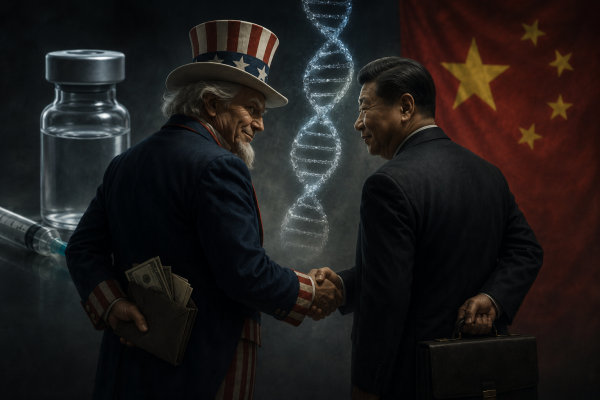
If the genetic sequence used to begin developing the first mRNA vaccines ultimately came from Chinese scientists investigating the outbreak, and if there was even a credible possibility that the outbreak involved a laboratory accident, why wasn’t the public simply told that?
Instead, many Americans felt they were handed a sales pitch instead of the full picture.
Imagine a different conversation.
“The virus has been previously sequenced by Chinese scientists. We are rapidly developing an mRNA vaccine using that published genetic code obtained from China. Here are the risks. Here are the benefits. Make an informed decision.”
Would everyone have agreed?
Of course not.
Would everyone have taken the vaccine?
Certainly not.
But people might have felt respected enough to make their own decisions instead of feeling managed. Get your vaccine and get a free donut.
That’s the real casualty of COVID—not just lives or livelihoods, but trust.
Public trust doesn’t disappear because officials are wrong. It disappears because officials act as though citizens are too fragile, to stupid to hear uncertainty.
Were mistakes made? Absolutely.
Were some decisions made with the best intentions? Probably.
Were politics, institutional reputation, and public relations mixed into scientific communication? It would be astonishing if they weren’t.
The irony is almost poetic.
The people who insisted we “follow the science” often seemed terrified of allowing scientific debate.
Science is supposed to thrive on competing hypotheses, not social-media moderation policies.
Suppressing discussion didn’t strengthen confidence in science.
It shattered it.
The next public-health crisis will not begin with a virus.
It will begin with millions of Americans asking one simple question:
“Why should we believe you this time?”
And perhaps the most uncomfortable question of all is this:
If the public had been given every known fact, every uncertainty, and every competing hypothesis from the beginning—even those that made governments and institutions uncomfortable—would the response have looked different?
We’ll never know.
Because someone decided Americans were too immature, and didn’t need all the information to make up their own minds.
That’s a lesson every free society should remember long after the masks have been packed away.
If you enjoyed this article, then please REPOST or SHARE with others; encourage them to follow AFNN. If you’d like to become a citizen contributor for AFNN, contact us at managingeditor@afnn.us Help keep us ad-free by donating here.
Substack: American Free News Network Substack
Truth Social: @AFNN_USA
Facebook: https://m.facebook.com/afnnusa
Telegram: https://t.me/joinchat/2_-GAzcXmIRjODNh
Twitter: https://twitter.com/AfnnUsa
GETTR: https://gettr.com/user/AFNN_USA
CloutHub: @AFNN_USA