This piece began as a discussion on a RedState comment page [Fired General Admits to Leaks; DOJ Announces Investigation – RedState]. The argument raised a question worth addressing beyond the comments section: when does a senior military officer’s obligation to give candid advice become, in his own mind, a license to overrule the civilians in charge?
There’s a useful name for that particular arrogance: “general’s disease.” The symptoms are unmistakable: the general confuses rank with infallibility, treats disagreement as disloyalty, and eventually decides that civilian supervision is an intolerable interference with his personal management of national defense. Anyone questioning his judgment becomes the enemy; anyone applauding it becomes a patriot.
General Douglas MacArthur supplied the classic warning. Whatever his military accomplishments, they did not entitle him to conduct an independent foreign policy. He publicly challenged the administration’s policy and issued an unauthorized ultimatum to the Chinese while Washington was preparing diplomatic overtures. Truman relieved him in April 1951, stating the governing principle plainly: “military commanders must be governed by the policies and directives issued to them in the manner provided by our laws and Constitution.” In plain speak, that means the military must follow the orders of the civilian leadership. Five stars did not buy MacArthur an exemption. Three or four should not buy one today.
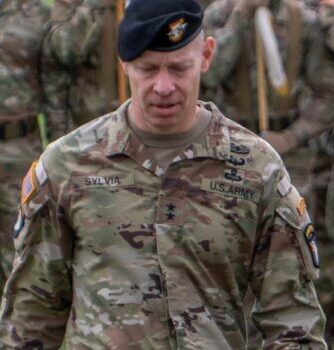
Many of the flag officers that both President Trump and Secretary of War Peter Hegseth have relieved seem to have suffered from “general’s disease”: the conviction that their superior judgment entitled them to circumvent civilian leaders rather than obey them. In that mindset, going around the chain of command becomes a duty, and perhaps even leaking becomes an act of patriotic necessity. Sylvia’s criminal guilt remains to be established, but the larger conceit deserves no such deference: stars on your shoulders do not confer the right to decide which lawful civilian directives you will follow.
Senior officers owe civilian leaders candid military advice, including advice those civilian leaders would rather not hear. What they do not possess is a personal veto over lawful policy, exercisable through friendly reporters. The distinction is between advising the government and appointing yourself its supervisor.
The Constitution does not contain a “but the general knows better” clause. MacArthur learned that the hard way. His successors should not need remedial instruction.

Patrick S. Baker is a U.S. Army veteran and retired federal civil servant who holds degrees in history, political science, philosophy, and education. Since 2013, he has written professionally with his work appearing in Strategy and Tactics, Military History Magazine, Sci Phi Journal, and others. In his downtime he plays golf, works out, travels, and enjoys life with his wife and their pets in Florida.
If you enjoyed this article, then please REPOST or SHARE with others; encourage them to follow AFNN. If you’d like to become a citizen contributor for AFNN, contact us at managingeditor@afnn.us Help keep us ad-free by donating here.
Substack: American Free News Network Substack
Truth Social: @AFNN_USA
Facebook: https://m.facebook.com/afnnusa
Telegram: https://t.me/joinchat/2_-GAzcXmIRjODNh
Twitter: https://twitter.com/AfnnUsa
GETTR: https://gettr.com/user/AFNN_USA
CloutHub: @AFNN_USA