
The car business gave me a front row seat to human behavior. When gas prices went up, many bought compact cars. When they went down, they bought SUVs. This would happen within relatively short periods of time. No logic, no memory, only knee jerks. We understood that gas prices fluctuated continuously and ensured we had the inventory to satisfy their emotional reactions with each ebb and flow.
On the national level, politics and marketing campaigns recognize humans’ short memory and tendency to react rather than think. Unfortunately for us, the stakes are immensely higher than buying the wrong car. Worse, some politicians are not satisfied to wait for an event that will cause the reaction they desire. As a result, strategies have been deployed to spark that emotional response. Unrelated but concurrent events can also magnify the impact of a successful campaign. It seems clear the goal is a massive social contagion. When it comes to elections, that translates to a red or blue wave.
We experienced a blue tsunami. Apparently Republicans stayed home, Democrats showed up in large numbers and suburban swing voters who went narrowly for Trump in 2024 swung back to Democrats by 19 points. Hispanic voters also swung decisively back to Democrats after their shift toward Trump in 2024.
Exit polling and post-election analyses document that many voters were driven by opposition to Trump in particular and Republicans in general rather than by support for the Democratic candidates. Republicans who chose not to vote increased the relative weight of every Democratic ballot. Swing voters switched even though they viewed Democrats unfavorably. They simply disliked Trump more. In my opinion, the behavior of these groups suggests an emotional reaction on “right now” data and their opinion of Trump, not one based on critical evaluation of the candidates or the long-term consequences of their policy positions. In other words, a knee jerk. Like my car buyers, they reacted to the pain of the moment and drove off the lot without asking whether their family could fit in the car.
It is not uncommon for voters to reject the party in power when kitchen table issues such as cost of living, the war and corruption are top of mind. What is uncommon is for the anti-vote to extend so far down the ballot that it flips traditional red states like Texas. More troubling still is the knee jerk into the arms of a handful of socialists and other progressive candidates who support centralized government control of the economy and, in its purest form, the abolishment of private property. For those who believe this statement is hyperbole, New York City’s socialist Mayor Mamdani, a member of the Democratic Socialists of America (DSA), has already signaled his intention to move in this direction with plans to transfer buildings out of private hands.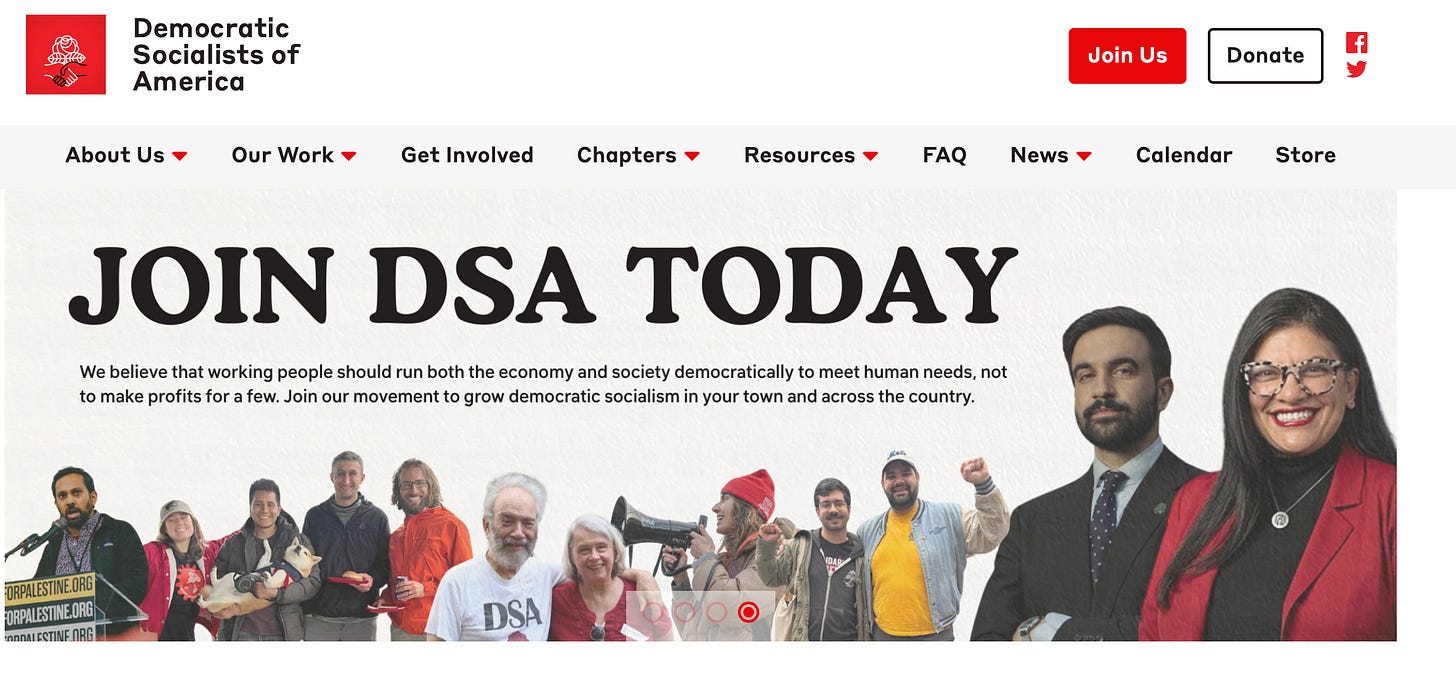
Eighty-one percent of Americans view free enterprise favorably, yet many cast an anti-Trump vote for candidates who favor significantly greater centralized control of the economy. I suspect we will look back on this election as a tipping point. Socialism gained a solid foothold, not on its merits, but on the back of Trump hate.
This article will address the confluence of several important factors that led to the blue tsunami. While voters have many valid complaints, too many of us allowed our dissatisfaction to be amplified or redirected by Democrats’ clever influence campaigns. Republicans, on the other hand, failed to deliver on key promises and offered no coordinated message of their own.
Part 2 will address the cultural trends that created fertile ground for the Democratic influence campaigns to succeed. How could voters possibly support both socialism and free enterprise, philosophies that are diametrically opposed? We will also examine what this election, in combination with these trends, portends for the future. The talking point has been deployed that this blue wave is no different than other midterm wipeouts. Everything will be fine! It is different because of these trends and the people who were elected. If we don’t change course, things will definitely not be fine.
Promises Made, Stories Told…
If a party is going to run a “slogan” campaign as they did in 2024, they better deliver the goods or provide effective messaging as to why they didn’t. On several key issues, Republicans did neither. We can lament the fact that voters are so uninformed that slogans work but it is what it is. Run that kind of campaign and live or die by it.
I can hear Republicans asking, “But what about all the good this administration has done?” For sure there is much good to discuss including on the economy, but negative messaging wiped out the positive and Republicans failed to mount a comprehensive, coordinated election campaign of their own. Equally important, some of their successful messaging from 2024 blew up in their faces:
No New Wars
The Iran war, regardless of whether it was justified, is a new war. To complicate matters, Trump’s messaging was disastrous. We have a deal, we don’t have a deal, I will bomb Iran to the stone age, etc. ad nauseam. We still don’t have “a deal.”
“No new wars” helped Trump win in 2024 but we now see that another policy position ultimately had a higher priority: “no nukes for Iran.” While Trump said many times on the campaign trail that he would never let Iran get a nuclear weapon, “no new wars” always grabbed the headlines. Ideally Trump would have ensured voters understood that “no nukes” could mean military action. Without that clarity and consensus, a segment of voters considered it a bait and switch.
The two priorities were not necessarily mutually exclusive. We have no idea what went on behind closed doors that led to this escalation of hostilities. For example, did Trump miscalculate the length of the mission or overestimate his ability to negotiate with people who regularly chant “death to America?” The only thing we know for sure is that there was no attempt to adjust the public’s expectations before the attack.
The Iran war coupled with terrible Republican messaging backfired politically and fueled the failure of two campaign promises: “no new wars” and “make America affordable again.”
Democrats immediately used the war as a launch pad for their affordability campaign. Four days into the war, Jeffries’ own office summarized his floor speech regarding the War Powers Resolution with the statement that taxpayer dollars should be used “to drop prices at home, not to drop bombs in the Middle East.”
In a healthy political climate (if such a thing exists), once hostilities began politicians might have followed Vandenberg’s classic approach from the 1940s, “politics stops at the water’s edge,” and not used the Iran war for electoral advantage. Democratic leaders quickly began calling it “a reckless war of choice” and used the war to hammer Trump and Republicans.
Some analysts believe that Iran dragged its feet in negotiations hoping for more amenable conditions after the midterms. Whether a united front would have changed that outcome is unknowable. What is clear is that Democrats treated the war as an opportunity for political gain rather than as a joint strategic problem that presidents of both parties have grappled with.
On Election Day, voters prioritized short term gas prices over the longer-term goals to eliminate the threat of a nuclear Iran, crush Iran’s terror machine and potentially stabilize the Middle East. I don’t think that decision is going to age well.
Make America Affordable Again
Considering the state of the economy after Covid and the Biden administration, this was an effective message in 2024 but Trump’s constant mantra that he would reduce prices on day one was stupid. Fixing the negative economic impacts of Covid, the response to it, and a myriad of economic issues decades in the making was never going to be a one-day solution. It was and is a big job that takes time.
Republicans’ inability to effectively simplify economic complexities, along with policies such as tariffs that raised prices, enabled one of the more ironic marketing campaigns ever: Democrats successfully coopted the affordability message for 2026. These are the same Democrats whose policies drove the inflation in the first place. How could people forget that the Biden administration dumped trillions into the economy, inflation hit 9%, and Treasury Secretary Janet Yellen assured us it was “transitory”?
One would think those concerned with affordability would run screaming from the party that presided over a clear upward distribution of wealth during Covid. Trump’s recommended 30-day extension of the lockdowns was a colossal mistake, but it was the Democratic governors who kept them in place for months, forcing small businesses to close while allowing “oligarchs” who own big corporations to rake in the profits. People knee jerked and voted for the same party whose prolonged lockdowns caused the bulk of the economic damage.
It takes real chutzpah to campaign against billionaires and “oligarchs” when your own policies fueled the creation of more of them than at any time in history.
Van Jones recently admitted how they won the affordability narrative: “Now it can be told… how did we win the narrative on affordability? … The Republicans never figured out what we were doing. There is something called the American Accountability Network. Tens of thousands of online humans, not bots, coordinated to make the affordability message a winning message online. 32.5 million people hit on Instagram every day, 88.8 million hit on Twitter/X every single day, and 185 million Facebook hits every single day… The Republicans could not understand it wasn’t bots; it was actual human beings… Driving the kitchen table affordability message and tying that to Democrats on a positive and Republicans on a negative…They couldn’t get any traction on these culture war issues anymore because we figured out how to get around all that…” Emphasis mine.
As Victor Davis Hanson points out, Trump inherited prices roughly 21% higher than when he left office in 2021. Add his cumulative 6.1 to 6.3% on top of already painful prices, combine it with the influence campaign above, and Trump becomes the villain.
Any who doubt the significance of influence campaigns should consider California. Drivers pay the highest gas prices in the nation, yet voters continue to reelect the leaders whose policies drive them up. If gas prices were the deciding issue in these midterms, as some talking points suggest, voters would have swept out Sacramento too. They didn’t.
Drain the Swamp
Once again, great slogan, poor execution. DOGE was quietly shut down before its planned end. People’s emotions were engaged by successful Democratic narrative campaigns using mass layoffs as fodder. Orwell would be impressed that cutting bloated payrolls became an attack on workers. Unwitting foot soldiers created a spectacle, burning Teslas and attacking Elon Musk, instead of asking why our tax dollars were being lost to fraud and waste. After Tesla reported a 71% reduction in first quarter profits, Musk stepped back, and without him, DOGE faded away. If you would like a refresher, I explored this in The Wrong People are Silent.
Congress talked about codifying the cuts but, other than one package, they never got around to it. I suppose they were too busy raising money for the next election to do pesky things like saving our tax dollars. With control of the House, Senate and White House, Republicans failed to follow through. So did voters.
After DOGE, the Task Force to Eliminate Fraud was established on March 16, 2026. The Fraud Ledger suggests $260.7 billion has been uncovered, $72 billion stopped and $58.9 billion recovered. It is very good this is happening, but these numbers are a drop in a very large bucket. The Government Accountability Office estimates the federal government loses between $233 and $521 billion to fraud every year. Nothing to see here, let’s burn some Teslas.
Democrats neutralized Republicans’ fraud talking points. When Nick Shirley testified before the Senate Homeland Security Committee regarding the fraud he exposed in Minnesota, the Democratic side of the dais was empty. When Shirley turned his attention to fraud in California, Newsom signed AB 2624, “Privacy for Immigration Support Services Providers.” Its author, Assemblywoman Mia Bonta, claimed it was an anti-doxxing bill. Critics called it “The Stop Nick Shirley Act.”
Is anyone else noticing a pattern?
The best defense is often a good offense. Democrats grabbed the corruption message and pointed it directly at Trump. Since Trump essentially put himself on the ballot, this was catastrophic. The accusations are flying about crypto, unethical Middle East influence peddling and the vast increase in his net worth. Trump needs to address this head on. While I will reserve judgement on these accusations until the facts are in, we have all heard the Trump ads for Trump watches and shoes. How many Republicans stayed home just because of those tacky commercials?
Protect the Vote
Republicans promised to address election integrity. Their proposed solution was the SAVE America Act. On the surface it sounded like a strong idea, but it was sloppily drafted, ignored legal precedent, and worked in opposition to federalist principles. Trump, congressional Republicans, and their media outlets continued to push the SAVE Act knowing full well it was dead on arrival instead of pivoting to something that might have passed, survived a legal challenge, and given the states greater control. Epic fail.
For more information, consider reading “Will the SAVE Act Save America?”
Seal the Border. Mass Deportation Now! The Worst of the Worst.
I guess this administration never studied history. The last time a president conducted a highly visible mass deportation was Operation Wetback in 1954. The political backlash was notable and may be why no administration has attempted such a public operation in the interior until now. Perhaps spurred on by public support and a strategy to encourage self-deportation, Trump and Noem thought it was a good idea to create a deportation spectacle in Minnesota. They clearly underestimated the probability of losing the narrative war.
Please consider Saul Alinsky’s Rule 11 in “Rules for Radicals” which was well illustrated in Minnesota: “If you push a negative hard and deep enough it will break through into its counterside; this is based on the principle that every positive has its negative.”
The open-border, anti-enforcement groups have applied sustained negative pressure against ICE and any attempt to deport those here illegally. They have come up with their own slew of endlessly repeated slogans. This was aided by sanctuary policies which pushed enforcement into the public sphere thereby creating the possibility of a highly visible confrontation, ideal conditions for narrative building. The Trump administration fell into the trap and launched the ill-conceived “Operation Metro Surge” which was styled as a militarized operation. The battle lines were drawn, each side’s media salivating over theatrical scenes that pushed their own narrative further, the victor in search of sympathetic public sentiment to be used to secure power via effective marketing.
Protestors blocked federal vehicles and public streets, conducted noise demonstrations, surrounded agents, forcing repeated street confrontations which at times resulted in physical assault against the agents. Of the two sides locked in the street confrontations, the agents were the ones who escalated to lethal force, thereby surrendering public sympathy to the protestors. The relentless negative behavior of the protestors was turned into a positive and public opinion shifted in their favor.
This performative strategy backfired on the administration, and two protestors were killed. Citizens on both sides of the issue were disturbed. Now we are in a stalemate where serious issues over immigration are ignored in favor of only those that support narratives that could lead to electoral success.
The administration’s assertion that only the “worst of the worst” would be deported was also a problem. In reality, illegal immigrants without additional criminal convictions were caught up in the dragnet. Whether one agrees with this is immaterial. The fact that the administration appeared to lie became a focal point. While there are many valid reasons to deport people here illegally as we will continue to explore in The Clash Over Immigration series, those can be easily dismissed when it comes to messaging via meme.
The argument over deportations eclipsed Trump’s closing of the border. This is of crucial importance. Border Patrol apprehensions at the southern border fell from 2.2 million in Biden’s first full year to fewer than 99,000 in fiscal 2026, the lowest on record according to preliminary figures. People knee jerked and voted for the same party that opened it wide under Biden and will likely do so again if they regain the presidency. Alinsky’s Rule 11 worked fabulously. The negative was pushed hard and deep enough that it broke through and buried one of the administration’s biggest successes.
Make America Healthy Again
I had such high hopes when public officials finally appeared serious about getting the crap out of our food and breaking Big Pharma’s apparent control of health-related federal agencies. I also wanted accountability for possible corruption in Biden’s vaccine mandates. How else do you explain an administration that issued vaccine mandates for people who were not at serious risk from Covid with a product that did not “stop the spread,” all while downplaying the potential of vaccine harm? Follow the money. Were officials protecting public health or Big Pharma? Many of us wanted this question answered and are mad it hasn’t happened.
While there are likely many reasons the agenda stalled, one decision stands out as a betrayal. In February, Trump signed an executive order to expand production of glyphosate, the weed killer many MAHA supporters associate with cancer, and granted its makers a form of legal immunity. The RFK coalition was very important in Trump’s 2024 victory. Hopefully this administration will research whether disappointed RFK voters who helped elect Trump in 2024 turned their backs on him in the midterms.
This election made me feel like I had time traveled back to 2020 when Trump and the Republicans were completely outmaneuvered. It happened again. Democrats’ coordinated messaging and delivery were far superior to the Republican scattershot approach. This in combination with the Republican failure to deliver on important promises gave Democrats the ability to generate the desired knee jerk reaction. This strategy might not have succeeded without certain cultural trends that we will examine in Part 2.
It’s essential we attempt to understand what happened in this election and the potential consequences of the anti-vote. This election could have inadvertently given socialist and extreme progressive ideas a greater foothold, producing “change” that voters will be unpleasantly surprised by.
Politicians will always attempt to manipulate us. We must stop reacting.
A Modest Opinion by Sue Seboda
If you enjoyed this article, then please REPOST or SHARE with others; encourage them to follow AFNN. If you’d like to become a citizen contributor for AFNN, contact us at managingeditor@afnn.us Help keep us ad-free by donating here.
Substack: American Free News Network Substack
Truth Social: @AFNN_USA
Facebook: https://m.facebook.com/afnnusa
Telegram: https://t.me/joinchat/2_-GAzcXmIRjODNh
Twitter: https://twitter.com/AfnnUsa
GETTR: https://gettr.com/user/AFNN_USA
CloutHub: @AFNN_USA