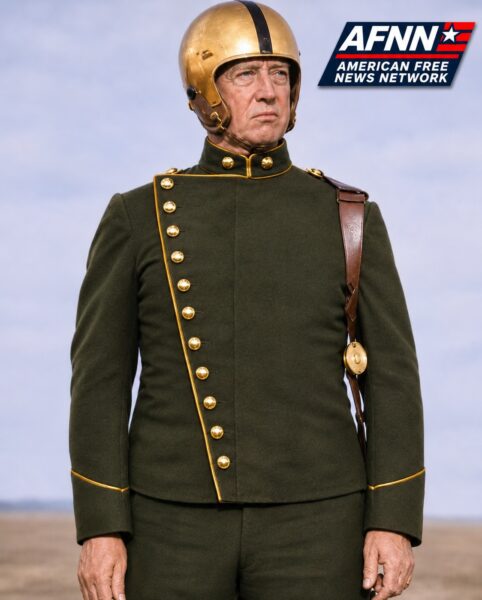
General George S. Patton was an absolute stud. An Olympic athlete, accomplished horseman, decorated combat veteran, pioneer of American armored warfare, and arguably one of the finest battlefield commanders America ever produced. The man understood warfare, leadership, momentum, and the importance of cultivating a warrior mentality.
But that doesn’t mean every idea that escaped his brain was worthy of implementation.
Sometimes even military geniuses need someone standing nearby to say, “Sir, that’s a terrible idea.”
Fifteen Days That Changed American Armor
Interestingly, Patton’s actual tank combat experience during World War I lasted barely two weeks. He entered armored combat during the Saint-Mihiel Offensive on September 12, 1918, and was wounded on September 26 during the Meuse-Argonne Offensive.
Fifteen calendar days.
However, reducing Patton’s expertise to fifteen days of combat ignores years of preparation, experimentation, education, and professional development.
Patton helped establish America’s fledgling Tank Corps, organized its training, and recognized the revolutionary potential of armored warfare while much of the military establishment remained emotionally attached to horses.
He was a visionary in a profession where institutional resistance to change is practically a competitive sport.
The Armani Suit of the Armor Officer
Among Patton’s better ideas was the American tanker boot, whose development around 1937 is credited to Patton and the Dehner Boot Company of Omaha, Nebraska.
The distinctive leather straps replaced conventional shoelaces for practical reasons. Tanks are inherently dangerous working environments. Breech flashback, hot propellant gases, petroleum-based hydraulic fluids, and mechanical equipment historically presented significant hazards to tank crews.
Conventional shoelaces could become entangled in machinery or burn during a flash fire. Leather straps eliminated loose laces and facilitated emergency boot removal.
The tanker boot was functional, distinctive, and eventually became a symbol of professional identity within the Armor community.
As young Armor lieutenants, we saved our money to purchase quality tanker boots. In 1998, mine cost me $300. That was a significant investment for a young lieutenant.
They were the Armani suit of the Armor officer.
You could buy cheaper boots, but a beautifully polished pair of quality leather tanker boots communicated something about professional pride and belonging to the Armor fraternity.
Nearly a century after their introduction, tanker boots remain an enduring military tradition.
Unfortunately, Patton’s fashion expertise apparently ended somewhere around the ankles.
The Green Hornet
In 1941, Patton modeled his proposed uniform for American tank crews. It featured a green uniform, shiny buttons, and a gold-colored helmet.
The resulting ensemble became known as the “Green Hornet.”
Looking at the photographs today, one might reasonably conclude that Patton had somehow intercepted a Space Force recruiting brochure from the future, combined it with an Army football helmet, and decided this was the appropriate attire for conquering Europe.
All he needed was a ray gun and a membership card to the Galactic Federation.
To be fair, Patton understood the importance of distinctive uniforms in developing esprit de corps. He wanted tankers to possess their own professional identity, much like cavalrymen had enjoyed for generations.
The concept was sound.
The execution looked like something rejected during auditions for a low-budget science fiction movie.
Fortunately, the Army never adopted the uniform.
Even Great Leaders Have Bad Ideas
There is a valuable leadership lesson buried beneath that ridiculous gold helmet.
Great leaders are not infallible. Intelligence, experience, courage, and professional competence do not automatically translate into brilliance in every endeavor.
Patton’s aggressive personality, unconventional thinking, and willingness to challenge established norms contributed to his battlefield success. Those same characteristics occasionally produced spectacularly questionable ideas.
Organizations need innovative leaders willing to challenge conventional wisdom. They also need subordinates with sufficient intestinal fortitude to tell those leaders when their ideas are genuinely stupid.
The problem with surrounding yourself with yes-men is that eventually somebody will convince you that dressing an entire armored division like intergalactic football players is a stroke of genius.
Patton’s legacy remains extraordinary. His contributions to American armored warfare helped shape generations of soldiers and officers. His battlefield accomplishments earned him a permanent place among America’s greatest military commanders.
His tanker boots survived.
His Green Hornet uniform did not.
And for that, generations of Armor officers should be eternally grateful.
Patton was a tactical genius. Giorgio Armani he was not.
If you enjoyed this article, then please REPOST or SHARE with others; encourage them to follow AFNN. If you’d like to become a citizen contributor for AFNN, contact us at managingeditor@afnn.us Help keep us ad-free by donating here.
Substack: American Free News Network Substack
Truth Social: @AFNN_USA
Facebook: https://m.facebook.com/afnnusa
Telegram: https://t.me/joinchat/2_-GAzcXmIRjODNh
Twitter: https://twitter.com/AfnnUsa
GETTR: https://gettr.com/user/AFNN_USA
CloutHub: @AFNN_USA