
Yes, another stupid idea from the geniuses.
I spent over two decades in the U.S. Army, and seeing the massive waste, countless worthless studies, etc., I coined a phrase from the experience.
This is so ate up it can only be federally funded.
E. G. Obama stimulus funds used for studying men’s sex habits in Africa, having a federal office for studying Y2K 17 years after the world survived Y2K, and 1.04 billion to extend a trolly in San Diego just over 10 miles (that’s over 100 million per mile).
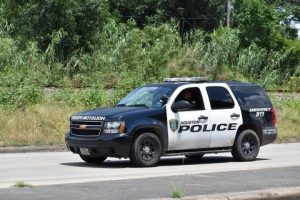
But now I’m seeing more stupidity coming from city and state levels. Cities, in an effort to further hamper law enforcement, are looking at having civilians handle traffic instead of police.
Berkley PDRK (People’s Democratic Republic of Kalifornia) started moving forward with this idea soon after the death of George Floyd. But such stupidity is not limited to third world states like the PDRK, but in cities like Brooklyn Center MN, and Cambridge MA.
Put aside the legal issues of civilians enforcing law (yes, traffic is a minor offense, but it is still a criminal law), the pains of setting up a new bureaucracy, the fact the population will not like them any more than they like the cops, I wonder if these geniuses thought this through.
If a Civilian Traffic Enforcer (CTE, to coin another phrase if you will) sees a car run a red light, and they attempt to initiate a traffic stop, will the driver cooperate? Assume he doesn’t, what are you going to do then? I promise you, after the local politicians make a big show of not allowing cops to enforce traffic, people will not be inclined to comply with people who command less respect than TSA agents, or Cartman on South Park. Are we going to equip the new group with patrol vehicles with emergency equipment? So, you are making them “cops” but less so.
Another issue, will the CTEs have access to NCIC (National Crime Information Center) or state crime information information? That is generally limited to sworn law enforcement officers, and civilians involved with enforcing the law (e.g., dispatchers, civilian investigators, etc.). Part of a traffic stop is checking the license plate to see if it’s there is a warrant attached to the plate, if the vehicle is stolen, involved in a serious case, etc. A statutory issue, but still something for politicians to “think” through before they make such drastic changes.
If a CTE manages to get someone to pull over, how cooperative will they be? Drawing from Texas law, if a peace officer has reasonable suspicion to initiate the stop, and he refuses to identify himself, he has committed a crime (emphasis mine):
Sec. 38.02. FAILURE TO IDENTIFY. (a) A person commits an offense if he intentionally refuses to give his name, residence address, or date of birth to a peace officer who has lawfully arrested the person and requested the information.
(b) A person commits an offense if he intentionally gives a false or fictitious name, residence address, or date of birth to a peace officer who has:
(1) lawfully arrested the person;
(2) lawfully detained the person; or
(3) requested the information from a person that the peace officer has good cause to believe is a witness to a criminal offense.
After the driver looks at this civilian trying to ruin his day, says “&$%^ you!” and drives off, will the CTE pursue in his new Traffic Enforcement Corps Prius? Issues there, the civilian city employees are likely not going to be trained for high-speed driving, so the CTE will not likely follow. Has the driver at this moment actually committed a crime? Under ever state code I’ve reviewed, no, because the person pulling them over is not a peace officer licensed by the state.
That is the issue, what statutory authority will a CTE have? Sounds like minutia, but it is a legal issue to be worked through before you make massive changes. By the way, cities can’t ignore or change state law, they will need the legislature to do that. I wonder if the masterminds at Berkley have thought (I know, don’t’ go there) that detail through.
But one thing must be thought through. A term I’ve heard for ages, and it makes be cringe every time. Routine traffic stop. There is nothing routine, fixed, reliable, or set about a traffic stop. It is like any other interaction with between the police and civilian world. You have no idea if the driver you just pulled over is a man or woman driving home from work, or a gang banger who just held up the Stop-n-Rob down the street. For example, a cop told a teenager to stop walking in the middle of the street, to use the sidewalk. The officer likely thought this was just a teenager being an idiot. However, when the teenager attempted to grab the officer’s pistol from him, things changed. Officer Darren Wilson shot Michael Brown, fresh from robbing Ferguson Market and Liquor. Routine traffic anyone?
Granted, most end up with the driver released, warned, or cited. Fewer times they are arrested for minor warrants or offenses, such as driving with a suspended license. Then there are other cases. Twice in my time on the streets, I pulled people over for “routine” traffic violations, and after checking their identification, my computer said those words, “WARNING: POSSIBLE OPEN WARRANT.” But this was not a misdemeanor theft case, but homicide warrants. After getting some backup units, we conducted a felony stop (weapons are drawn, the suspect ordered out, etc.), took the suspect into custody, and the rest is history. Assume the CTE gets that message back, he will need the cops again. So, the police force that was cut to fund civilian traffic enforcement (and other stupidity) will have to do the work of the civilians after all. Sounds like a lot of waste to me.
Granted, those two cases were not routine, neither was this one for (now retired) Oklahoma State Trooper Charlie Hanger. He pulled over a car without a license plate, and as he approached, Trooper Hanger ”…got a strange feeling about the occupant.” Something cops develop from experience, a sense of when something doesn’t add up.
After asking the man to step out of is vehicle, he noticed a pistol on his belt. The trooper immediately pulled his pistol out, and the driver admitted his weapon “was loaded.” Troop Hanger’s response was, “So is mine.”
After disarming and taking the driver into custody, Trooper Hanger found the man was wanted for a traffic warrant. He booked him in the local jail, not knowing what he was really guilty of. The man had just arrested Timothy McVeigh, the mass murderer from the Oklahoma City Bombing. McVeigh almost got out of the county jail, but was delayed because the judge was not available. He was minutes away from release when the FBI sent out the worldwide notice on him. One can only speculate if McVeigh had managed to make it back on the road.
Again, traffic enforcement is a law enforcement action. Granted, minor compared to other items, but often a “minor traffic infraction” leads to much greater offenses. But we have local and federal “leaders” wanting to hamper the ability of cops everywhere to enforce the law overall, and this is just one more part of their efforts. And, again, women, children, and minorities will be hardest hit.
Michael A. Thiac is a retired Army intelligence officer, with over 23 years experience, including serving in the Republic of Korea, Japan, and the Middle East. He is also a retired police patrol sergeant, with over 22 years’ service, and over ten year’s experience in field training of newly assigned officers. He has been published at The American Thinker, PoliceOne.com, and on his personal blog, A Cop’s Watch.
Opinions expressed are his alone and do not necessarily reflect the opinions of current or former employers.
If you enjoyed this article, then please REPOST or SHARE with others; encourage them to follow AFNN
Truth Social: @AFNN_USA
Facebook: https://m.facebook.com/afnnusa
Telegram: https://t.me/joinchat/2_-GAzcXmIRjODNh
Twitter: https://twitter.com/AfnnUsa
GETTR: https://gettr.com/user/AFNN_USA
CloutHub: AFNN_USA
The only thing I would love to see change, concerning traffic enforcement, is the traffic camera at stop lights, well and their cousins the speed enforcer camera/ radar. I’d much rather deal with a cop than have to pay a supposed cop in another state or country.