Last time we talked about rationalism and the enlightenment, how science became a large influence on the philosophers of the time and how they felt that science would continue to unlock the secrets of the universe to mankind, both those secrets that were scientifically provable, and those that existed in a philosophical sense.
Another phrase that the philosophers of the enlightenment period used to describe their movement was, “the age of reason”. It is not true that these philosophers believed in reason as the sole source of knowledge. Descartes in particular believed in the separate essence of God and the senses and felt that God was better known by the study of ideas. Since the mind and body are two distinct things, Descartes believed that our empirical knowledge of the world would not necessarily lead to knowledge of God. But neither did he believe that science rendered God obsolete.
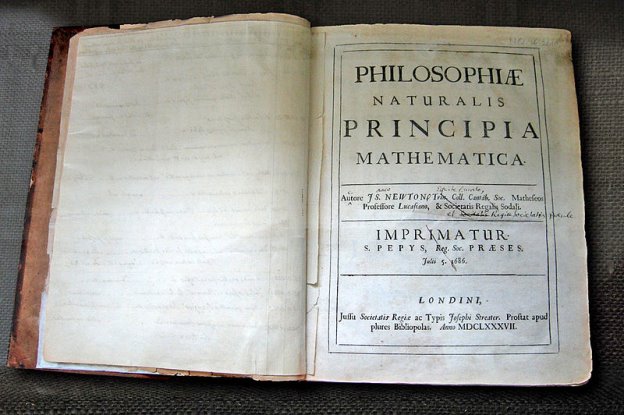
If Descartes was the founder of the rationalist movement, then Francis Bacon would best be known as the founder of the empiricist movement. He believed that the “new science” of the enlightenment was based on empirical observation and experimentation, that knowledge could be arrived at by the power of induction (body of observations that is the basis for a general principal. If the premises are correct, the conclusion of a deductive argument is certain.[1]), and that the pursuit of this knowledge was designed to have a practical application. And it was from this belief that Bacon gave us the phrase, “knowledge is power”. Bacon’s induction process is similar to that which Newton used when writing his work “Principa Mathamatica”.
In it, Newton observed the movement of planets and then deduced the mathematical formulas that described that movement. If you will recall, our first discussions about Marcus Aurelias included the phrase from Hannibal Lector in “Silence of the Lambs” where he discusses “first principles”. This is a metaphysical construct, meaning the study of things in their entirety in an attempt to understand their natures. It is a top-down approach if you will, based on understanding things in their entirety, both as concepts and in their physical existence. The approach that Newton and Bacon took looks at these same things from the bottom up and is designed to understand mathematical laws and principles that can be expounded upon to explain larger phenomenon. What Newton and his successors showed was that it was possible to separate natural science and math from metaphysics and to explain certain natural phenomena without understanding the entire nature of that which he was observing. In that sense, the enlightenment was an anti-metaphysical movement. No longer were philosophers looking at “first principles”, now they were using math and science to explain that which could be observed.
Later, John Locke took this concept one step further when he argued against the idea that any ideas are “innate” to man. This is the beginning of the “blank slate” concept where Locke and his adherents believed that everything that man thought, every concept, was a product of external forces. To him, all knowledge is a product of our senses and, incidentally, this concept is critical to the beginning of the modern study of psychology.
Because man uses his senses to understand that which surrounds him, Locke and Descartes confront the problem of our objectivity by saying that the ideas we have about the environment around us are representations of those objects. But, they would say, we have no way of knowing if our ideas actually match reality, because as skeptics nothing is certain. While this creates problems for the study of natural forces, it creates huge issues when contemplating the more abstract concepts like God.
Ultimately, one of the key concepts of the enlightenment is that of skepticism. In this sense, we can think of skepticism as a scientific principle, “prove it”, rather than the modern equivalent, which I will call cynicism, or the denial of evidence. As the philosophers of the period began to challenge more and more past beliefs, many moved to Holland because of that country’s tolerant attitude toward more radical thought. Interestingly it was not just philosophers who fled to Holland in order to escape the dangers of being considered radical thinkers. In 1608 the Pilgrims first stop on their way to the new world was Amsterdam where they lived for several years before their 1620 trip to Plymouth. Their religious beliefs were considered as radical as the thinking of some of the philosophers of the time. In fact, the tradition of thanksgiving was likely picked up during their time in Holland.[2]
While we tend to think of the enlightenment as a period where the authority of religion was challenged, a better reading might be that the philosophers of that period wound up challenging the concept of any belief. In a sense what they said was that, while the rules of scientific discovery are infallible, that which we use to populate those rules, be they our senses or our perceptions, are fallible which makes any result of the scientific process suspect. As David Hume eventually put it, “all knowledge degenerates into probability.” Taken to its logical conclusion, this philosophy calls into question everything that we know including the Newtonian mathematics used to describe the movement of planets. Ultimately the enlightenment let lose the concept of skepticism which eventually began to consume the movement itself.[3]
[1] https://en.wikipedia.org/wiki/Inductive_reasoning For example, say there are 20 balls—either black or white—in an urn. To estimate their respective numbers, you draw a sample of four balls and find that three are black and one is white. An inductive generalization would be that there are 15 black and 5 white balls in the urn. Author – Different from deductive reasoning if A>B, and B>C, then A>C.
[2] https://earthobservatory.nasa.gov/images/91317/holland-first-stop-for-the-pilgrims
[3] https://plato.stanford.edu/entries/enlightenment
If you enjoyed this article, then please REPOST or SHARE with others; encourage them to follow AFNN. If you’d like to become a citizen contributor for AFNN, contact us at managingeditor@afnn.us Help keep us ad-free by donating here.
Truth Social: @AFNN_USA
Facebook: https://m.facebook.com/afnnusa
Telegram: https://t.me/joinchat/2_-GAzcXmIRjODNh
Twitter: https://twitter.com/AfnnUsa
GETTR: https://gettr.com/user/AFNN_USA
CloutHub: @AFNN_USA