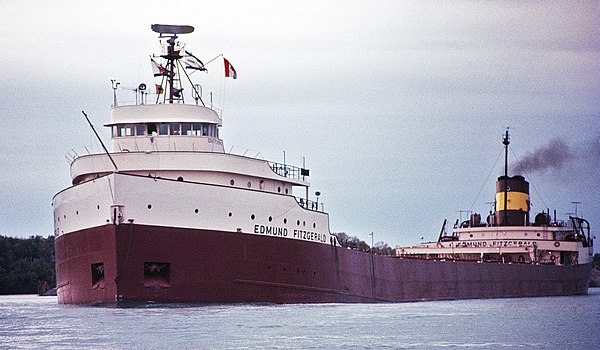
In the annals of American maritime history, there are few stories as haunting and heroic as that of the SS Edmund Fitzgerald. The tragic sinking of this mighty Great Lakes freighter on November 10, 1975, during a fierce November storm, remains etched in the collective memory of those who revere the history and legacy of the region. This story, however, hits closer to home for this writer, as my own family was touched by the tempest that fateful night.
My grandfather, now gone, was a steadfast first mate on another ship navigating the treacherous waters of Lake Superior, was among those who braved the unforgiving gales of the “Witch of November.” He, like the crew of the ill-fated Edmund Fitzgerald, faced a dire predicament that night. But, against the odds, he managed to steer his vessel through the tempest and bring his crew safely to shore. The relief that washed over my family when they received the news that he had survived is a feeling that has never dimmed.
In the days following the tragedy of the Edmund Fitzgerald, as we watched the news unfold and learned of the 29 souls lost aboard that ill-fated ship, our hearts went out to the families who received devastating news instead. It was a stark reminder of the perilous nature of maritime work and the tremendous sacrifices made by those who labor to transport the goods that sustain our nation.
The Edmund Fitzgerald, known affectionately as the “Big Fitz,” was a symbol of American industry and might, like a steel behemoth cutting through the Great Lakes. The ship, measuring over 700 feet in length, was an icon of the blue-collar ethos that has defined this region for generations. Yet, that November night, it met its tragic end beneath the churning waves.
The sinking of the Edmund Fitzgerald has left an indelible mark on the American consciousness, with songs, documentaries, and books dedicated to preserving the memory of this ill-fated voyage. It’s a story that reminds us of the courage and resilience of those who take on the challenges of the unforgiving waters, the often-inhospitable weather, and the grueling demands of Great Lakes shipping.
As we remember the Edmund Fitzgerald and honor the lives lost that night, let us also pay tribute to the unsung heroes like my grandfather, who braved the same storm and managed to navigate their vessels to safety. Their stories, while less known, are just as vital in preserving the legacy of the Great Lakes maritime tradition. The Edmund Fitzgerald and the brave sailors who perished aboard it serve as a solemn reminder of the extraordinary risks faced by those who labor on the high seas, and the enduring strength of the American spirit in the face of adversity.
If you enjoyed this article, then please REPOST or SHARE with others; encourage them to follow AFNN. If you’d like to become a citizen contributor for AFNN, contact us at managingeditor@afnn.us Help keep us ad-free by donating here.
Truth Social: @AFNN_USA
Facebook: https://m.facebook.com/afnnusa
Telegram: https://t.me/joinchat/2_-GAzcXmIRjODNh
Twitter: https://twitter.com/AfnnUsa
GETTR: https://gettr.com/user/AFNN_USA
CloutHub: @AFNN_USA
48 years ago, this tragedy unfolded. So many have no clue of the risks Merchant Mariners face on our inland seas. Living on the Mighty St Lawrence, and in the area for about 50 years I have been blessed to work in the shipping industry as a Pilot Boat Operator for a few years and there’s nothing like servicing a ship in a blizzard in the dark. I also had the privilege of working another gig with the niece of Capt McSorely 🚢. Bless our Mariners and of course all our service men. 🇺🇸🙏