Did Old Max Declare Endex Too Soon On The Status Of ODNI Reform? The Reform We Want, Vice The One We Need
Reforming the ODNI and the National Intelligence Community (IC) is a strategic imperative for the 21st century.
In the previous seven parts of this series I articulated a general plan as a starting point for reforming the Office of the Director of National Intelligence (ODNI) and the intelligence community (IC) based on a number of reasons but largely because it had failed to achieve the original objective of the 9-11 Commission (e.g., to unify the IC and prevent strategic surprise,) and went on to specify why I believed that nothing is going to come of it.
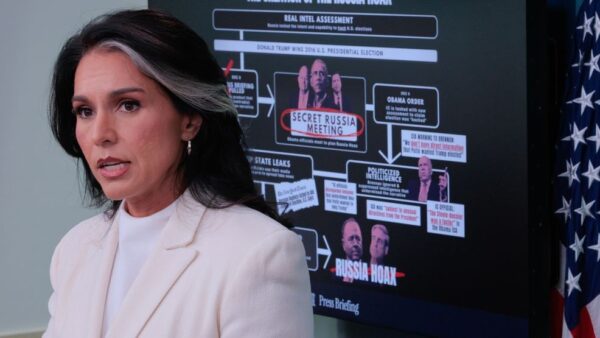
With the recent announcement by DNI Gabbard of ODNI 2.0 with plans to cut personnel and costs by 40% and to back the ODNI out of responsibility for manning some of the ODNI created Intel Centers, while refocusing on ODNI core missions, there are many touting these steps as exactly what is needed to get the ODNI reformed and focused on their statutory mission. From the piece:
“Today I’m launching ODNI 2.0 – the first step toward bringing about transformational change that is based on cutting bloated bureaucracy, rooting out deep state actors, and restoring mission focus,” Gabbard wrote.
She added, “When implementation is complete, ODNI will be more agile, efficient, and effective, reducing our organization by more than 40%, saving taxpayers $700+ million per year.”
Her memo somewhat says it all:

The ODNI released a companion fact sheet/memo to the above that articulates the specifics on the significant cuts and changes to the ODNI staff and participation/representation in a number of IC centers. Many will be unfamiliar with these entities that have somewhat proliferated during the two-decade ODNI history, while many have been staples of the IC for a long time. From the Fact Sheet:
MISSION FOCUS: Maximize Efficiency, Eliminate Redundancy Director of National Intelligence (DNI) Tulsi Gabbard is transforming the Office of the Director of National Intelligence (ODNI) to eliminate redundant missions, functions and personnel, and bolster areas that need resources to support the President’s national intelligence priorities.
• Over the last 20 years, ODNI has become bloated, radically expanded in size, and distracted by tasks and requirements that fall outside its mandate. ODNI and the IC are plagued with unauthorized intelligence leaks, politicization, and weaponization of intelligence. ODNI’s ability to fulfill its core mission of protecting Americans against present and future threats has degraded.
• Part of this effort includes refocusing functions within the Foreign Malign Influence Center, the National Counterproliferation and Biosecurity Center, and the Cyber Threat Intelligence Integration Center, and integrating core functions and expertise from those offices into ODNI’s Mission Integration (MI) and the National Intelligence Council (NIC).
• DNI Gabbard is also eliminating the External Research Council and the Strategic Futures Group, both which operated as hubs for injecting partisan priorities into intelligence products.
• The combined efforts of DNI Gabbard’s “ODNI 2.0” initiative will reduce bloat by nearly 50% and save taxpayers $700+ million per year.
There is a lot to unpack in her statement and fact sheet while acknowledging that this is going to be a welcome first step to many pundits, critics and concerned Americans. Cutting nearly 50% of the ODNI workforce saving ~700M, while broader cuts-or efficiencies across the entire IC amounting to a target of saving of 1.3B per year is seemingly a good first step in the process.
Just a few thoughts about her statement before getting to the meat of where these first steps in ODNI 2.0-“the start of a new era focused on serving our country” intend to take the ODNI.
I’m not a math major or budget guy-but I can do math and know others that can as well-and I have run a few-a dozen or more-big programs in my day and am frankly underwhelmed by the announcement of a savings of 700M dollars against an ODNI FY 2025 budget of 73.4B dollars-which is actually only the National Intelligence Program budget (NIP) side of the house. When you include the Military Intelligence Program (MIP) or Pentagon budget of 28.2B we are talking about an IC budget of 101.6B a year: 101.6 billion dollars a year to fund the intelligence community.
I want to state before proceeding that American taxpayers deserve a hell of a lot better from the IC than we’ve seen over the past 20 years for 100B dollars a year. I’ve outlined at least a dozen major failures over the ODNI existence and cutting personnel with measly savings is not going to change that performance.
To do it simple-Simon style, 10% of the NIP is 7.34B, 1% is 734M. If you include the entire IC budget-10% is 10.1B, 1% is 1B dollars. The announced savings equate to-in a best case scenario-a 1% savings against budget. We can look at it as a great start or solid first step, but it is honestly feeble in the grand scheme of things. Even the wider announced cuts or savings across the larger IC of a total of 1.3B equate to 1% of the budget.
And-yes-I know-this is likely just the payroll savings that have been billed as some roughly ~40% of funds via 50% of the workforce, so that is a much better metric if ODNI payroll is ~1.5B and we’re saving 700M.
Just to put the magnitude of the IC budget in perspective, a few years ago when Principal Deputy Director of National Intelligence (PDDNI) Stephanie O’Sullivan somewhat mandated the implementation of the Intelligence Community Information Technology Enterprise (ICITE) based on contracting Amazon Web Services (AWS) for the community, the IC IT NIP budget was reportedly 13B dollars and the proposed ICITE contract was based on cutting the overall budget to~7B.
I will leave it to others to judge whether ICITE-AWS-was worth the squeeze, particularly considering that the National Security Agency (NSA) had already implemented a hybrid cloud effort supporting the Real Time Gateway that revolutionized cloud analytics based analysis and target operations, while proving that single-vendor solutions were not the best way to go for government cloud investments: that did not stop the ODNI (PDDNI.)
There are many critics of these cuts to the IC. Perhaps the least surprising are democrats in congress who railed the most and the loudest at ODNI standup when the emerging plan called for nearly 1500 personnel to support the transfer of the prevailing Community Management Staff (CMS) functions of between 280-450 personnel, many of whom were contributed from the larger IC working agency budgets and congressional budget justification exhibit staffs working at CMS under the Director of Central Intelligence (DCI.)
There is also the historical malfeasance of congressional actors who went all in on the Russia-Gate/Obama-Gate/HRC Gate Russia, Russia, Russia Pee Pee Hoax typified by a number of folks who have been continuously outed with damning releases of their collusion against President Trump over the last now nearly 10 years.
Having just posted an article bemoaning the fact that the needed reforms were not likely to happen, I’ve had quite a few inquiries as to how some of the “Crow” tastes that I most certainly had to add to my recent menu options over my declaration that the ODNI reforms were not coming.
I think there is quite a bit of confusion these days caused by somewhat of the rush to judgment that often conflates money savings, personnel cuts and bumper sticker slogans as strategy.
So-yes-are the ODNI personnel cuts, salary savings, and manpower savings from divesting in myriad “centers” good? Of course, and about time.
We can’t clean house quickly enough on decades of hires-this century-of people whose attributes they bring to the IC is their race, gender, political leanings or other “specialties” that have nothing to do with intelligence specific support to the American people and government.
So a good start? Certainly. Progress along the long-term reform of the ODNI and the IC? Much less clear. This is somewhat like house cleaning-you start with mouse and rat traps-if necessary-cause winter is coming and better to fight them now than once they’ve decided they are comfortable…
Progress along the core mission the US needs to support POTUS and the 250 or more government civilians relying on the ODNI to produce first class intelligence that can be used to conduct statecraft and guide strategic decisions around the world? Hardly.
This challenge is a much more different and strategic issue than mere personnel or budget cuts or “light” reorganization tasks. Like-for instance-how prepared was President Trump from an intelligence collection standpoint to do a relatively short notice tete a tete with Putin in Alaska? Do we know Putin’s BAFO (best and final offer) on Ukraine? Who is on point to collect that info? How about the Chinese position on tariffs and economic policy? What is Ukraine doing with all that US aid? What are our Biolabs doing in Ukraine?
That-strategic intelligence-is the challenge I spoke to in part 1 of this series. Budget cuts, personnel actions-early retirements, elimination of woke positions and the wokesters occupying them, analysis of resumes and job descriptions, elimination of fat in the categories of DEI, ESG, CRT, Equity, Unconscious Bias, etc., is a somewhat routine though no less important step in getting the workforce on job number 1 which is the oversight of the IC intelligence production mission.
I mentioned in an earlier part of this series that the ODNI attempted to produce a somewhat daily publication called Intelligence Today. The community already had the very high production quality website CIA wIRE comprising much of the Directorate of Intelligence (DI) production and somewhat of a topical aggregation site pulled together by Geoffrey F and Mary S. While NGA-Barb D, Wendy M and Evelyn T had added a daily aggregation site called GEOINT Today (Geospatial-Intelligence Today,) which consisted of the phases of daily imagery analysis in terms of Indications and Warning produced by the Watch/first phase, more in depth second phase, as well as third phase reporting consisting of special studies, tailored products for the 250 consumers outside of the Presidential Daily Brief-outside the book-and specialty reporting on topics supporting conferences, dialogues and forums for other government officials and State (Dept.)
Not to point fingers or call anyone out but the Intel Today project was one of myriad efforts where the leadership of the ODNI got way too clever by half. It was an earnest effort worked hard by good people, but the Intel Today effort did not make it: the ODNI is not an IC production element from an intelligence reporting standpoint, and they don’t need to be.
It was a flawed idea/concept/”manhood issue” that the ODNI had to have the community subject matter experts on staff to “oversee” the reporting from all the other agencies. In fact the ODNI over time somewhat diluted the analysis pool across the IC by hiring in/recruiting/sweet talking agency SMEs-that had often been the ones doing battle with the ODNI staff to fine tune positions-by offering to help with the suddenly mandatory ODNI Joint Duty Assignment Policy which soon became a mandate in order to get promoted to pay band V/GS-15 or senior executive.
The view from the agency level was that these senior analyst SMEs had been invested in education and position responsibility-wise and groomed over the years and were often counted on as somewhat master trainers and mentors in functional and technical areas. Losing them to the ODNI disrupted the agency development process and-worse-fostered an effort where the ODNI-often in a pinch time-wise-would go forth with agency positions on a topic where the agency had not been consulted because the ODNI seemingly had the next best thing. Which is admittedly somewhat inside baseball but it’s a worst practice all around.
The other challenge faced during this effort (where the ODNI was struggling to establish Intel Today) was the ODNI had not resolved nor clarified Analysis Production Policy, which is crucial to getting all 17 IC reporting entities following the same standards and approach to analysis to enable products to more easily make their way through the system to decision makers.
Which became a huge problem throughout the Russia-Obama-HRC Gate clown circus because you had the ODNI delegate authority to CIA Dir Brennan to violate their own policy throughout this tomfoolery. This was not the first time, and it did not happen overnight. Such behavior grew from a flaw to a feature during the past 20 years while costing the IC a lot of good leaders and personnel who did not stick around for more. I related a number of these incidents in a somewhat longish series called Intelligence Folly: How An Unsolved Murder Led To Billions Of Dollars of Fraud, Waste and Abuse.
Part 3-in particular-provides details about how ODNI scheming, finagling and lying cost the IC a great leader of the National Reconnaissance Office, Gen Bruce Carlson (USAF, Ret) who was not going to stick around and be lied to year after year after year. Nobody was ever held accountable for any of this malfeasance and illegal activity over the years, all violations of ODNI policy. The myth of the worth of the IC/ODNI IG was exposed and made a mockery of in these instances, as in many cases the IG report which followed the activity often took a year or more to produce and was late enough that the culpable leaders had already moved on or-whatever-they were never held accountable.
These illegal and anomalous acts eventually become common place, as did leaking classified information, acting as sources for more than willing journalismers, and underhanded acts that trod all over oaths of office.
Recommendations from Part 1 (I didn’t forget):
The bottom line up front (BLUF) in what is going to be a multi-part article to provide the rationale on the “why” is that we need a Presidential Executive Order to stand up a congressionally led Blue Ribbon Panel (or whatever color is preferred) to produce a report and a plan of action and milestones (POAM) on Intelligence 2050: Reshaping the Intelligence Community For the 21st Century to Eliminate Failures.
Such a panel has six simple but critically important directives that will interact throughout to inform outcomes.
One is to look at causality on recent intelligence failures (the who, what, where, when, why and how, many of which I will list later in this article) with a focus on lessons learned and recommendations.
Two is to review the statutory missions of the IC from top to bottom and the resources and funding provided to accomplish them (in terms of capability, overlap, synergy and potential changes.)
Three is to develop a threat projection in terms of nation states, near nation states and other bad actors, in consideration of the influences that shape aspirations, the development of technology, weapons trends, cyber, sources of income, drug trafficking, etc.
Four is to assess and project necessary IC resources and capabilities in consideration of meeting the projected threat landscape given known deficiencies and projected challenges out to 2050 and beyond.
Five is to do an emerging Red Team effort of potential solutions against unconventional tactics and potential Black Swan events to inform risk assessments for emerging solutions.
Six is to prepare the plan of actions and milestones (POA&M) and necessary program directions to implement the vision.
There will need to be a companion and parallel effort conducted by the Pentagon as part of the annual mission review to identify and leverage changing dynamics in the combatant command areas of responsibility to both inform the above threat assessments and to address potential implications for supporting IC elements and relationships-dependencies-contributions-burden sharing-funding.
This will optimistically take a minimum of a year. The goal should be to revise the fiscal year 2027 budget submission that takes us out to 2031. Emerging insights or critical solutions-particularly deltas or lack of capability or sufficiency that intersects with a critical threat domain-think cyber or artificial intelligence, WMD/chem biohazard detection-should be issued as critical panel directives to execution agents to energize the system: immediately.
28 August 2025
LSMBTGA: Lamestream media echo chamber (LMEC-L) social media (SM) big tech tyrants (BT,) government (G) and academia (A)
If you enjoyed this article, then please REPOST or SHARE with others; encourage them to follow AFNN. If you’d like to become a citizen contributor for AFNN, contact us at managingeditor@afnn.us Help keep us ad-free by donating here.
Substack: American Free News Network Substack
Truth Social: @AFNN_USA
Facebook: https://m.facebook.com/afnnusa
Telegram: https://t.me/joinchat/2_-GAzcXmIRjODNh
Twitter: https://twitter.com/AfnnUsa
GETTR: https://gettr.com/user/AFNN_USA
CloutHub: @AFNN_USA