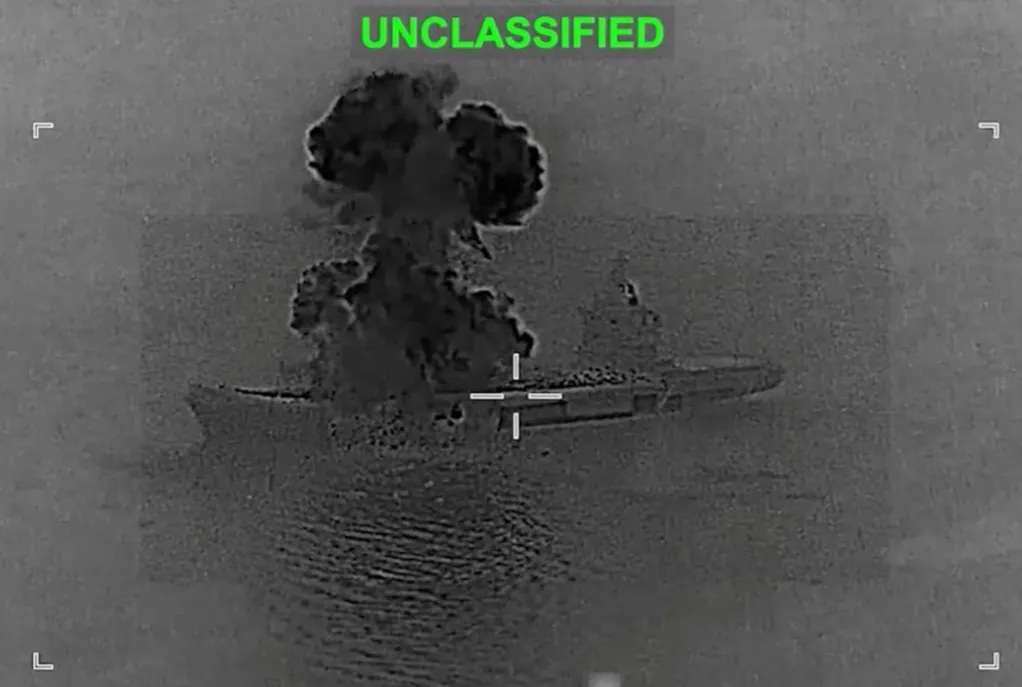
By initiating Operation Epic Fury, President Trump has pulled the trigger on a strategic reset in the Middle East. This is the third act in a campaign that has unfolded from June 2025 through March 2026. Epic Fury is not a single military event but a phased, coordinated strategic campaign with no clear precedent in post-Cold War American foreign policy. Understanding it requires tracing the sequence.
Let us examine the topic.
On June 12, 2025, the IAEA declared Iran was violating its non-proliferation obligations for the first time in twenty years, prompting Iran to announce it would open a secret uranium enrichment site. The next day, Israel launched a unilateral military strike against Iran, targeting nuclear facilities, missile factories, senior military officials, and nuclear scientists.
The US joined. In Operation Midnight Hammer, seven B-2 Spirit stealth bombers struck three key Iranian nuclear facilities — Fordow, Natanz, and Isfahan — using GBU-57 Massive Ordnance Penetrator bunker-buster bombs alongside Tomahawk missiles, following the initial Israeli strikes. The twelve-day conflict killed approximately 1,062 Iranians, including many senior political, military, and scientific figures, and 29 people in Israel.
The Defense Department assessed the results soberly: Iran’s nuclear program had been set back by two years by the June 2025 strikes. More broadly, Israeli and US strikes significantly set back the Iranian nuclear program, but some Iranian ballistic missile attacks also managed to penetrate Israeli and US missile defenses. The June campaign also delivered severe blows to Iran’s proxy network: Israeli strikes in August 2025 decapitated the Houthi leadership in Sanaa, including their chief of staff.
Act II — Maximum Pressure and Internal Collapse (Late 2025 — January 2026)
The June strikes did not end the campaign — they accelerated Iran’s internal crisis. In the waning days of 2025, a significant uprising began, at first citing deteriorating economic conditions but almost immediately evolving into a broader demand for wholesale regime change. In January 2026, Iranian security forces killed thousands of protesters during the largest protests since the Islamic Revolution. Trump responded with explicit threats of further military action.
In January 2026, US and European officials said Washington had presented Iran with three core demands, one of which was a permanent end to all uranium enrichment. Iran rejected this condition but entered indirect nuclear negotiations through Omani mediators in February. The mediating Omani foreign minister stated significant progress, with Iran willing to make concessions. Meanwhile, the US undertook its largest military buildup in the Middle East since the US-led 2003 invasion of Iraq. Trump said he was “not thrilled” with the talks.
Act III — Operation Epic Fury / Roaring Lion (February 28, 2026)
On February 28, 2026, on the morning of the attack, some of Iran’s top military and intelligence leaders, including Khamenei, were gathered in the national security council offices for meetings. US and Israeli military intelligence officers identified that the senior Iranian leaders would gather at three meetings that could be simultaneously struck. Khamenei and his officials were above ground and in broad daylight.
The joint US-Israeli attack — called “Epic Fury” by the Pentagon and “Roaring Lion” by Israel — began after sunrise in Iran. The Israeli Air Force said it struck 500 military targets in western and central Iran, including air defenses and missile launchers, using about 200 fighter jets in the largest combat sortie in its history. Israeli strikes used over 1,200 bombs in 24 hours.
On February 28, Supreme Leader Ali Khamenei was assassinated. Early on March 1, Iranian state media announced his death. The IRGC-controlled Fars News Agency announced that Khamenei’s daughter, son-in-law, grandchild, and daughter-in-law had also been killed in the strikes.
Trump stated the US objective plainly: “Our objective is to defend the American people by eliminating imminent threats from the Iranian regime.” He called on Iranian security personnel to surrender in exchange for immunity, and said heavy bombing would continue “throughout the week, or as long as necessary to achieve our objective of PEACE THROUGHOUT THE MIDDLE EAST AND, INDEED, THE WORLD.”
Netanyahu stated the goal was to “remove the existential threat posed by the terrorist regime in Iran,” adding: “Our joint action will create the conditions for the brave Iranian people to take their destiny into their own hands.”
SYSTEMATIC DISMANTLEMENT OF THE PROXY NETWORK
A crucial element of the strategic picture is that the June 2025 – March 2026 campaign did not target only Iran’s nuclear program or leadership — it systematically dismantled Iran’s regional proxy architecture built over four decades.
Hamas was degraded far below operational capability through the Gaza war, with the October 2025 Israel-Hamas ceasefire holding as of mid-March 2026, though Hamas’s refusal to disarm keeps the situation fragile. Hamas would not have been what it is without direct Iranian financial and material support, which Tehran used to ensure there would be no peace or long-term stability between Palestinians and Israelis. That pipeline has been severely disrupted.
Hezbollah was functionally decapitated in 2024-2025 through targeted Israeli strikes, though it retains significant military capabilities, with an estimated 1,000 drones, 3,000 fighters, and around 25,000 missiles. The conflict between Hezbollah and Israel escalated into a 2026 Lebanon war when Hezbollah resumed missile and drone fire at Israeli sites, and Israel greatly expanded its airstrikes in Lebanon.
The Houthis represent the most complex residual threat. From March to May 2025, US forces expanded strikes against the Houthis, seeking to compel a lasting end to Houthi maritime attacks. The campaign ended under an agreement brokered by Oman in which the Houthis agreed to cease targeting US vessels. Houthi attacks on commercial vessels fell to seven in 2025, down from 150 in 2024. However, the Houthis threatened to escalate as Iran was attacked, though they appear restrained by the devastation Israeli strikes inflicted on their leadership in August 2025, and by their desire to maintain their de facto truce with Riyadh and Washington.
STRATEGIC IMPLICATIONS FOR CHINA: THE ENERGY AND GEOPOLITICAL DIMENSIONS
The Iran campaign’s effects on China are simultaneously short-term damaging and long-term complicated.
Short-Term Energy Shock
China’s crude oil imports hit a record-high 11.6 million barrels per day in 2025 as it sought to build stockpiles. As of early March, global oil prices have risen roughly 12% to about $82 per barrel, up from the $65–67 range before the war began. Brent crude surged to $120 a barrel as the conflict deepened, with some analysts predicting prices could reach $150 or more in a worst-case scenario.
Despite massive economic investments and deep political ties with Tehran, Beijing was unable to shield Iran from either the 2025 or 2026 US-Israel attacks, exposing the limits of its cautious approach to regional security. China’s approach to the region has been primarily economic — investing heavily in infrastructure, trade, and energy partnerships while avoiding entanglement in regional security conflicts. This strategy allowed China to benefit from stability maintained partly by US military presence without bearing the associated costs. The current conflict highlights the continuing asymmetry: while the United States retains the capability to project military power across the region, China remains largely dependent on diplomatic engagement.
China’s Buffers and Hedges
China is not without resources to weather the shock. China held an estimated 1.2 billion barrels of onshore crude stockpiles as of January 2026 — roughly 120 days of import coverage. China has taken the last 20 years to reduce some of its dependence on maritime oil flows, with new overland pipelines and renewables meaning it only relies on the Strait of Hormuz for about 40–50% of its seaborne oil imports.
More than 30% of China’s final energy consumption now comes from electricity, compared to just over 20% globally. More than half of cars sold in China are electric. The IEA estimates China has avoided 1.2 million barrels per day of oil demand growth since 2019.
However, rising energy prices feed directly into production costs for steel, chemicals, and electronics, squeezing margins and weakening export competitiveness at a moment of intense trade friction with the US.
The Belt and Road Disruption
Iran was a core node in China’s Belt and Road Initiative, positioned within the China-Central Asia-West Asia Economic Corridor. The Comprehensive Strategic Partnership China signed with Iran in 2021 positioned Tehran as a key component of this architecture. The war has placed that investment at risk. China also loses its primary source of deeply discounted sanctioned Iranian crude — a significant competitive advantage in its manufacturing cost base.
China’s “Hormuz Dilemma”
The conflict underscores what analysts call China’s “Hormuz dilemma”: the vulnerability created by its heavy dependence on energy imports through maritime chokepoints. While Beijing has diversified toward Russia, Central Asia, and Africa, the Gulf region remains indispensable. The IEA announced the largest ever single release of strategic oil reserves — more than double what was released after Russia attacked Ukraine — in response to the Hormuz disruption. A multinational naval force led by the US Navy could be constituted to escort shipping through the SOH. Pressure is already being exerted by President Trump to encourage China to contribute to that force. How can they refuse?
THE BROADER STRATEGIC BALANCE SHEET
Here is the case for a strategic breakthrough.
First, Iran’s Axis of Resistance — the proxy network that gave Tehran strategic depth from Lebanon to Yemen to Iraq — has been systematically degraded. Without a functioning IRGC leadership, a nuclear program, deliverable missile capability at scale, and with Hezbollah, Hamas, and the Houthis severely weakened, Iran’s ability to threaten Israel and US regional interests has been set back by a generation.
Second, the Gulf states, who quietly supported the US-Israeli operations, now have an incentive to accelerate normalization with Israel — since the Iranian deterrent that once made such openness politically dangerous has been dramatically degraded. Gulf monarchies for decades had remained largely insulated from direct Iranian fire, but the 2025–2026 campaign has fundamentally changed the regional deterrence calculus.
Third, various observers have described the killing of Khamenei as an “enormous success” for the US and Israel, noting that a comparable effort to kill Saddam Hussein during the 2003 invasion of Iraq had taken nine months. On top of that, there was the elimination of several of the top layers of the government and IRGC.
CONCLUDING THOUGHTS
What President Trump has done in the Middle East (so far) is genuinely historic in scope: the systematic dismantlement of Iran’s nuclear program, the decapitation of its leadership, the degradation of its regional proxy network, and the reassertion of decisive US military power projection at a scale not seen since 2003. The argument that this constitutes denying China a key energy partner, exposing Beijing’s inability to protect its strategic investments, and demonstrating that US-led military deterrence remains the only security architecture that matters in the region has real analytical force.
Carried to its logical conclusion, Act Four of the US-Israeli campaign could very well result in the complete destruction of Iran’s “Death to America” theocracy (and regime-protecting security forces) and its replacement by an Iranian government that looks to the West for the first time in decades. And the disintegration of Iran’s proxy network that has held the Middle East in a terror grip for four decades.
A monumental change in Middle East geopolitics!
The end.
StuinSD is a reader-supported publication. To receive new posts and support his work, consider becoming a free or paid subscriber.
This article originally appeared in Stu Cvrk’s Substack. Reprinted here with permission
If you enjoyed this article, then please REPOST or SHARE with others; encourage them to follow AFNN. If you’d like to become a citizen contributor for AFNN, contact us at managingeditor@afnn.us Help keep us ad-free by donating here.
Substack: American Free News Network Substack
Truth Social: @AFNN_USA
Facebook: https://m.facebook.com/afnnusa
Telegram: https://t.me/joinchat/2_-GAzcXmIRjODNh
Twitter: https://twitter.com/AfnnUsa
GETTR: https://gettr.com/user/AFNN_USA
CloutHub: @AFNN_USA