
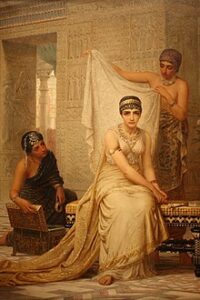
The book of Esther is known as the most “godless” book of the Bible because the name of God is not mentioned in the story. But don’t let that concern you–God is very present in the story of Esther.
Esther was born around 490 BC, during one of the most “godless” periods in Biblical history. The book of Esther is one of the last books we have before what is known as the “intertestamental period”–the 400 years or so between the end of the events of the Old Testament and the birth of Christ.
During the intertestamental period, God was silent. No scripture was written and no wonders or miracles were carried out. Author Nicholas Davis writes that “the only thing that God’s people had were his great works of old, and his promise of something new—a Messiah who was to come—sometime off in the distant future.”
But I’m getting ahead of myself. I think of the Book of Esther as the soap opera of the Old Testament. There’s love and hate, intrigue and mystery, and a Cinderella-like search for a new queen. And the good guys win. With only six chapters, the Book of Esther can easily be read (or re-read) in one sitting.
Here are the bullet points of the Scripture:
- Esther is a Jewish orphan, adopted by her cousin Mordecai after her parents die.
- King Xerxes (or King Ahasuerus) of Persia becomes angry at his wife, Queen Vashti, and he banishes her.
- A search for a new queen is undertaken, and beautiful and obedient Esther wins the king’s favor and he marries her. Esther does not reveal her Jewish heritage to King Xerxes.
- Haman, Xerxes’ most powerful advisor, resents that Mordecai refuses to bow to him, and Haman hatches a plot to get rid of all of the Jews. He gets King Xerxes to issue an edict that all Jews will be executed on the 12th day of the month of Adar.
- Esther learns of the plot, and risking her own life, she thwarts Haman’s plans.
- The evil Haman is hanged, and Mordecai becomes a favorite of the king.
- Oh yes, and the Jewish people are saved from annihilation.
Let’s go back to bullet point #5 above. When Esther learns of Haman’s plot to annihilate the Jews, her reaction is one of helplessness. Mordecai asks her to go to the King Xerxes and beg him for the life of the Jewish people:
Esther’s reply to Mordecai:
“All the king’s servants and the people of the king’s provinces know that if any man or woman goes to the king inside the inner court without being called, there is but one law—all alike are to be put to death. Only if the king holds out the golden sceptre to someone, may that person live.” (Esther 4:11)
Mordecai responds to Esther:
“Do not think that in the king’s palace you will escape any more than all the other Jews. For if you keep silence at such a time as this, relief and deliverance will rise for the Jews from another quarter, but you and your father’s family will perish. Who knows? Perhaps you have come to royal dignity for just such a time as this.” (Esther 4:13-14)
That’s the money quote right there: “Perhaps you have come…for just such a time as this.” We know the end of the story. Esther gathers her courage, she goes to the king, and hallelujah, he holds out his golden sceptre. Esther and the Jewish people are saved and the evil Haman is destroyed.
It’s a great story and it’s one of my favorites. But how does the Book of Esther apply to us today? It may be a “godless” book, but there is no doubt that the hand of God is present in Esther’s life.
God’s hand is present in our lives, too. Even when we doubt God, or even if we don’t believe in God, He believes in us. Read that again. He believes in us. He believes in you.
Maybe there’s a conversation that you need to have with someone. It’s unlikely that the penalty is death, but perhaps you’ll have to risk your dignity or a friendship.
Maybe there’s a job that you want, but the threat of failure is overwhelming.
Maybe God is calling you to be the hands and feet of Jesus, but you just don’t think you’re up to the task.
God has a plan for your life, even if you don’t believe in Him:
“‘For I know the plans I have for you,’ declares the LORD, ‘plans to prosper you and not to harm you, plans to give you hope and a future.'” (Jeremiah 29:11)
Have you considered the fact that God has placed you where you are for a reason? It’s not an accident that you do what you do. It’s not an accident that you live where you live. It’s not an accident that you are who you are.
God loves you–He’s holding out his golden sceptre to you. After all, He placed you here for just such a time as this!
If you enjoyed this article, then please REPOST or SHARE with others; encourage them to follow AFNN. If you’d like to become a citizen contributor for AFNN, contact us at managingeditor@afnn.us
Truth Social: @AFNN_USA
Facebook: https://m.facebook.com/afnnusa
Telegram: https://t.me/joinchat/2_-GAzcXmIRjODNh
Twitter: https://twitter.com/AfnnUsa
GETTR: https://gettr.com/user/AFNN_USA
Parler: https://parler.com/AFNNUSA
CloutHub: @AFNN_USA
Teresa, an uplifting Sunday message, thank you…
bless the Nation and the Patriots!🙏🇺🇸