September 2026: World War III Escalation Watch

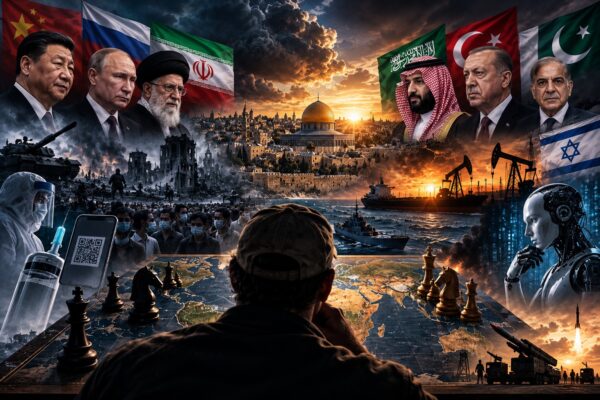
Are We Watching the World Move Toward the Sixth Trumpet War?

World War III Escalation Watch: Revelation 9, Matthew 24, and the growing risk of global war.

As I write this on September 13, 2026, I believe Christians need to pay very close attention to what is happening around the world.

I am not setting a date for Bible prophecy. I am not claiming that every war, earthquake, missile launch, or political crisis represents the fulfillment of a particular verse.

But neither should Christians ignore what Jesus specifically told us to watch for.

PART V — Jesus, the New Eden, the Tree of Life, and the Eternal Vocation of God’s Human Family

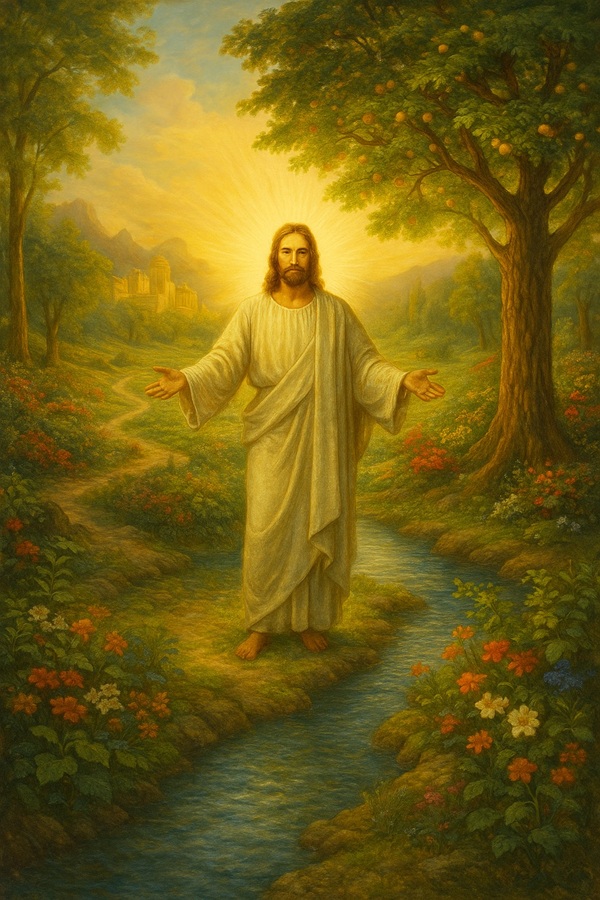
Jesus is the center of the entire Bible because He answers all three rebellions. He defeats the serpent (Gen. 3; Rev. 12), proclaims victory over the imprisoned Watchers (1 Pet. 3:19–20), and reclaims the nations disinherited at Babel (Matt. 28:18–20; Acts 2). He is the Second Adam (1 Cor. 15:45), restoring humanity’s failed vocation.

PART IV — The Third Rebellion: Babel, One-World Government, and God’s Disinheriting of the Nations

After the flood, God again commands humanity to “fill the earth” (Gen. 9:1). Instead, humanity gathers at Babel and says, “Let us make a name for ourselves” and “lest we be scattered” (Gen. 11:4). This is open rebellion. Babel is the first attempt at global government independent of God—centralized control, unified language, human exaltation. It is humanity trying to reverse God’s plan and replace divine rule with human empire.

PART III — The Second Rebellion: The Watchers, the Nephilim, and Why the Flood Was Not Just a Rainstorm

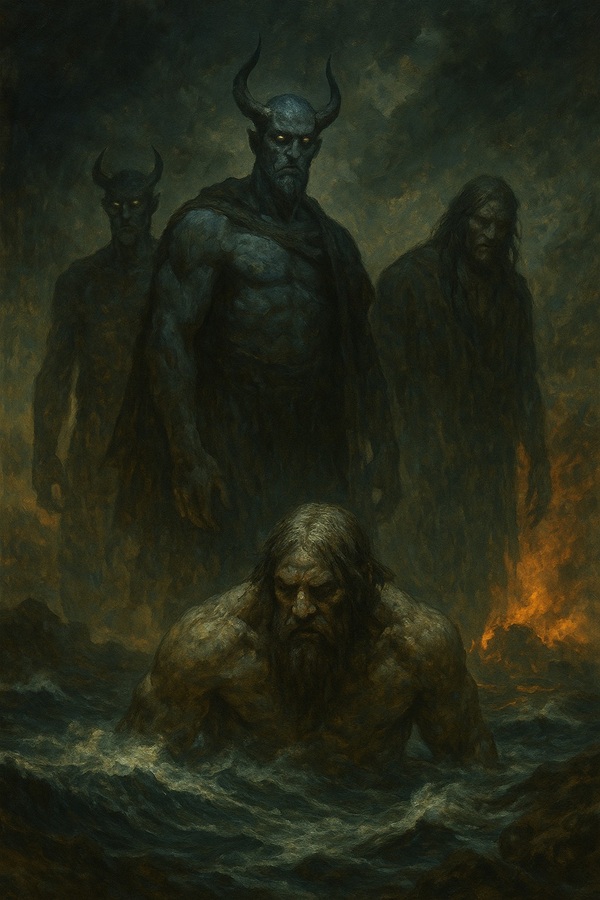
Most Christians know nothing about Genesis 6:1–4 because tradition buried it. But Scripture is blunt: “the sons of God” (bene elohim) took human women, producing the Nephilim. This language is the same used for divine beings in Job 1:6. The earliest Jews and Christians interpreted this literally. Peter and Jude confirm it (2 Pet. 2:4–5; Jude 6). This is a second supernatural-human rebellion that corrupts humanity and the earth.Eden

PART II — The World Outside Eden: Mortal Humans, Real Danger, and the Mission Adam Abandoned

Genesis draws a sharp line between inside Eden (God’s dwelling) and outside Eden (the rest of earth). Humanity’s command to “fill the earth and subdue it” (Gen. 1:28) implies the world outside Eden was wild, undeveloped, and awaiting humanity’s rule. The Hebrew kavash (“subdue”) means to bring under order. You don’t “subdue” paradise. You subdue wilderness. The world outside Eden was not evil—just unfinished.

Start Together, Finish Together: Love Is Easy, Everything Else is Hard.

3:42 a.m.—Three hours before sunrise. Sarah and I are awake. Sort of. We begin our marathon route in the hamlet of Manitou Springs, a town where everything is organic, even the Subaru exhaust.

We start our journey alone, in front of the little courthouse, the official starting line of the Pikes Peak Marathon. Before we begin running, we hug each other tightly.

“We’re doing this,” we say before we sprint off into the silent streets.

PART I — Eden: God’s Dwelling, Humanity’s Calling, and the Story We Flattened Into a Coloring Book

Most Christians think Eden was a perfect, universal paradise. But Genesis never claims that. The Bible says God “planted a garden in Eden” (Gen. 2:8), a sacred space inside a larger region. Ezekiel calls it “the mountain of God” (Ezek. 28:13–14). Eden was God’s dwelling place, not a global utopia. Only inside Eden did God walk with humanity (Gen. 3:8). Outside the garden lay the rest of the earth—good, but not yet sacred space. The story starts with geographic holiness, not widespread perfection.

I Don’t Believe in Miracles, Says the Miracle

Modern man says he doesn’t believe in miracles while standing on a wet rock hurtling through space, made of stardust, possessing consciousness nobody can fully explain, pondering a universe nobody can explain why exists. God? Ridiculous. Ancient aliens? Now you have his attention. Maybe we didn’t stop believing—we just changed the vocabulary and became selectively skeptical about which mysteries are socially acceptable. Watch for AFNN next week as we ask the uncomfortable question: “I Don’t Believe in Miracles,” Says the Miracle.

SUPERNATURAL REMEDIES–The Great Physician’s Prescription for the Nine Deep Woes

Do you ever feel like your entire life hurts—like you are physically exhausted, emotionally drained, and completely trapped by circumstances? In our modern, high-pressure world, it is tragically easy to fall into dark depression, feeling isolated, out of touch with God, and deeply anxious about the future.

The Sword of Sharia: The Christian Test Under Sharia Law

Paying an unfair tax is one thing. Wearing clothes you wouldn’t otherwise wear is another. But what happens when government finally asks the question Christians have faced since Rome: Will you obey us when obeying us means disobeying Christ? That’s where Romans 13 meets Acts 5:29—and Christianity stops being a bumper sticker.

Feeding the Beast: And Lo, We Built It a Data Center

What if the Beast of Revelation didn’t rise from the sea—but arrived in a server rack? This fictional, extra-biblical excursion imagines AI as the Beast, data centers as its temples, and humanity enthusiastically feeding it electricity, water, privacy, knowledge, and eventually perhaps our autonomy. The disturbing part isn’t that the machine might conquer us. It’s that we may build it ourselves, connect everything to it, put it in our pockets—and stand in line for the upgrade.

When Government Rewards Evil: The Biblical Line Between Obedience and Resistance

Christians are frequently reminded that Romans 13 tells us to obey governing authorities. Fair enough. But what happens when government reverses its God-given assignment—punishing good, protecting evil, or commanding Christians to violate their conscience? Scripture actually answers that question, and the answer is considerably less comfortable than “just obey.”

Sword and Scimitar: The 1,400-Year History We Somehow Forgot to Mention

Raymond Ibrahim’s *Sword and Scimitar* commits a dangerous act in modern history: it starts at the beginning. Long before the First Crusade of 1095, Christian lands across the Middle East, North Africa, Spain, and Anatolia had already faced centuries of Islamic conquest and warfare. Through eight pivotal battles spanning more than a thousand years, Ibrahim restores the part of the timeline that somehow keeps falling behind history’s couch cushions. His argument is uncomfortable, provocative, and difficult to dismiss: the Crusades weren’t Chapter One of the conflict—they arrived hundreds of pages into the story. You can debate Ibrahim’s conclusions, but you can’t understand 1095 while pretending 636 never happened.

Romans 13 and Revelation 13: Two Chapters, One Warning

Romans 13 and Revelation 13 aren’t enemies. They’re bookends. One describes government as God intended it to be: rewarding good and restraining evil. The other warns what happens when government abandons that mission and begins demanding loyalty that belongs to God alone. History is filled with examples of Romans 13 being used to justify kings, slavery, and authoritarian regimes, while Scripture repeatedly reminds believers that their highest allegiance is not to a political party, a flag, or a nation. Christians are called to be good citizens, but faithful disciples. God first. Everything else second.