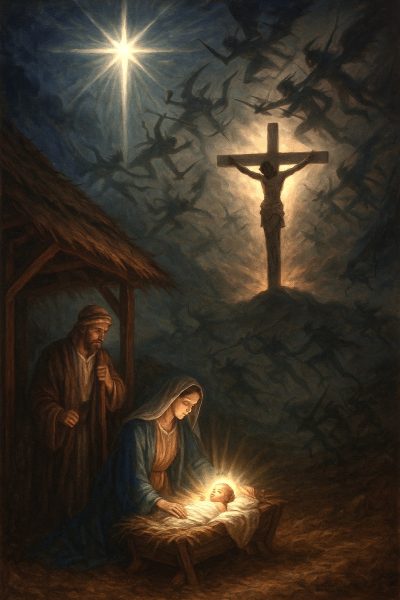
Three Part AFNN series: The Heavens, the Crucifixion, and the End of the Powers’ Claim
Part III: Christmas, Calendars, and the Myth That “Pagans Invented It
Every year, right on schedule, someone announces that Christmas is “really pagan,” that Christians stole December 25, and therefore the celebration is tainted. This is what happens when people learn one fact, ignore ten others, and then build a personality around it. A Christian worldview can handle history. It just can’t survive lazy history.
The earliest clear evidence we have for December 25 being marked as the Nativity in Rome appears in the Chronograph of 354, which includes an entry for Christ’s birth on “VIII kal. Ian.” (December 25). That doesn’t prove December 25 is the exact day Jesus was born. It proves that by the mid-fourth century, Christians in Rome were publicly calendaring the feast.
Yes, the same general late antique environment also features Sol-related language and festivals. The Chronograph tradition also has an entry often associated with “Natalis Invicti” on December 25, and scholars debate what depends on what—Christian feast borrowing from pagan solar observances, or pagan solar emphasis responding to Christian claims, or parallel developments in a culture saturated with solar symbolism. In other words: anyone who tells you “we know for sure Christians copied pagans” is usually selling certainty they don’t possess.
Here’s the key: even if a culture around you uses solar language, that doesn’t automatically make Christian claims pagan. Scripture itself uses light-and-glory imagery constantly. The issue is meaning, not vocabulary. Early Christians weren’t worshiping the sun; they were proclaiming the Lord of creation. In a world where everyone argued about what the heavens “meant,” Christians argued that the heavens belong to God and that Jesus is Lord over every power that claims authority.
Now go back to Heiser’s point about worldview. Heiser could say “Sept 11, 3 BC” without turning Christmas into a fraud, because his actual aim wasn’t to police the church calendar—it was to restore the Bible’s supernatural context and remind believers the incarnation is war. The date question is secondary. The cosmic claim is primary.
So here’s the mature Christian posture: you don’t need to prove Jesus was born on December 25 to celebrate the incarnation. And you don’t need internet myths about “pagans inventing Christmas” to feel edgy. You can affirm the Bible, respect history, reject superstition, and still say what the church has always said: God entered our world in the flesh, and that arrival began the end of the powers’ reign.
If you want a “three-part takeaway” before Christmas, it’s this: the sky-sign language of the ancient world helps explain the Magi; Paul’s cosmic warfare framework explains the cross; and real history explains December 25 without panic. The Bible doesn’t fear scrutiny. It survives it—because it’s telling the truth about the kind of world we actually live in.
This is Part 3 of a 3 part series. Links below become active as each segment is published and on the dates indicated:
December 16-Part I: The Sky Knew a King Was Coming
December 17-Part II: The Cross as the War Plan the Powers Misread
December 18-Part III: Christmas, Calendars, and the Myth That “Pagans Invented It”
If you enjoyed this article, then please REPOST or SHARE with others; encourage them to follow AFNN. If you’d like to become a citizen contributor for AFNN, contact us at managingeditor@afnn.us Help keep us ad-free by donating here.
Substack: American Free News Network Substack
Truth Social: @AFNN_USA
Facebook: https://m.facebook.com/afnnusa
Telegram: https://t.me/joinchat/2_-GAzcXmIRjODNh
Twitter: https://twitter.com/AfnnUsa
GETTR: https://gettr.com/user/AFNN_USA
CloutHub: @AFNN_USA