 By the time you read this, Easter will have arrived. He is risen indeed!
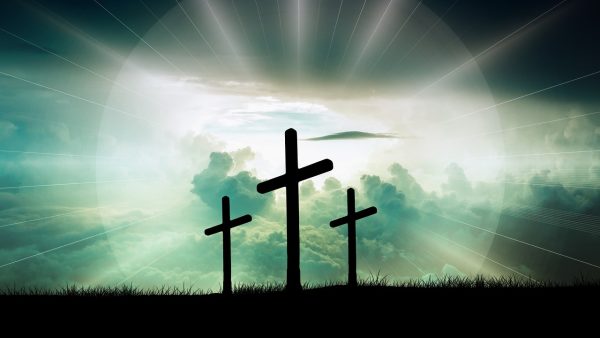
But I’d like to look backward two days to what we now call Good Friday.
In His final moments on the cross, Jesus uttered one word—“Tetelestai”—“It is finished.”
“When Jesus had received the sour wine, He said, ‘It is finished,’ and He bowed His head and gave up His spirit”(John 19:30).
At first glance, it sounds like Jesus surrendered and sighed, “It’s over.” But the original Greek word tetelestai carries far more weight. It means completed, accomplished, brought to its intended end. This was not Jesus’ acknowledgment of defeat, but rather His declaration of victory.
Jesus did not say, “To be continued.”
He did not say, “Almost done.”
He did not say, “Now you finish the rest.”
He said, “It is finished.”
Earlier, Jesus spoke of the job given to Him by the Father:
“I glorified You on earth, having accomplished the work that You gave Me to do” (John 17:4).
At the cross, that work reached its full completion. Every prophecy was fulfilled and every requirement was met. Every act of obedience was carried through to the end.
This matters, because it means that our salvation rests on something fully accomplished.
Scripture often describes sin in terms of debt:
“Forgive us our debts…” (Matthew 6:12).
“He canceled the record of debt that stood against us… nailing it to the cross” (Colossians 2:14).
When Jesus said tetelestai, the weight of our sin was lifted—not deferred, not minimized, but completely satisfied.
Even more interesting to me, as a former English and grammar teacher, tetelestai is in the perfect tense—meaning something completed in the past still has an ongoing effect.
That means what Jesus finished then still holds true now. We don’t wake up each morning needing to re-earn God’s favor. We don’t have to live under the constant fear that we’ve fallen out of grace. We don’t have to worry that we can’t do enough to earn salvation.
Instead, we are invited to live from a place of finished work, not frantic striving.
“There is therefore now no condemnation for those who are in Christ Jesus” (Romans 8:1).
But even knowing this, many of us live as though Jesus said, “It’s started—now don’t mess it up.”
We try to prove ourselves worthy. We carry guilt long after it’s been forgiven. We treat grace like a loan instead of a gift.
But tetelestai gently challenges that mindset. It reminds us that the Christian life is not about finishing what Jesus began. It is about living in what He has already finished. And that leads to freedom. We obey, not to earn God’s love, but because we already have it.
What would it look like to truly live as though tetelestai were real?
- To know forgiveness is secure.
- To worship with gratitude instead of anxiety.
- To rest—really rest—in the grace of God.
The cross does not merely open a door. It completes the work. There’s nothing left undone, nothing left unpaid, and nothing left uncertain.
What’s left? Only this: a Savior who finished what we never could.
Tetelestai.
If you enjoyed this article, then please REPOST or SHARE with others; encourage them to follow AFNN. If you’d like to become a citizen contributor for AFNN, contact us at managingeditor@afnn.us Help keep us ad-free by donating here.
Substack: American Free News Network Substack
Truth Social: @AFNN_USA
Facebook: https://m.facebook.com/afnnusa
Telegram: https://t.me/joinchat/2_-GAzcXmIRjODNh
Twitter: https://twitter.com/AfnnUsa
GETTR: https://gettr.com/user/AFNN_USA
CloutHub: @AFNN_USA