Seventy-Two Years

You died by suicide 30 years ago. You hated yourself. You hated this life. You hated where the world was heading. So you left. You’d probably hate it even more today. For one thing, they sell water in bottles now.
Citizen Writers Fighting Censorship by Helping Americans Understand Issues Affecting the Republic.
 Sean Dietrich
You died by suicide 30 years ago. You hated yourself. You hated this life. You hated where the world was heading. So you left. You’d probably hate it even more today. For one thing, they sell water in bottles now.

She was a cleaning woman. Two kids. One cat. She was going under, fast. She could not afford this month’s rent. The landlord was already preparing to kick her out. She was working from can to can’t…

How I ended up walking into a sliding glass door in a supermarket is pretty simple. I got a text from my wife. I looked at my phone to read the message and, WHAM! Goodbye nasal cartilage.

Seated beside me was an elderly pilgrim who seemingly had energy to converse. His beard was white. His skin was shoe leather. His odor was ripe. He looked like a cross between Moses and a Hobbit.

Charlotte is a student at West Virginia University. The 19-year-old emailed me asking for relationship advice concerning her ex-boyfriend, John, who once hurt her very badly. Tragically, I don’t give advice. But I can tell you a story, Charlotte.

My wife and I are eating at a Chinese restaurant. We’ve been driving for hours through South Carolina. We pulled over to refuel and address pressing bladder issues. And we found this place.

South Carolina. The distant backroads. Deep forest. Lots of Spanish moss. I am stuck behind an asthmatic pickup.

Before the boy sat a massive meal. Bacon. Eggs. Huge glass of chocolate milk. Stack of pancakes bigger than a midsize SUV.

My mother always told me to smile. Especially when I didn’t want to. She often told me to smile when I was sad, when trying on school clothes, or whenever I was forced to eat beef liver at gunpoint.

A small town. The kind of beautiful American hamlet where all that’s missing is the Norman Rockwell signature. There was a party happening on Main Street. Lots of people.

I love marshmallows. I love Basset hounds. I love the smell of fresh-cut grass. I love sunlight. And I love the way a baby feels in your arms, all squishy and warm.

I had a dream. I was walking on the beach with God. We were the only two on the shore. God was very tall.
The first thing that struck me was that God was nothing like I thought he’d be.

The school cafeteria. The boys were all sitting together, doing what teenage boys do. Horsing around, talking about girls, probably trying to make milk spew from each other’s nostrils.

There was once a raccoon named Benny. Benny was very nice, and very cute. Also, he did not smell like urine and feces the way other raccoons did.

Have mercy on Minneapolis. On Minnesota. On our country. Have mercy on those of us who are angry, God. Mercy on those of us who weep. Mercy on those who mourn.

I remember before the game, things got very quiet. All 30-odd thousand people rose. The throngs of stadium chairs creaking sounded like the world was splitting.

Nothing beautiful has ever landed on me before, unless you count the way local pigeons have sometimes used me for target practice.

I have a story about bad things. The story is about an old man. He lived during in the Great Depression. He was a very poor farmer. His home was a ramshackle shotgun house. He drove a rusted truck that predated the Punic Wars.

Two railway track maintainers stood at a distance watching her. Their neon vests, reflecting in the early morning light. Their hard hats pushed upward on their heads. They weren’t sure what to do with the bird.
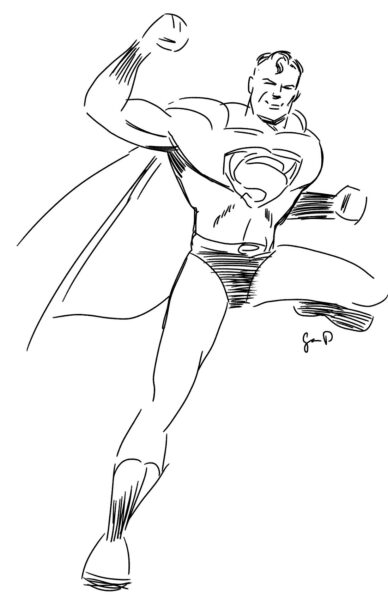
I’ve been a Superman fan since I was old enough to fill up a diaper. I used to attend school wearing Superman pajamas beneath my civilian clothes, posing as a mild-mannered first-grader. My mother made me stop this in college.