A Little Goodness
Dallas. The mid-1980s. There were three Mexican boys in the supermarket. The meat department. They were covered in sawdust and drywall mud. They were eyeing the beef, looking for the cheapest cuts. Counting their nickels and dimes.
Citizen Writers Fighting Censorship by Helping Americans Understand Issues Affecting the Republic.
Dallas. The mid-1980s. There were three Mexican boys in the supermarket. The meat department. They were covered in sawdust and drywall mud. They were eyeing the beef, looking for the cheapest cuts. Counting their nickels and dimes.
How I ended up walking into a sliding glass door in a supermarket is pretty simple. I got a text from my wife. I looked at my phone to read the message and, WHAM! Goodbye nasal cartilage.
A very serious issue we all need to be concerned about is the presence of artificial intelligence in our everyday lives, and we will get to that shortly, but first we need to discuss how I got stung by a bee.
I am not sure whether you understand English, but I’d like to think you do. I’d like to think that you know exactly what I’m saying to you. I’d like to think I speak fluent dog.
Sunset. There must be a million people gathered in Railroad Park tonight. Downtown Birmingham is crazy. There are no parking spots left. People are parking cars as far away as Milwaukee.
Our Father, which art in heaven, hallowed be thy name. Even though this name has been so misused, misapplied, and misappropriated throughout history.
I wonder who is watching me right now.
Someone must be watching me because I, too, am watching others. I am in the Adolfo Suárez Madrid-Barajas airport. We are leaving Spain after spending the better part of a month here. And I am engaging in my second favorite pastime: people-watching.
I don’t know how I got into this. No, wait. I remember.
My wife, that’s how I got into this. That’s how every crazy, halfcocked idea in my life starts. With her. Bungee jumping in Mexico is only one example.
We had a three-hour layover in Santiago de Compostela where we had nothing to do but sit in an outdoor cafe, downtown, watching hordes of pilgrims arrive at the cathedral and publicly rejoice in Santiago Square.
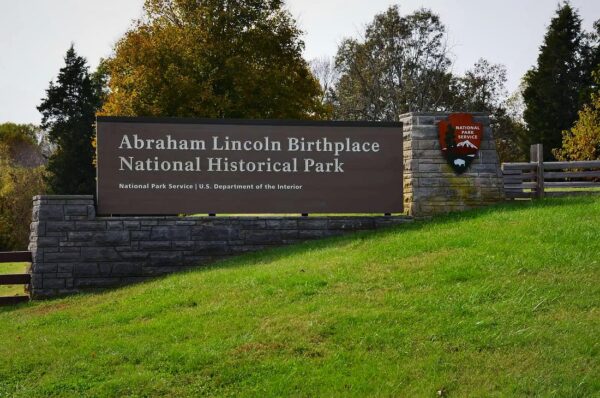
Hannibal, Missouri, is a little off the beaten path. Actually, Hannibal is a LOT off the beaten path. I can’t even find the beaten path anymore.
On the way into town, my GPS kept getting confused in rural Missouri, and at one point I ended up in—this is true—Illinois.
The ancients called this place the end of the world. And that’s what they believed it was.
Cracker Barrel is quiet this time of night. There are few cars in the parking lot. My wife is with me. We’ve been traveling all day.
On the way into the restaurant, I see a few kids sitting on rockers outside. They’re playing checkers.
It is among the grandest churches in the world. It is one of the greatest achievements of man that took so long to build that architectural periods changed several times throughout its construction.
Even so, when you walk into Santiago de Compostela the first thing you see is not the cathedral. You neither see the gilded grandeur, nor the ornate.
The first things you see are pilgrims.
Things I’ve seen in Spain.
Little children, deviceless in public, making blatant eye contact with adults, behaving ten years more mature than their age.
Lugo, Spain, is a mini metropolis compared to the remoteness of the Camino Primitivo. For days we have been hiking in isolated mountains and faraway countrysides. It’s startling to see a city suddenly emerge from the landscape.
I have learned that everyone walks the Camino for a reason. This is my second Camino, and thus far I have not met anyone who approaches this 1,500-year-old path without a spiritual and emotional objective.
The reasons are not always clear. Sometimes the reasons are even unclear to the person walking. But the reasons are there. They walk so they can find something. Something unnameable.
What is God?
This single question underpins all things on the Camino de Santiago, a trail inhabited by us full-time pilgrims whose lives are contained in backpacks.
Rain. It never stops coming. Rain, rain, rain. Sometimes it seems like all it does is rain.
It’s been raining for two days now on the Camino Primitivo. And there is no end in sight. Spanish news channels on television, which are wonderful media organizations whose reporters dress exquisitely, speak rapidly, and replay the same four news stories every six minutes, are predicting rain each day this week.
The albergue looks like a mountain chalet. We are snugly situated deep within the Fonfaraón Mountains, which climb high into the Spanish sky, separating us from an entire civilization below the cloud line.
Here atop the world, the mountain peaks look like incarnations of the Appalachians, with a fuzzy, green carpet-like texture, rounded edges, and swooping valleys that gather pools of fog like a white lake.
We will be hiking this today.