The Exception, Not the Rule: Why the American Revolution Was an Anomaly
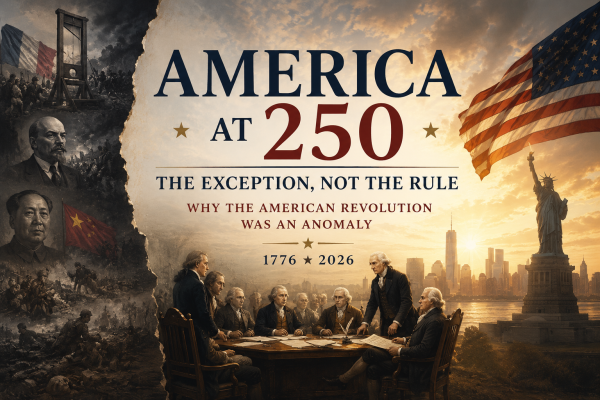
Most revolutions begin with promises of freedom and end with new forms of power. The French Revolution produced the Terror and Napoleon. The Russian Revolution produced Lenin and Stalin. The Chinese Revolution produced Mao and mass famine. History’s pattern is clear: tearing down institutions is far easier than building stable replacements. The American Revolution was different. The Founders inherited functioning local governments, a tradition of self-rule, and a deep understanding of human nature. Rather than trusting power, they divided it. Rather than creating permanent revolution, they created a constitutional republic capable of reform without collapse. As America approaches its 250th birthday, the greatest lesson of 1776 may not be that revolution is glorious, but that the true miracle was what came after—the creation of a nation where change could occur without needing another revolution.

Your Great-Grandfather Would Think You’re Rich

America is about to turn 250 years old, yet many of us live with less gratitude than our great-grandparents who had far less. The average American enjoys comforts that kings, presidents, and industrial tycoons could only dream of—instant communication, modern medicine, air conditioning, safe food, and access to nearly all human knowledge from a device in their pocket. Yet we often act as though we are the most deprived generation in history. This article examines the extraordinary inheritance we’ve received from those who built America, the dangers of historical amnesia, and why our descendants may care less about our complaints than what we chose to build, preserve, and pass on. Before we criticize the nation our forefathers handed us, perhaps we should ask a more uncomfortable question: Are we proving worthy of the gift they left behind?

Empire in Denial: How the United States Is Quietly Losing Its Strategic Edge

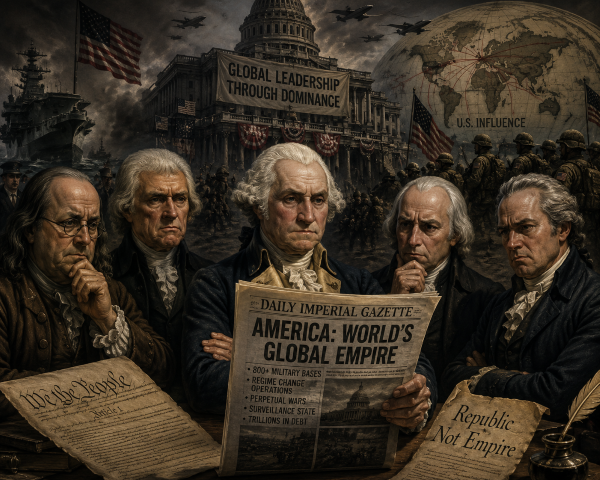
Empires don’t collapse in a blaze of cinematic glory—they erode, quietly, while insisting everything is fine. The United States still fields the most powerful military on Earth, still prints the world’s reserve currency, still lectures the planet on order and stability. But beneath the polished surface, the math is getting ugly, the cohesion is cracking, and the strategic margin is shrinking. This is what decline actually looks like—not defeat, but drift. Not surrender, but overextension wrapped in denial. The dangerous part isn’t that America is weakening; it’s that it hasn’t fully realized it yet.