The Modern Plato

As I was responsible yesterday for your overconsumption of wine, perhaps I can offer amends today.  Remember that in the discussion of the nature of a chair, Plato hypothesized that the form of a chair existed separately from the existence of any particular chair or of the craftsman who make them.  That form did not depend on space or …
Read more

What Is Truth?

Not every question is asked in order to get an answer.  In the scene I described in my last article, the Roman ruler asks this question not in order to better understand the Truth, but rather to mock the very idea of Truth.  Think of it along the lines of your significant other asking, “What …

Read more

Citizen Responsibility

There are widely varying views of the responibility of leaders in the proper formation of government.  Plato believed in the philosopher king while his student Aristotle believed in the rule of law and the proper formation of a constitution consisting of the laws, traditions, and habits that together form the nature of a country.

Why We Have Elections

Elections

I believe that it is worthwhile to consider why we have elections.     The first reason is the obvious one, we use elections to choose representatives.  That is how a representative government works.  That concept was reinforced by the Christian concept that God made all men and that there is, therefore, no longer Roman or Jew, freeman …

Read more

The Enlightenment as a Political Movement

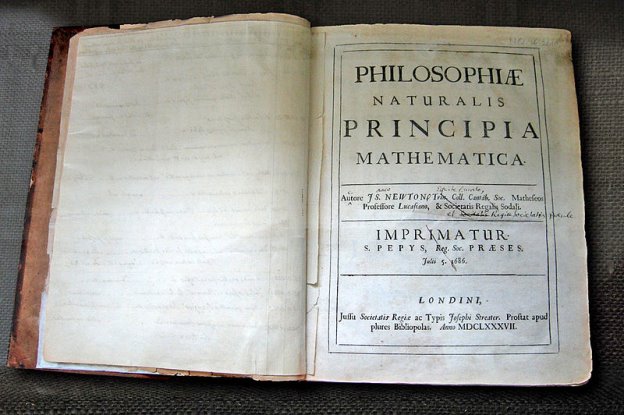
Over the last few days, we have been exploring the enlightenment as a philosophical movement.  This movement started as a reaction to the significant advances in math and science, particularly Isaac Newton’s mathematical modeling of planetary movement, which described their orbits without the traditional process of metaphysics, the understanding of the planet’s first principles.  From there, the …

Read more

The Enlightenment and The Science of Man

As we continue trying to understand the philosophy of the enlightenment (an admitted challenge for me I freely admit) we started with Newton’s mathematical explanation of the movement of planets.  He completed this analysis without the use of metaphysics, the intellectual discipline where the observer would attempt to understand the entire nature of the item that …

Read more