Fort Wilkins: Once again, US Army Sends a West Pointer to the End of the Earth

In 1844, the U.S. Army sent a West Point graduate and a couple companies of infantry to the very tip of Michigan’s Keweenaw Peninsula to keep order during America’s first great copper rush. Captain Robert Emmet Clary and his soldiers arrived in the wilderness, built most of a fort in five months, and then watched history move somewhere else when war with Mexico began. But Clary’s story gets even better: his West Point classmate—and reportedly his wedding best man—was Jefferson Davis. Three decades later, Davis headed the Confederacy while Clary remained loyal to the Union and earned brevet promotion to brigadier general for his Civil War service. Fort Wilkins is a wonderfully obscure reminder that long before Gettysburg, some remarkably tough Americans were already busy building this amazing country.
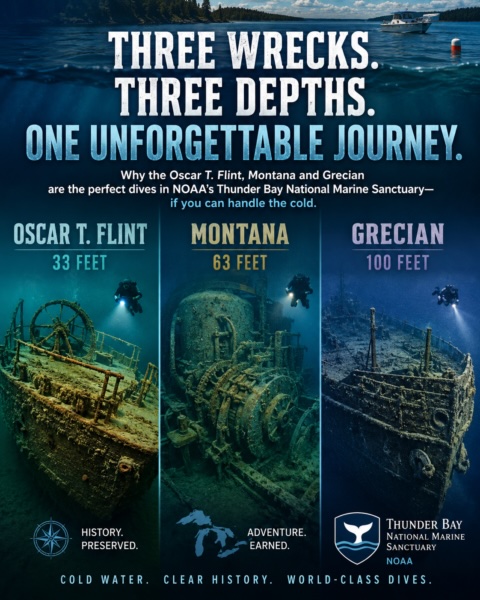

The Coldest Paradise in Recreational Scuba

There are places where the water is warm, the reefs are colorful, and every dive feels familiar. Then there’s Thunder Bay. Hidden beneath the cold, crystal-clear waters of Lake Huron lies one of North America’s greatest collections of preserved shipwrecks, where history is measured not in museums, but in feet of depth. From the beginner-friendly “Oscar T. Flint” at 33 feet, to the towering machinery of the “Montana” at 63 feet, and finally the legendary “Grecian” resting around 100 feet below the surface, few places offer such a perfect progression for recreational divers. The only catch? You have to embrace the cold—but those who do are rewarded with an underwater time capsule unlike anywhere else in the world.

Michigan: A Peaceful Place Built by Geological Violence

Stand on the bank of the Au Sable River at sunrise and it’s all mist, pine trees, and trout quietly minding their business. Feels like the kind of place that’s always been this way—stable, predictable, friendly. It hasn’t. Michigan is what happens when the earth tries to tear itself apart, fails, gets buried, frozen, crushed, flooded, and then—only after all that—decides to look nice about it.