Ye Olde Flip Phone

This is my fourth week with a flip phone. My “unintelligent” cellular phone is manufactured by Nokia, and the phone’s primary selling feature is that it sucks.
Citizen Writers Fighting Censorship by Helping Americans Understand Issues Affecting the Republic.
This is my fourth week with a flip phone. My “unintelligent” cellular phone is manufactured by Nokia, and the phone’s primary selling feature is that it sucks.
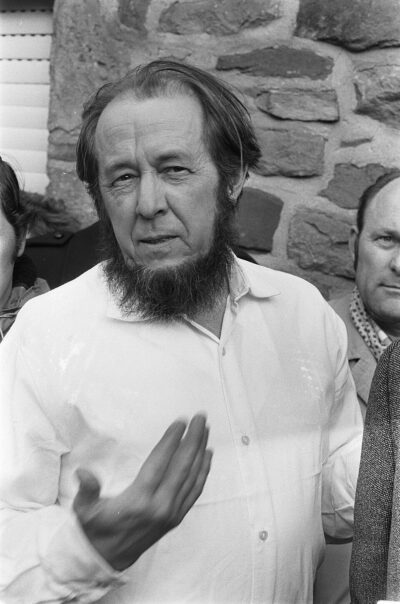
Solzhenitsyn’s address delves deeply into the concept of “man with a capital ‘M’,” critiquing the modern, inflated perception of human potential and autonomy. He warned against the hubris of believing that mankind could solve all problems through reason and science alone, a belief that has only intensified in the contemporary era. This illusion, he argued, neglects the spiritual dimensions of human existence and leads to a profound disconnection from the divine.

Jack O’Connor died in 1978, nearly 30 years before the 6.5 Creedmoor appeared, but judged by the standards he championed in The Hunting Rifle and decades of Outdoor Life writing, he probably would have loved it—even if it never displaced his beloved .270 Winchester. O’Connor valued accuracy, moderate recoil, flat-enough trajectory, high sectional density, efficient bullets, penetration, and above all the hunter’s ability to put a bullet precisely where it belonged. The Creedmoor checks virtually every box: a 140-grain 6.5mm bullet has excellent sectional density, modern high-BC bullets retain velocity remarkably well, recoil is lighter than the .270, and the cartridge is famously easy to shoot accurately. Where O’Connor would still favor the .270 is raw velocity and its flatter trajectory at ordinary hunting distances—especially important in his era, when hunters estimated range rather than pushing a button on a laser rangefinder. Ironically, O’Connor also admired cartridges such as the mild-mannered 7×57 Mauser and repeatedly argued that shot placement mattered more than horsepower. The funniest conclusion, then, is that the old-school hunters who dismiss the 6.5 Creedmoor as some newfangled fad might be surprised by their own patron saint: the Creedmoor is essentially an O’Connor hunting cartridge designed 30 years too late—accurate, efficient, mild to shoot, and powerful enough to kill what you’re hunting if you quit arguing about caliber and put the damned bullet where it belongs.

MOA vs. mils: no, mils aren’t “more accurate.” Math is math. They’re just beautifully idiot-resistant.
Tell Private Snuffy to add ½ and ¼ and you can smell the electrical fire. Tell him to add .3 and .5 and he can probably do it on his fingers. Suddenly the military’s love affair with mils makes perfect sense.
PRS speaks decimals. Traditional American riflemen speak fractions. Different dialects, same X-ring.

NASA Administrator Jared Isaacman analyzes the space competition between the United States and China while discussing a successful SpaceX Falcon 9 rocket launch on ‘Special Report.’

What if the geopolitical insanity of 2026 isn’t actually insane? Game theory suggests something more disturbing: perfectly rational nations, each acting in their own self-interest, can collectively produce disastrous outcomes that nobody actually wanted. Born from Cold War-era work at RAND, the Prisoner’s Dilemma explains everything from arms races to alliances and deterrence. Sometimes nobody has to be crazy for the world to go completely nuts.

U.S. Ambassador to China David Perdue assesses the outcome of President Donald Trump’s summit with Chinese President Xi Jinping on ‘Fox News Sunday.’

History remembers Vlad the Impaler as a blood-soaked medieval psychopath. But what happens if we assume Vlad was a rational actor? Suddenly the stakes, the terror, and the infamous Forest of the Impaled start looking less like random savagery and more like calculated deterrence. Vlad couldn’t outspend or outfight the Ottoman Empire, so he weaponized the one battlefield where a small power could compete with a giant: the human mind. Five hundred years before “fifth-generation warfare” became fashionable, Dracula was already playing game theory—with sharpened stakes.

The SpaceX Starship spacecraft is about to attempt its first ten-hour orbital spaceflight.

Before freezers and generators, Michigan hunters had another way to make November’s deer feed the family all winter: the Mason jar. Pressure-canned venison may be the original deer-camp MRE—simple, shelf-stable, already cooked, and requiring no refrigeration. It’s a nearly forgotten skill worth bringing back.

There is so much “news” about Generative Artificial Intelligence (AI) – but precious little that is new.
We’ve had authors for a century-plus describing almost exactly the doomsday scenarios towards which we are now currently, stupidly hurtling ourselves.

What if World War III didn’t begin with missiles, mushroom clouds, or tanks crossing a border? What if it quietly started around 2016, and we were too busy arguing about elections, surviving COVID, watching AI explode, and complaining about gas prices to notice the clouds gathering? Grab the heavy-duty aluminum foil and follow me down the rabbit hole as we connect geopolitics, oil, emerging alliances, artificial intelligence, biblical prophecy, and one wonderfully uncomfortable question: What if history has already changed—and nobody bothered to send us the memo?

Rep. Darrell Issa, R-Calif., joins ‘Sunday Morning Futures’ to discuss the rapid development of artificial intelligence and the growing push for Congress to regulate the technology after reports of Google’s Gemini hacking companies.

This transcript preserves the recent portion of our conversation about artificial intelligence, the Turing test, human–AI integration, neural interfaces, gaming, brainwaves, and the possibility of dramatically increasing communication bandwidth between people and AI.
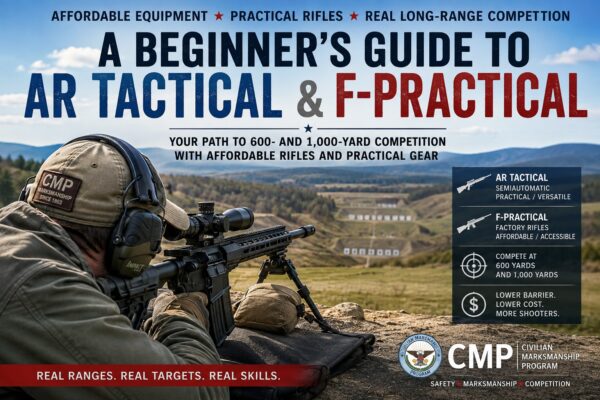
Competitive long-range shooting used to look like a sport where the entry fee was a custom rifle, a pile of specialized equipment, and possibly a second mortgage. CMP’s new AR Tactical and F-Practical categories are changing that. Built around affordable AR-platform and factory-production rifles, practical rests, bipods, and limited-power optics, these events offer ordinary shooters a pathway onto the 600- and 1,000-yard firing line without first building a NASA-grade race gun. This beginner’s guide explains the rifles, equipment, rules, match formats, and what to expect at your first match. The wind is still free—and it will still humble you.
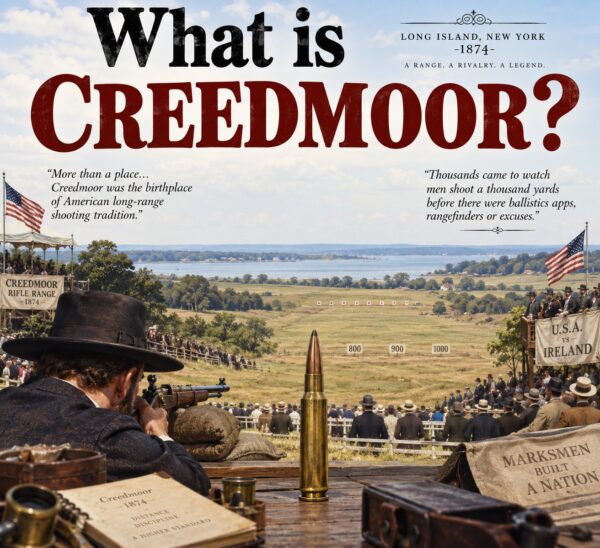
The 6.5 Creedmoor has been around for 19 years, and apparently that still hasn’t been enough time for some gun enthusiasts to learn what the word Creedmoor actually means.
Before you utter “6.5 Man Bun” again, try Google.

Teachers across the US are citing growing concerns over what they’re saying is a reading crisis. CNN’s Isabel Rosales reports.
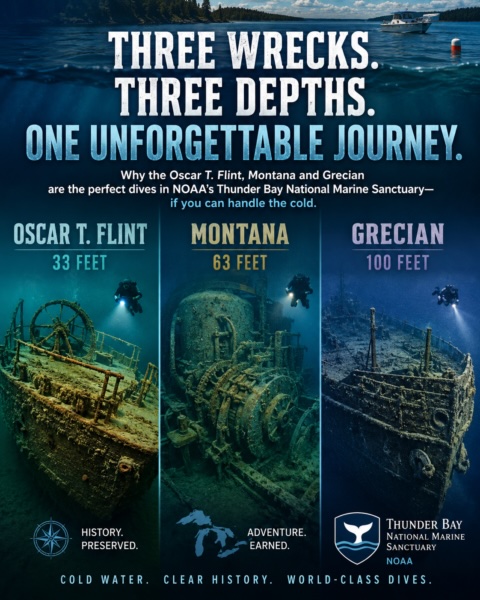
There are places where the water is warm, the reefs are colorful, and every dive feels familiar. Then there’s Thunder Bay. Hidden beneath the cold, crystal-clear waters of Lake Huron lies one of North America’s greatest collections of preserved shipwrecks, where history is measured not in museums, but in feet of depth. From the beginner-friendly “Oscar T. Flint” at 33 feet, to the towering machinery of the “Montana” at 63 feet, and finally the legendary “Grecian” resting around 100 feet below the surface, few places offer such a perfect progression for recreational divers. The only catch? You have to embrace the cold—but those who do are rewarded with an underwater time capsule unlike anywhere else in the world.

I learned something while sitting on a Michigan jury that sent me down one hell of a rabbit hole: Michigan can separately criminalize using a computer to commit a crime. In 2026, when your phone, truck, watch, bank, doorbell and possibly your toaster are computers, that starts sounding suspiciously like an enhancement for breathing oxygen while committing a crime.

Dad thought “permanent trailer plate” meant permanent. Government apparently meant, “until you buy another trailer, peasant.” For generations, recycling an old trailer plate was the kind of technically-wrong rural economics nobody noticed unless a cop had an actual reason to look. Today, cameras, databases, and algorithms potentially can notice—and remember—things no human officer ever would have bothered with.
That raises a bigger question than Dad’s Great Trailer Plate Crime Spree: **When technology makes it possible for government to notice nearly everything, should it?**